25 Years of Paddling Toward Reconciliation in BC
More than 200 people just completed a nine-day canoe journey down British Columbia's rivers, marking a quarter-century of bringing Indigenous and non-Indigenous communities together through shared paddles and campfires. The Pulling Together voyage has been quietly building bridges since 1997.
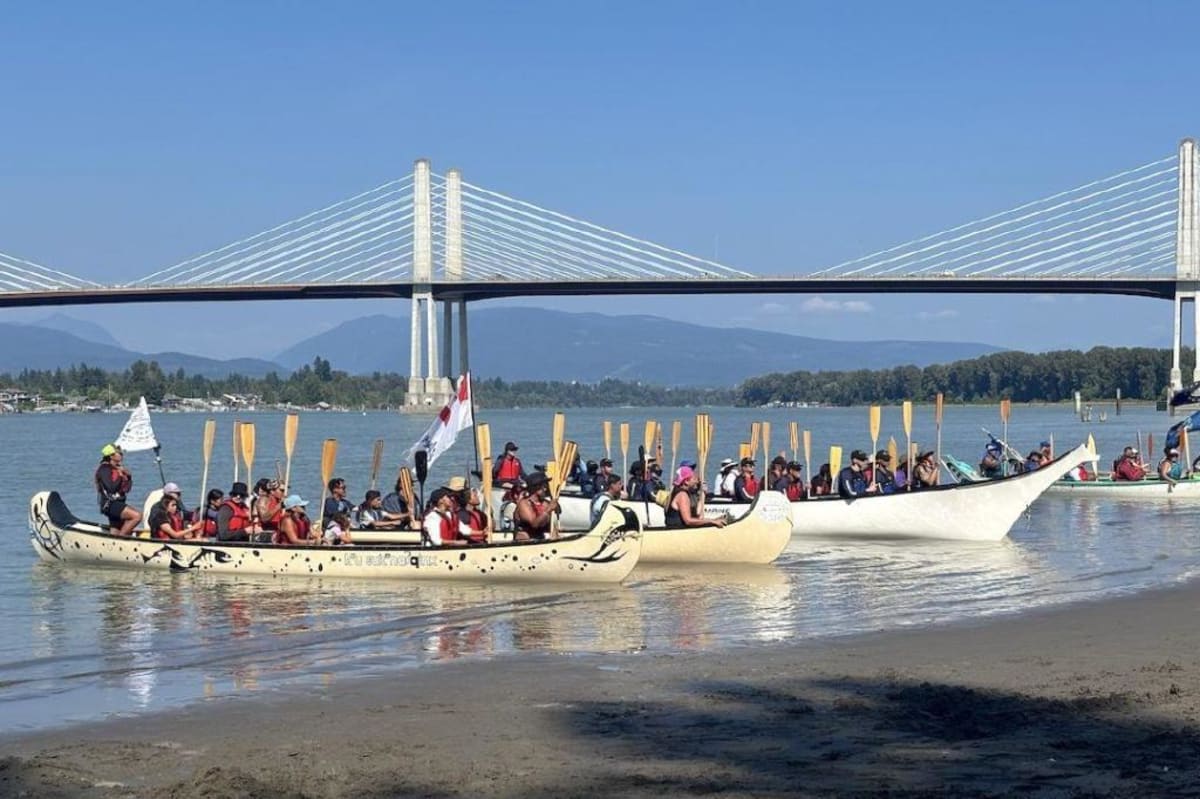
When 200 paddlers dipped their oars into Harrison River on August 15, they weren't just starting another canoe trip. They were continuing a 25-year tradition of reconciliation, one stroke at a time.
The 2026 Pulling Together canoe journey brought Indigenous people, youth, police officers, and public servants together for nine days of shared paddling through the traditional territories of five First Nations. The route wound through waters stewarded by Katzie, Matsqui, Kwikwetlem, Tsawwassen and Musqueam peoples, ending at Wellington Point Park in Delta.
"As we paddle together, work together, and camp together, we also learn together," said Betty Kruger-Cardenas, president of Pulling Together Canoe Society. Those shared moments around fires and in canoes have been strengthening relationships for a quarter century.
The journey traces its roots to the 1997 Vision Quest Journey along British Columbia's coast. What started as a single voyage has grown into an annual tradition that welcomes participants from the Royal Canadian Navy, Department of Fisheries and Oceans, multiple police departments, and universities.
This isn't performative reconciliation conducted in boardrooms. It's real people getting blisters together, sharing meals, and spending nights under the same stars while traveling through lands that Indigenous peoples have navigated for thousands of years.
The canoes made stops at Matsqui Regional Park and Barnston Island before completing the journey. At each landing, paddlers deepened their understanding of the territories they traveled through and the nations who call these waters home.
The Ripple Effect
What makes Pulling Together special is its quiet persistence. Twenty-five years of annual journeys means hundreds of police officers, government workers, and young people have experienced a different kind of education than any classroom could provide.
When a Vancouver police officer paddles alongside an Indigenous youth for nine days, they both go home changed. When navy personnel camp on traditional territories and hear stories from elders, those lessons ripple outward into their organizations.
The journey creates spaces where titles and uniforms matter less than the rhythm of paddles hitting water in unison. That shared physical effort builds trust in ways that policy papers and official apologies cannot.
Every year, new paddlers join the journey while veterans return to reconnect. Together they're weaving a web of relationships that grows stronger with each paddle stroke, creating foundations for understanding that will outlast any single initiative or government program.
This August, those 200 paddlers carried 25 years of hope downstream, proving that reconciliation isn't a destination but a journey best traveled together.
Based on reporting by Google News - Reconciliation
This story was written by BrightWire based on verified news reports.
Spread the positivity!
Share this good news with someone who needs it