250-Million-Year-Old Fossil Reveals Mammal Egg Mystery
Scientists have discovered the first proof that our ancient mammal ancestors laid eggs, solving a mystery that's puzzled researchers for generations. The fossil also explains how these creatures survived Earth's deadliest mass extinction.
A tiny fossil curled up in South African rock just rewrote what we know about our own origins.
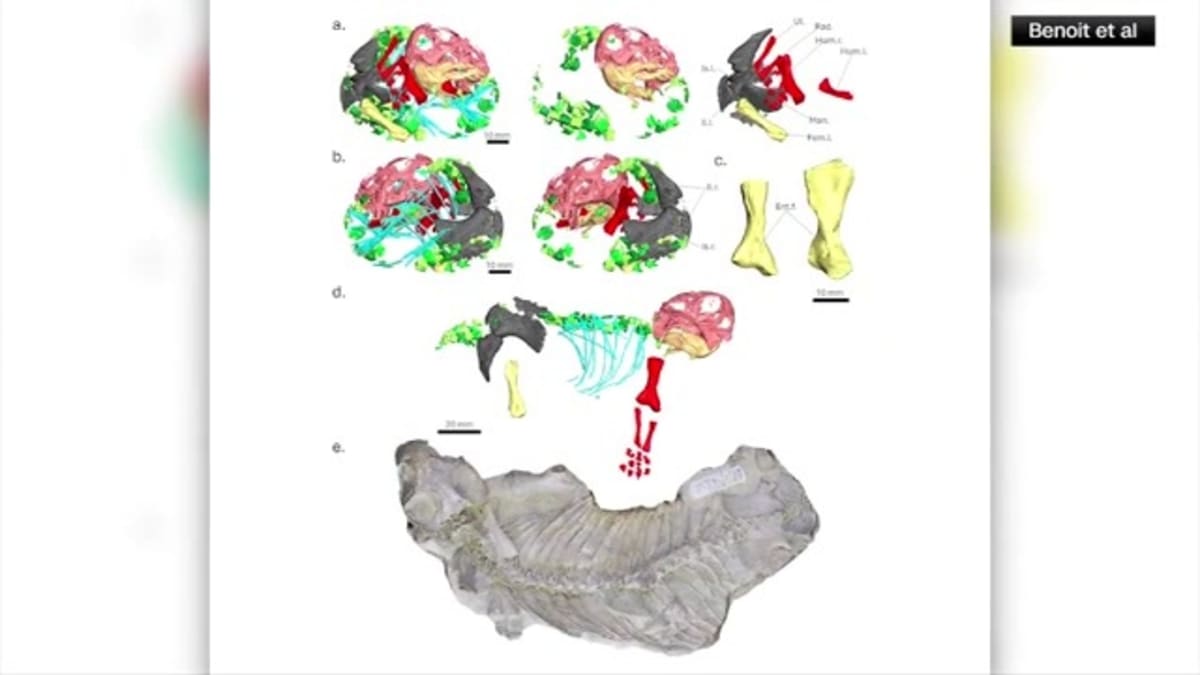
Researchers scanning a 250-million-year-old embryo have found definitive proof that mammal ancestors laid eggs. The breakthrough came from studying a Lystrosaurus, a creature that survived the "Great Dying" when 90% of life on Earth vanished.
Using X-rays brighter than the sun, scientists discovered the embryo's jaws weren't fully fused. This trait only appears in modern bird and turtle embryos still inside their eggs, proving the tiny Lystrosaurus died before hatching.
"This is the first time we can say, with confidence, that mammal ancestors like Lystrosaurus laid eggs," said lead researcher Julien Benoit from the University of the Witwatersrand. "It's a true milestone in the field."
The eggs had soft, leathery shells since hard shells wouldn't evolve for another 50 million years. But those leathery eggs might be exactly why Lystrosaurus survived when almost everything else perished.
During the Great Dying, Earth became a scorching desert. Lystrosaurus lived in dry riverbeds and burrowed into mud to escape brutal droughts. Their large eggs lost less water than other species' eggs, giving babies a fighting chance.
Baby Lystrosaurus hatched already developed enough to find food and escape predators. This quick start meant they could mature faster and reproduce earlier, multiplying their survival odds.
Why This Inspires
This discovery helps explain when mammals developed one of their most caring traits: nursing their young. The research suggests lactation evolved between 252 and 201 million years ago, possibly starting not to feed babies but to keep those precious leathery eggs moist.
Understanding when our ancestors switched from laying eggs to giving live birth reveals the remarkable journey that led to mammals thriving today. These survival strategies, born from catastrophe, shaped the very traits that define us.
The findings open new doors for understanding how the darkest moments in Earth's history sparked innovations that would eventually lead to every mammal alive today, including us.
Scientists are now investigating exactly when and how live birth and milk production evolved, piecing together the success story of mammals rising from the ashes of extinction to inherit the Earth.
Based on reporting by Google: fossil discovery
This story was written by BrightWire based on verified news reports.
Spread the positivity!
Share this good news with someone who needs it