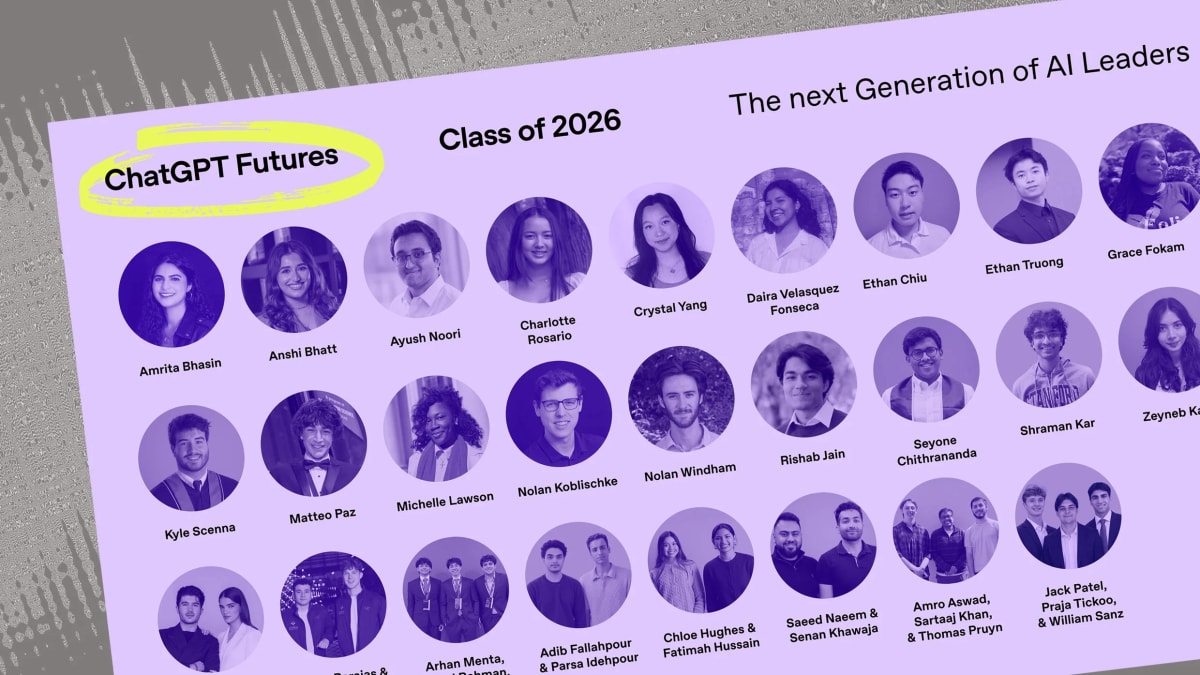
26 Students Win $10K for AI Innovations That Help Others
A college student who created audio games for her blind friend just won $10,000 from OpenAI, along with 25 other young innovators using AI to solve real problems. From accessible gaming to disaster rescue tech, these students are proving AI can be a force for good.
When Crystal Yang's blind friend couldn't join their Wordle games in high school, Yang didn't just feel bad about it. She did something.
Yang partnered with researchers at Texas A&M University to create audio-based versions of the popular word game. That project grew into Audemy, a nonprofit that has now developed over 50 audio-powered games for blind and visually impaired players.
The University of Pennsylvania student used AI throughout the journey, from coding and user research to prototyping an accessible gaming console that works without Wi-Fi. "It's been a very helpful tool throughout, allowing me to champion the issues I'm passionate about," Yang says.
Her work just earned her one of 26 grants worth $10,000 each from OpenAI's ChatGPT Futures program. The initiative celebrates young people using AI to make real differences in the world.
Yang's fellow winners are tackling problems just as meaningful. One student is building space robots to handle routine tasks for astronauts. Another developed a way to find disaster survivors trapped behind walls using Wi-Fi signals.
Some winners focused on protecting vulnerable people, like creating tools to help seniors avoid online scams or helping Latin American street vendors manage their finances. Others are advancing science and medicine by predicting protein functions, connecting people with mental health resources, and improving drug production.
The Ripple Effect
These 26 students represent the class of 2026, the first group of university students who had access to ChatGPT during nearly their entire college experience. That timing matters.
"What we've seen is that these students are using AI to build things that many wouldn't have previously thought were possible," says Leah Belsky, head of education at OpenAI. The technology didn't just help them code faster or write better papers. It helped them dream bigger.
Yang's gaming console will incorporate both audio and tactile features, expanding access beyond what traditional gaming offers. The $10,000 will help Audemy move from prototype to reality, potentially opening up gaming to thousands of players who've been left out.
Each winner's project started with noticing someone who needed help, then using every tool available to actually provide it.
Based on reporting by Fast Company - Innovation
This story was written by BrightWire based on verified news reports.
Spread the positivity!
Share this good news with someone who needs it