27 Fishermen Rescued After Fire 450 Miles From Galapagos
When a fishing vessel erupted in flames hundreds of miles from the nearest land, two ships dropped everything to race toward 27 people drifting in a life raft. Within 11 hours, every single crew member was safe.
Twenty-seven fishermen bobbing in a life raft in the middle of the Pacific Ocean watched their vessel burn. But help was already on the way.
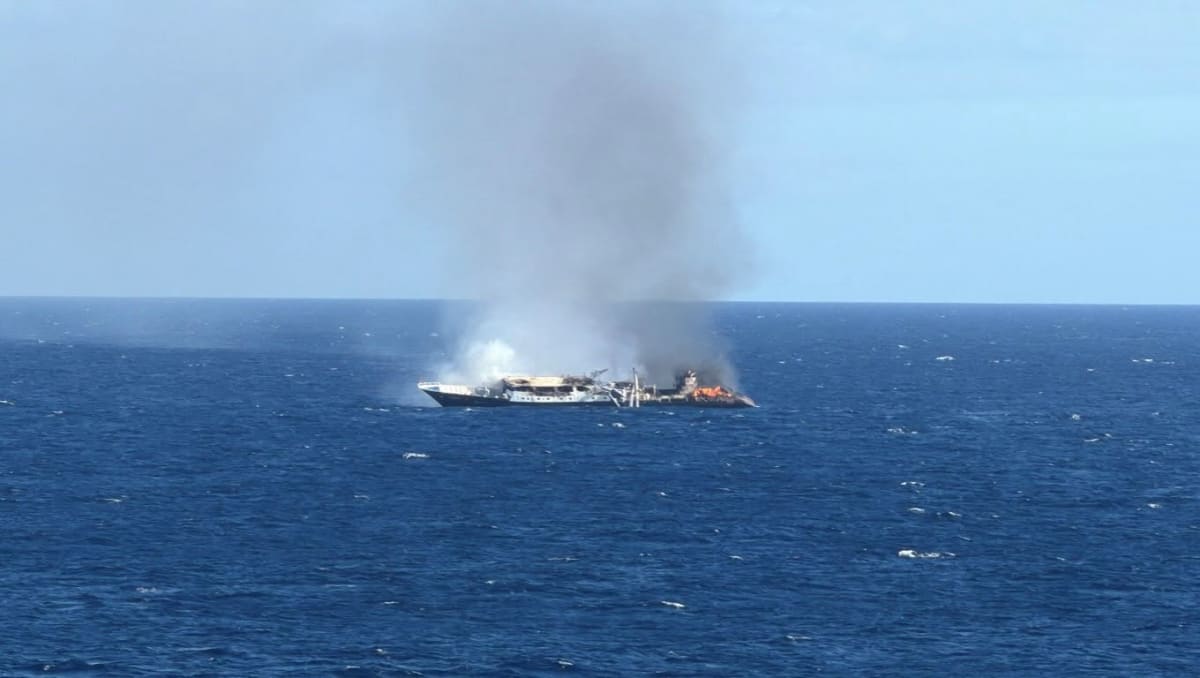
Last Thursday night, the tuna fishing vessel Drennec caught fire 450 nautical miles southwest of the Galapagos Islands, one of the most remote stretches of ocean on Earth. The crew abandoned ship and sent out a desperate message using a satellite texting device, telling rescuers they were alive but stranded in open water.
The U.S. Coast Guard received the alert and faced a sobering reality. No helicopter could reach them. The crew was far beyond the range of traditional rescue operations.
So the Coast Guard activated AMVER, a voluntary system that tracks commercial ships willing to help in emergencies. They sent out a call asking if anyone nearby could divert course to help 27 strangers in trouble.
Two vessels answered. The container ship Oluf Maersk and fishing vessel Ricky A turned around and headed toward the life raft's coordinates.
When they arrived on scene, the Ricky A pulled all 27 crew members aboard. Every single person was in good health despite their ordeal. The Ricky A is now transporting them to Guayaquil, Ecuador, where they'll reunite with their families.
The Ripple Effect
This rescue highlights something beautiful about the maritime world. Out on the ocean, where you're days away from help and completely vulnerable to the elements, sailors look out for each other. The crews of Oluf Maersk and Ricky A were on their own journeys with their own schedules and deadlines, but they didn't hesitate.
"Rescuing 27 crew members within 11 hours of the distress alert in a remote area of the Pacific Ocean is an incredible achievement," said Doug Samp, the Coast Guard's search and rescue mission coordinator. He thanked both vessels for their response, crediting them with 27 lives saved.
The AMVER system, which made this rescue possible, relies entirely on voluntary participation. Ships enroll and share their positions so rescuers know who might be nearby during emergencies. It's a global network of goodwill that turns every enrolled vessel into a potential lifesaver.
In one of the most isolated places on Earth, 27 people learned they weren't alone after all.
Based on reporting by Google News - Good Samaritan
This story was written by BrightWire based on verified news reports.
Spread the positivity!
Share this good news with someone who needs it