%2Ffile%2Fattachments%2F2992%2F688635092_1403790941795291_6434669868162454614_n_856400.jpg)
27-Year-Old PhD Shows Beekeeping Boosts Rural Income
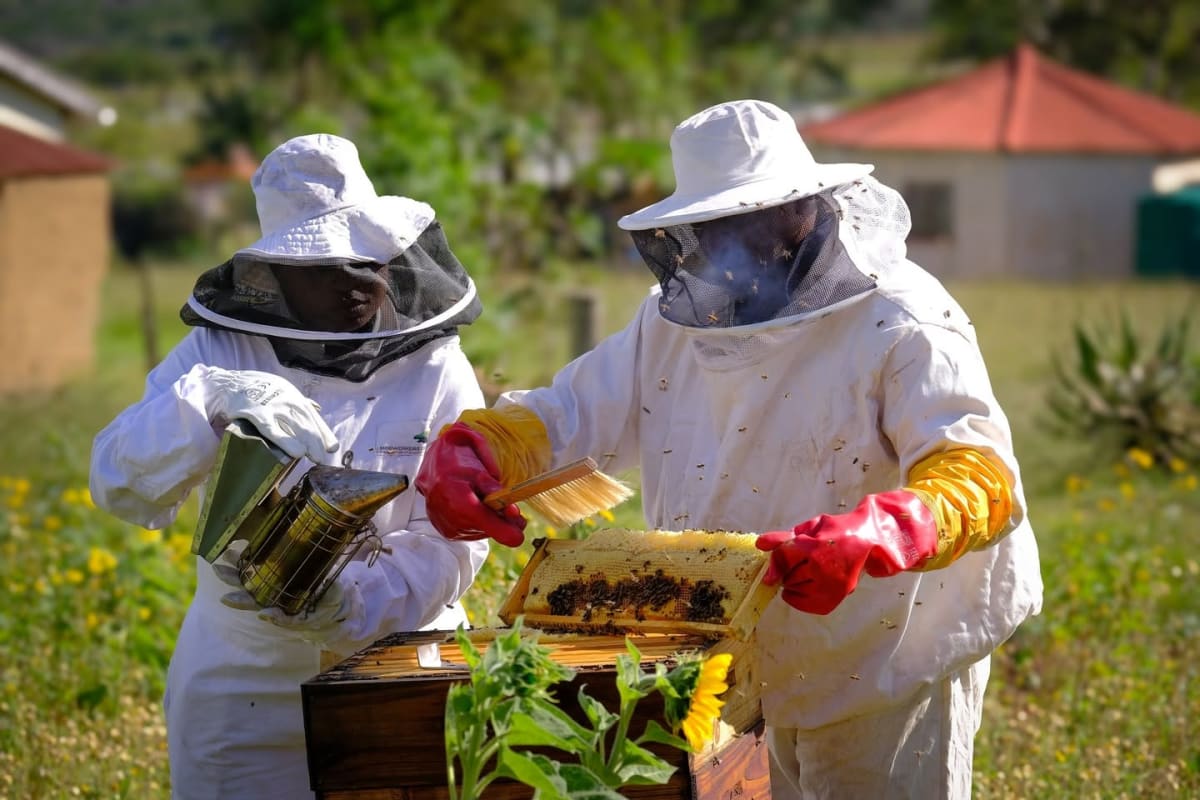
A researcher in South Africa's Eastern Cape proved that beekeeping can transform rural economies, especially for women. Her work with 300 beekeepers is helping families earn real money and improve food security.
Dr. Owetu Zamisa became the University of Fort Hare's youngest PhD graduate at just 27, but her real achievement is showing rural communities a path out of poverty through honey.
Her four-year research project tracked 300 small-scale beekeepers across South Africa's Eastern Cape. The results were clear: beekeeping significantly improves household income, particularly when families get proper training, join cooperatives, and access formal markets like supermarkets.
The findings matter most for rural women. Traditionally, wild honey hunting was men's work in these communities. Zamisa's research revealed growing interest among women in the practice, which could open new income streams for families struggling with food insecurity.
"There is money in beekeeping," Zamisa said, especially when beekeepers learn sustainable harvesting techniques and connect with buyers beyond their villages.
Luthango Stamper, one of the beekeepers in her study, saw the difference firsthand. "She helped us see how honey moves in the market and how we can position ourselves for formal markets like supermarkets," he explained. "Her work opened our eyes."
Zamisa's journey to this breakthrough started in Peddie, a rural Eastern Cape town. She completed her entire education at Fort Hare, finishing both undergraduate and PhD work in just 10 years while lecturing at the Faculty of Science and Agriculture.
The work wasn't easy. Her fieldwork took her to remote areas where she confronted traditional beliefs that linked bees to ancestral messages. Some communities feared the insects because of their stings. She also mourned her eight-year-old brother, who died of cancer during her studies.
The Ripple Effect
Zamisa's research is already changing how beekeepers see their future. Her findings show that education, cooperative membership, and access to market information are the key drivers that turn small-scale honey harvesting into a real business.
For rural women especially, this opens a door that was previously closed. The study points to specific supports they need: training in sustainable techniques, help accessing extension services, and connections to formal buyers who pay better prices than local markets.
Zamisa's mother, Nompumelelo, watched her daughter become the first in their family to graduate from university and earn a PhD. "I witnessed her struggles and now I am witnessing her successes," she said. "She has truly elevated the family's name."
Now Zamisa plans to mentor young researchers from similar backgrounds, showing them that rural communities hold untapped economic potential worth studying and supporting.
More Images

%2Ffile%2Fattachments%2F2992%2F688910265_1403790625128656_199067188844076950_n_760404.jpg)
%2Ffile%2Fattachments%2F2992%2F687930924_1403790931795292_5684827557962946553_n_945590.jpg)
Based on reporting by Daily Maverick
This story was written by BrightWire based on verified news reports.
Spread the positivity!
Share this good news with someone who needs it
%2Ffile%2Fauthors%2F1487710282782686547.jpg)
%2Ffile%2Fattachments%2Forphans%2F20260825_114344_866872.jpg)