3-Legged Sea Turtle Tracked by Satellite After Release
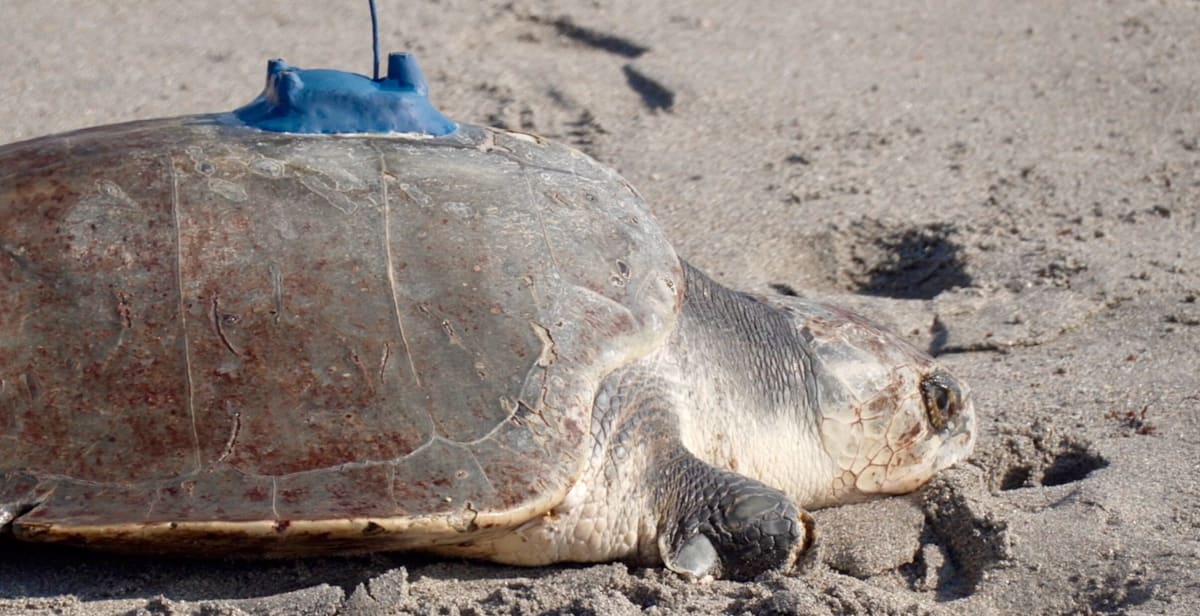
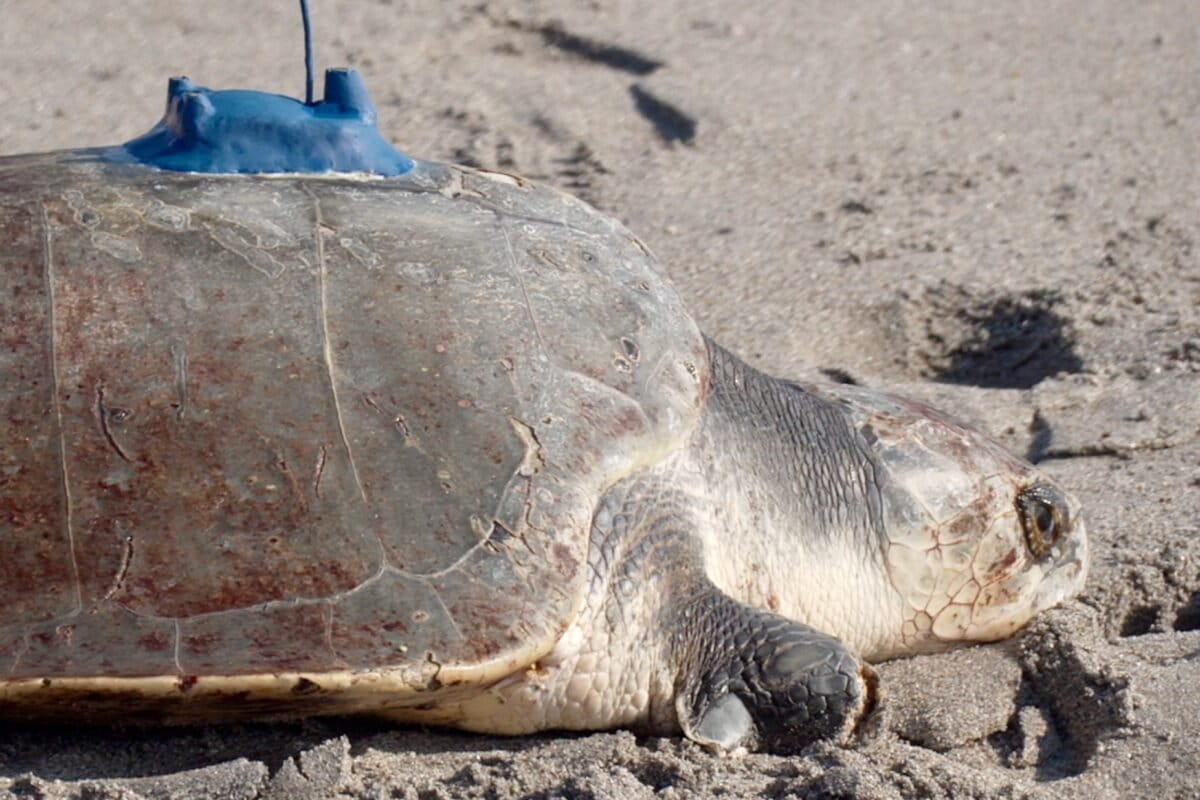
Amelie, a rare Kemp's ridley sea turtle who survived a shark attack and lost a limb, just swam back into the Atlantic Ocean with a satellite tracker on her shell. She's one of four amputee turtles being monitored to prove that three-legged sea turtles can thrive in the wild.
A three-limbed sea turtle named Amelie paused at the water's edge in Juno Beach, Florida, then crawled confidently into the Atlantic Ocean while dozens of people cheered her on.
The rare Kemp's ridley sea turtle lost her right forelimb to a predator, most likely a shark. Seven weeks ago, rescuers from the Inwater Research Group found her and rushed her to the Loggerhead Marinelife Center, where veterinarians performed surgery to close the wound and treated her for pneumonia.
Last Wednesday, Amelie was healthy enough to return home. Before releasing her, scientists glued a satellite tracking device to her shell so they could monitor how well she adapts to life with three limbs.
An ultrasound revealed another exciting detail: Amelie is developing eggs. That means researchers will get to track her journey to nesting beaches, providing crucial data about how amputee turtles navigate and survive in open water.
Amelie joins three other three-limbed sea turtles currently being tracked by the center. One named Pyari has already traveled nearly 700 miles since her January release, proving that losing a limb doesn't have to be a death sentence for these ocean dwellers.
"We do know that they can be successful in the wild because we have seen them on our nesting beaches, but we really want to understand their dive behaviors, how they're migrating once they're back in the wild," said Sarah Hirsch, the center's research director.
The satellite tags use a saltwater switch that detects when turtles surface to breathe. Each time Amelie comes up for air, the device transmits her location to satellites, and the data appears online after a 24-hour delay so anyone can follow her journey.
The Ripple Effect
This research matters beyond Amelie's personal success story. Kemp's ridley turtles are the rarest sea turtle species on Earth, and they're more commonly found on Florida's Gulf Coast, making Amelie's treatment and tracking especially valuable for conservation efforts.
Every data point collected from Amelie and other amputee turtles helps veterinarians make better decisions about which injured sea turtles can be released versus which need permanent care. That means more turtles get second chances at life in the ocean, contributing to populations that desperately need every individual to survive.
The tracking project is a collaboration between the Loggerhead Marinelife Center and the Smithsonian Conservation Biology Institute. Together, they're building a database that will help sea turtle hospitals worldwide make evidence-based decisions about rehabilitating injured animals.
Andy Dehart, the center's president and CEO, emphasized how meaningful it is to work with such a rare species and give her a fighting chance.
Amelie's story proves that resilience isn't just a human trait, and that with the right medical care and monitoring, wildlife can overcome seemingly impossible odds.
More Images


Based on reporting by Mongabay
This story was written by BrightWire based on verified news reports.
Spread the positivity!
Share this good news with someone who needs it