340-Million-Year-Old Fossils Found in English Stone Wall
National Trust rangers discovered exceptionally preserved ancient marine fossils embedded in a stone wall in England's Peak District, revealing intricate details from 340 million years ago. The rare find is helping scientists and communities connect with the prehistoric tropical sea that once covered central England.
A routine inspection of a dry stone wall in England's Peak District just revealed something extraordinary: two perfectly preserved fossils from creatures that lived 340 million years ago.
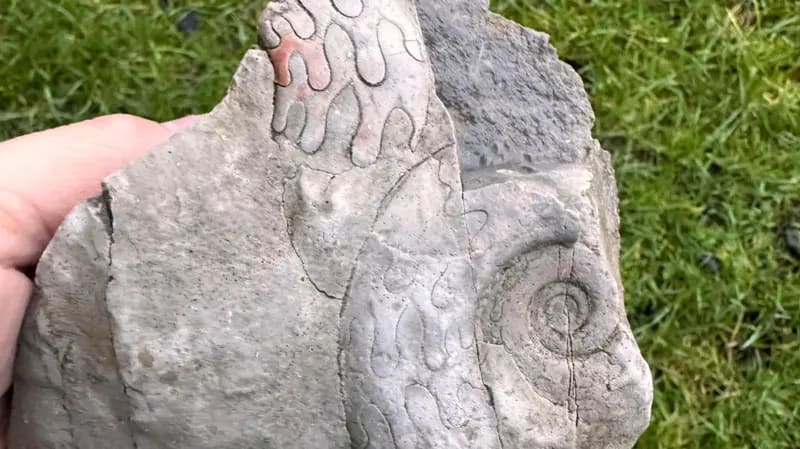
National Trust rangers in Staffordshire's White Peak region discovered the ancient remains of goniatites, extinct relatives of modern squid and octopus. What makes this find special isn't just the age but the exceptional clarity of delicate patterns still visible on the fossilized shells.
Ranger David Ward initially thought someone had drawn the intricate wavy markings on the limestone by hand. The fine details stood out so clearly that he was stunned when he realized they were natural patterns preserved from an ancient tropical sea.
Most fossils found in the Peak District's limestone are broken fragments. Finding intact specimens with this level of detail is extremely rare, which is why the National Trust is keeping the wall's exact location secret to prevent damage from unauthorized fossil hunters.
Why This Inspires
Dr. Susannah Lydon, a paleontologist from the University of Nottingham, explains that this discovery does more than advance scientific knowledge. Finding fossils beneath your feet changes how communities understand their surroundings and humanity's deep connection to Earth's ever-changing environments.
The goniatites died in warm, shallow seas that covered what is now central England during the Carboniferous period. Their shells sank to the seabed, were buried by sediment, and over millions of years transformed into stone through pressure and mineralization.
These creatures are valuable to scientists because they evolved rapidly and spread widely across ancient oceans. As index fossils, they help geologists date rocks and reconstruct prehistoric climates and sea levels, contributing to our understanding of how Earth's environments have changed.
The National Trust plans to use the specimens for educational outreach and guided talks. Ward shared that the fossils will inspire curiosity about geology while reinforcing why protecting historic landscapes matters.
As climate change and erosion increasingly threaten natural heritage sites, this unexpected discovery reminds us that Earth's distant past can surface in the most ordinary places, offering extraordinary glimpses into life hundreds of millions of years ago.
Based on reporting by Google: fossil discovery
This story was written by BrightWire based on verified news reports.
Spread the positivity!
Share this good news with someone who needs it