3,400-Year-Old Spearhead Mold Found in Czech Backyard
A homeowner in the Czech Republic discovered he was using a rare Bronze Age spearhead mold as part of his barn foundation. The 3,400-year-old artifact reveals how ancient cultures mass-produced weapons. ##
A gray stone that sat forgotten in a Czech garden for years turned out to be one of the best-preserved Bronze Age weapons factories ever found in Central Europe.
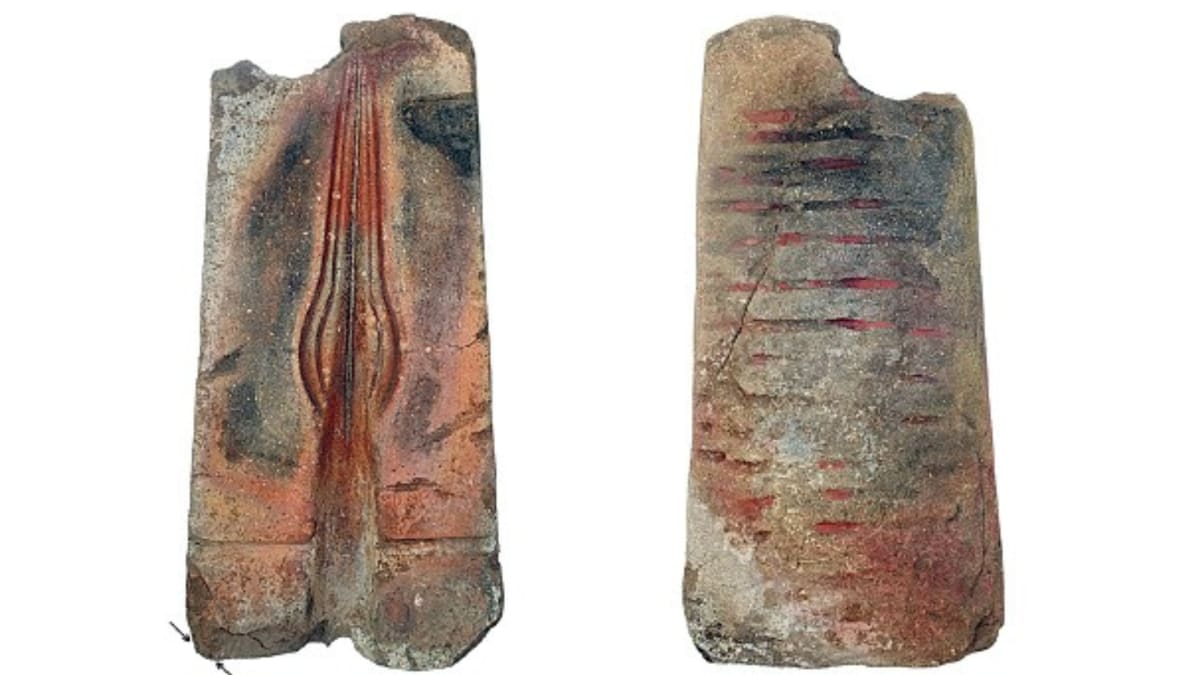
J. Tomanec noticed the rectangular slab poking out of the ground near his barn in 2007. He had no idea the seemingly dull rock was actually half of a sophisticated spearhead mold dating back to 1350 B.C.
The 9-inch-long mold was carved from volcanic rock called rhyolite tuff. Scientists now believe it traveled over 120 miles from northern Hungary to southern Moravia, where it produced dozens of identical bronze spearheads.
"This is the best preserved and most perfect casting mold for a bronze spearhead in Central Europe," said Milan Salaš, an archaeologist at the Moravian Museum. His team published their findings in the journal Archeologické Rozhledy in 2025.
The mold belonged to the Urnfield culture, which emerged around 3,400 years ago. Heavy scorching and heat marks show it was used repeatedly, like an ancient assembly line for weapons.
X-ray fluorescence scans revealed traces of bronze still embedded in the stone. The two halves of the mold were held together with copper wire during the casting process, creating spearheads with distinctive ribs along the blade and sharp ridges on the socket.
Why This Inspires
This discovery shows how innovation shaped ancient societies in ways that still echo today. The ability to mass-produce identical weapons didn't just change warfare. It strengthened trade networks and political power across the Carpathian Basin.
Tomanec donated the stone to the Moravian Museum in 2019, where researchers spent years analyzing its composition. They traced the volcanic rock to the Bükk Mountains in Hungary, where a massive eruption 20 million years ago created perfect material for toolmaking.
"This interesting case shows how long the journey from the discovery of a unique archaeological object to its scientific evaluation can sometimes be," said study co-author Antonín Přichystal, a geology professor at Masaryk University.
The find reminds us that history isn't always locked away in museums or buried deep underground. Sometimes it's right beneath our feet, waiting for someone to look twice at an ordinary gray stone that turns out to be extraordinary.
##
More Images




Based on reporting by Live Science
This story was written by BrightWire based on verified news reports.
Spread the positivity!
Share this good news with someone who needs it