4 Astronauts Safe After ISS's First Medical Evacuation
Four astronauts splashed down safely in the Pacific Ocean after the International Space Station's first-ever medical evacuation in its 25-year history. While one crew member faced a health concern that couldn't be treated in space, everyone is stable and the mission showcased how well space agencies respond to unexpected challenges.
Four astronauts are safely home after making history for a reason no one wanted but everyone handled brilliantly.
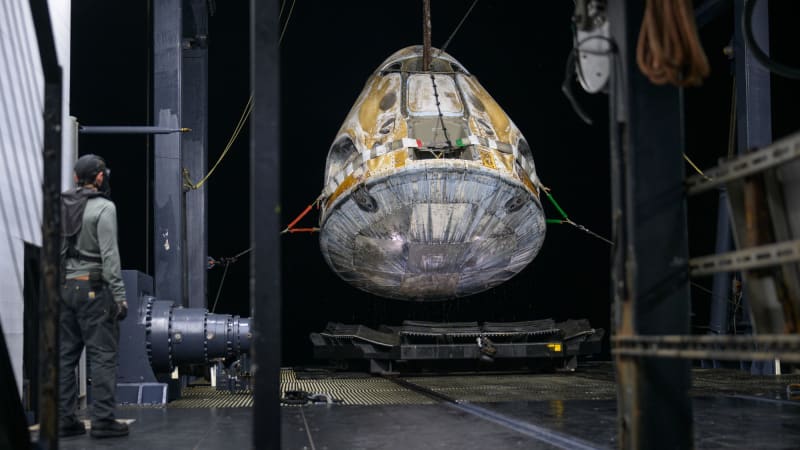
NASA's Mike Fincke and Zena Cardman, Japan's Kimiya Yui, and Russian cosmonaut Oleg Platonov splashed down in the Pacific Ocean on January 15 at 3:41 a.m. EST. Their SpaceX Crew Dragon capsule landed off the coast of San Diego, ending the International Space Station's first medical evacuation in its entire history.
The crew launched on August 1, 2025, for what should have been a standard six-month mission. But on January 7, NASA canceled a scheduled spacewalk due to a medical concern with one crew member.
Two days later, mission control made the call to bring everyone home early. NASA hasn't identified which astronaut experienced the health issue or shared specific details, respecting medical privacy. What they have emphasized: the crew member is stable, and this wasn't an emergency situation.
"It is not an emergency de-orbit," NASA Administrator Jared Isaacman told reporters. "The capability to diagnose and treat this properly does not live on the International Space Station." The decision reflected careful planning rather than panic.
The mission lasted 167 days, with 165 spent aboard the ISS. For Cardman and Platonov, it marked their first journey to space. Yui completed his second flight, bringing his total space time to 309 days, while veteran Fincke logged his fourth mission and now has 549 days off Earth.
"It's so good to be home!" Commander Cardman said after splashdown. "With deep gratitude to the teams that got us there and back."
Their early departure left just three people on the station: NASA's Christopher Williams and cosmonauts Sergey Kud-Sverchkov and Sergei Mikayev. The skeleton crew will manage operations until SpaceX's Crew-12 arrives on February 15.
NASA officials say they're confident in the arrangement. Williams is trained to handle every task on the American segment by himself, and mission control teams around the world can operate much of the station remotely.
The Bright Side
This historic evacuation actually demonstrates how far space travel has come. The fact that agencies could identify a medical issue, make a calculated decision, and safely return four people from 250 miles above Earth in just over a week shows remarkable capability.
Space agencies train constantly for scenarios like this, and when the moment came, every system worked exactly as designed. The crew remained calm and professional. Ground teams coordinated seamlessly across NASA, SpaceX, JAXA, and Roscosmos.
Most importantly, everyone came home safe. In the early days of spaceflight, a medical emergency aboard a space station would have presented terrifying challenges with far fewer options.
Today, we have multiple spacecraft, constant communication, and the ability to bring astronauts home within hours if needed. That's not just a win for this mission—it's a win for every future astronaut who'll venture beyond Earth knowing help is always within reach.
More Images


Based on reporting by Google News - Science
This story was written by BrightWire based on verified news reports.
Spread the positivity! 🌟
Share this good news with someone who needs it