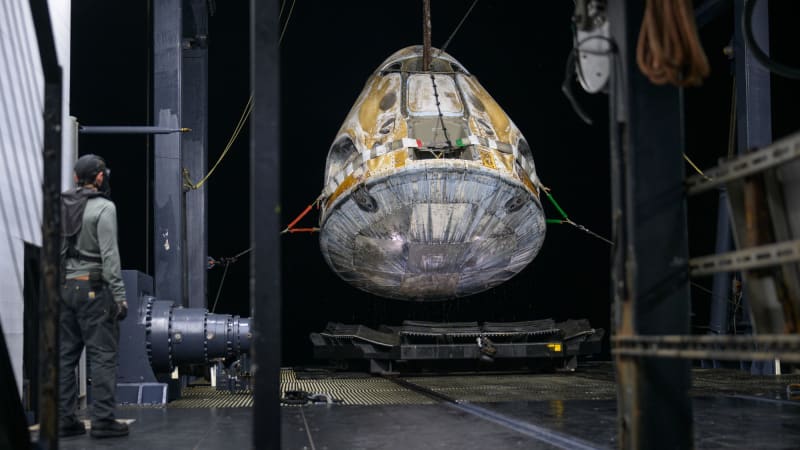
NASA Safely Returns ISS Crew in First Medical Evacuation
After 25 years of continuous operations, the International Space Station just demonstrated its emergency response capabilities for the first time. Four astronauts returned home safely after medical concerns prompted an early departure, showcasing how space agencies prioritize crew health above all else.
Four astronauts splashed down safely in the Pacific Ocean Thursday after NASA made the unprecedented decision to bring them home early from the International Space Station. The crew's early return marks the first medical evacuation in the ISS's 25-year history, highlighting how seriously space agencies take astronaut health.
The Crew-11 team had been aboard the ISS since August and was scheduled to stay until mid-February. However, undisclosed medical concerns prompted NASA to bring them home roughly two months ahead of schedule, demonstrating the agency's commitment to crew safety over mission timelines.
Dr. James Polk, NASA's chief health and medical officer, explained that "lingering risk" and questions about the diagnosis made the early return necessary. The agency declined to share specific details about the medical situation out of respect for astronaut privacy, a policy that protects crew members' personal health information.
The successful operation proves that decades of planning and preparation pay off when unexpected situations arise. NASA executed its contingency protocols smoothly, showing that astronaut wellbeing remains the top priority even 400 kilometers above Earth.
The Bright Side
This historic event actually reinforces confidence in space operations. For 25 years, the ISS has hosted hundreds of astronauts and thousands of experiments without requiring a single medical evacuation, an impressive safety record for one of humanity's most ambitious projects.
The fact that NASA could identify a health concern, make a quick decision, and execute a safe return demonstrates the maturity of space travel systems. The station continues operating normally, with international partners from Russia, Europe, Japan, and Canada maintaining humanity's continuous presence in orbit since November 2000.
The swift action also shows how far space medicine has come. Modern monitoring systems can detect health issues early, and return procedures are reliable enough that NASA can prioritize caution without declaring an emergency.
This successful response sets a reassuring precedent as space agencies plan longer missions to the Moon and eventually Mars.
More Images



Based on reporting by Punch Nigeria
This story was written by BrightWire based on verified news reports.
Spread the positivity! 🌟
Share this good news with someone who needs it