40,000-Year-Old Bird Carvings Found in German Cave
Archaeologists in Germany just discovered tiny bird figurines carved from mammoth ivory 40,000 years ago, offering a stunning window into how early humans saw their ice age world. The intricate artworks suggest these ancient people had cognitive abilities that helped them thrive when other groups disappeared.
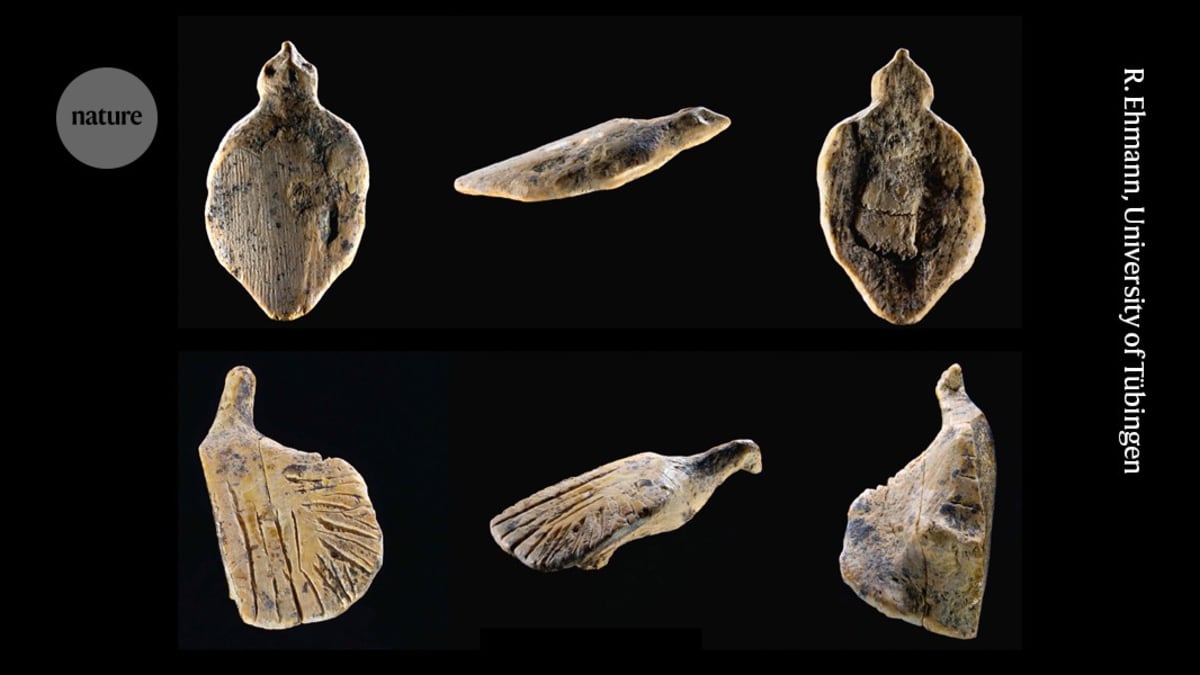
Deep inside Hohle Fels Cave in southwestern Germany, archaeologists have uncovered two delicate bird figurines that our ancestors carved from mammoth ivory 40,000 years ago. One shows a bird in flight with outstretched wings, while the other rests peacefully.
The tiny carvings, only 2 to 3 centimeters long, depict ptarmigans, relatives of modern pheasants. Researchers unveiled the treasures at the Museum of Prehistory and Ice Age Art in Blaubeuren, Germany, this week alongside fragments of flutes made from vulture bones.
"We can almost look through the eyes of the Aurignacian people and see how they viewed the environment around them," says Amy Clark, a palaeolithic archaeologist at Harvard University. The Aurignacian people were among Europe's earliest humans to leave behind depictions of their world.
Hohle Fels has become an archaeological goldmine over the past three decades. The cave previously yielded the world's oldest human figurine, the famous Venus of Hohle Fels, and the earliest known musical instruments, all crafted with remarkable skill.
Archaeologist Nicholas Conard, who has led excavations at the site since the late 1990s, believes these artworks reveal something profound. His team has also discovered figurines of waterfowl, horses, otters, and a tiny lion man, all carved from mammoth ivory in the same chamber near the cave entrance.
The artistic sophistication displayed in these caves marks a shift in human culture that may explain why these hunter-gatherers flourished in ice age Europe while other groups vanished. Conard now plans to collect ancient DNA from the cave sediments to test this theory.
Why This Inspires
These ancient artworks prove that creativity and expression have always been part of what makes us human. The fact that our ancestors took time to craft beautiful objects while surviving harsh ice age conditions shows an unbreakable human spirit.
The discoveries also remind us that humans have always found ways to document and celebrate the world around them. These tiny birds, preserved for 40,000 years, still speak to us today about wonder, observation, and the drive to create meaning.
Today's archaeological teams work painstakingly, excavating just 2 to 3 centimeters of soil at a time and sieving every grain through fine mesh to ensure no treasures are missed. One researcher spotted the first new bird figurine while searching for microfossils, instantly recognizing its shape despite a missing wing.
The cave itself offers modern researchers respite from Germany's summer heat, maintaining a constant cool temperature of 9 to 10 degrees Celsius. For 40,000 years, Hohle Fels has protected these precious glimpses into humanity's earliest artistic achievements, and it likely holds many more secrets waiting to be discovered.
More Images




Based on reporting by Nature News
This story was written by BrightWire based on verified news reports.
Spread the positivity!
Share this good news with someone who needs it

%2Fhttps%3A%2F%2Ftf-cmsv2-smithsonianmag-media.s3.amazonaws.com%2Ffiler_public%2F75%2F34%2F75342ac4-0f4b-4563-a63d-3012f0feae31%2Fgettyimages-2293659629.jpg)
%2Fhttps%3A%2F%2Ftf-cmsv2-smithsonianmag-media.s3.amazonaws.com%2Ffiler_public%2Fef%2F5b%2Fef5b9055-962e-483d-b70c-ed912c2a6481%2Fviikinkaikainen_rahakatko.jpeg)