
430,000-Year-Old Wooden Tools Rewrite Human History
Scientists in Greece have discovered the oldest known hand-held wooden tools ever found, pushing back our understanding of human innovation by 40,000 years. The breakthrough reveals our ancestors were more sophisticated toolmakers than we ever imagined.
Deep in the hills of Greece, researchers have uncovered wooden tools shaped by human hands 430,000 years ago, rewriting what we know about our ancestors' ingenuity.
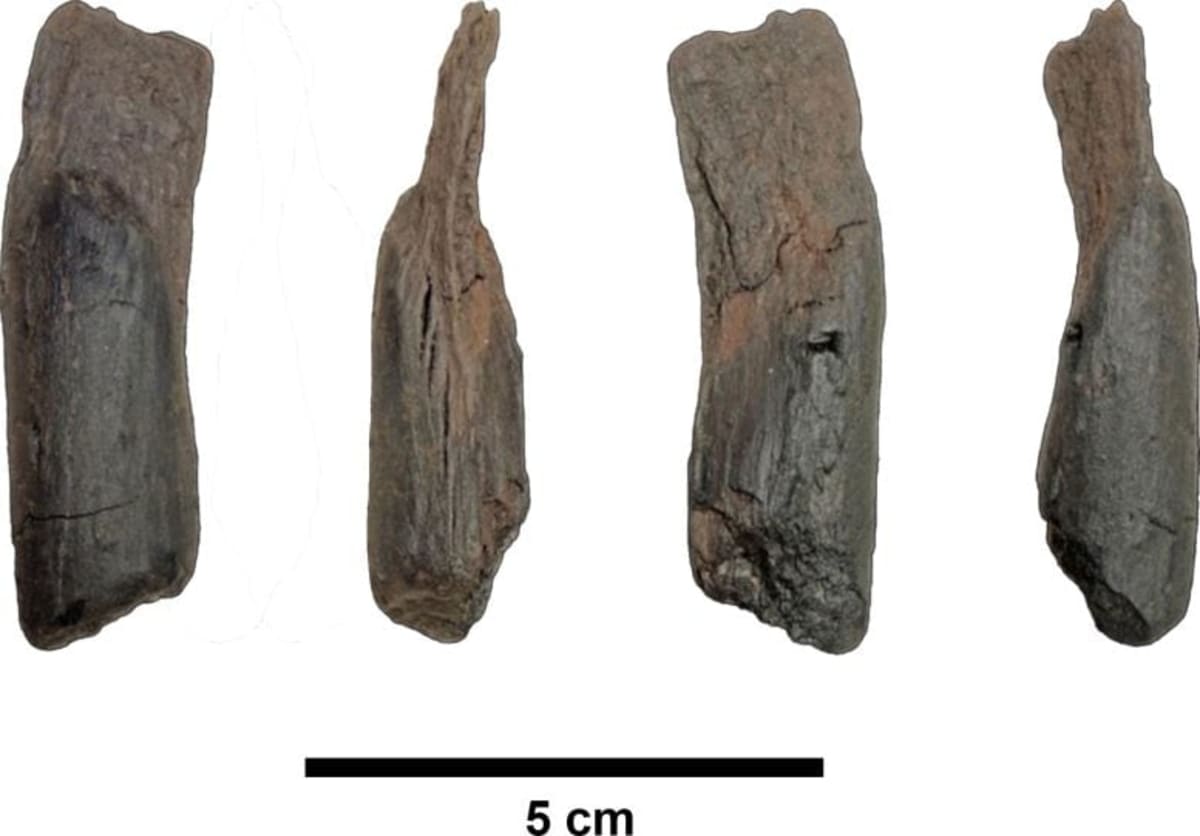
An international team from Germany, the UK, and Greece made the discovery at Marathousa 1, an ancient lakeside site in central Greece. The find includes two carefully crafted wooden objects, one made from alder and another from willow or poplar, that early humans shaped and used during the Middle Pleistocene period.
Professor Katerina Harvati from the University of Tübingen and Dr. Annemieke Milks from the University of Reading led the research. Using microscopic analysis, they found clear marks of chopping and carving on the wooden fragments, proving these weren't random sticks but deliberately crafted tools.
The larger fragment, carved from an alder trunk, shows both shaping marks and wear patterns. Scientists believe it may have been used for digging near the lake or stripping bark from trees, making it a versatile multipurpose tool.
The discovery extends the known timeline of hand-held wooden tools by at least 40,000 years. Previous finds from the UK, Zambia, Germany, and China were all more recent than these Greek treasures.
"The Middle Pleistocene was a critical phase in human evolution, during which more complex behaviors developed," Harvati explains. This period, spanning from 774,000 to 129,000 years ago, saw our ancestors taking major leaps in problem-solving and creativity.
The site itself tells a fascinating story of ancient life. Stone tools and elephant remains suggest the location served as a butchering area where early humans processed their food. Even more intriguing, the team found marks from large carnivores, possibly bears, on nearby wood, showing fierce competition between humans and predators.
"Unlike stones, wooden objects need special conditions to survive over long periods," says Milks. The exceptional preservation at Marathousa 1 has given us a rare window into everyday life nearly half a million years ago.
The Ripple Effect
This discovery does more than add a chapter to history books. It shows that human innovation and adaptability stretch back further than we thought, reminding us that problem-solving and creativity are deeply embedded in who we are as a species.
The find also opens new possibilities for future discoveries. If wooden tools survived this long in Greece, similar treasures might be waiting at other well-preserved sites around the world.
The research, funded by the European Research Council and German Science Foundation, proves that collaboration across borders can unlock secrets buried for hundreds of thousands of years.
These ancient wooden tools remind us that humans have always been innovators, finding creative solutions to challenges using the resources around them.
More Images


Based on reporting by Google News - Scientists Discover
This story was written by BrightWire based on verified news reports.
Spread the positivity!
Share this good news with someone who needs it