4.6 Billion-Year-Old Meteorite Now on Display in Utah
A fist-sized space rock that exploded over Salt Lake City in 2022 is now greeting visitors at the University of Utah, offering a rare glimpse of the oldest thing most people will ever witness. Only 70 meteorites in history have been tracked from space to ground like this one.
On the morning of August 13, 2022, a thunderous boom shook Salt Lake City as a 4.56 billion-year-old visitor from the asteroid belt announced its arrival with a spectacular fireball.
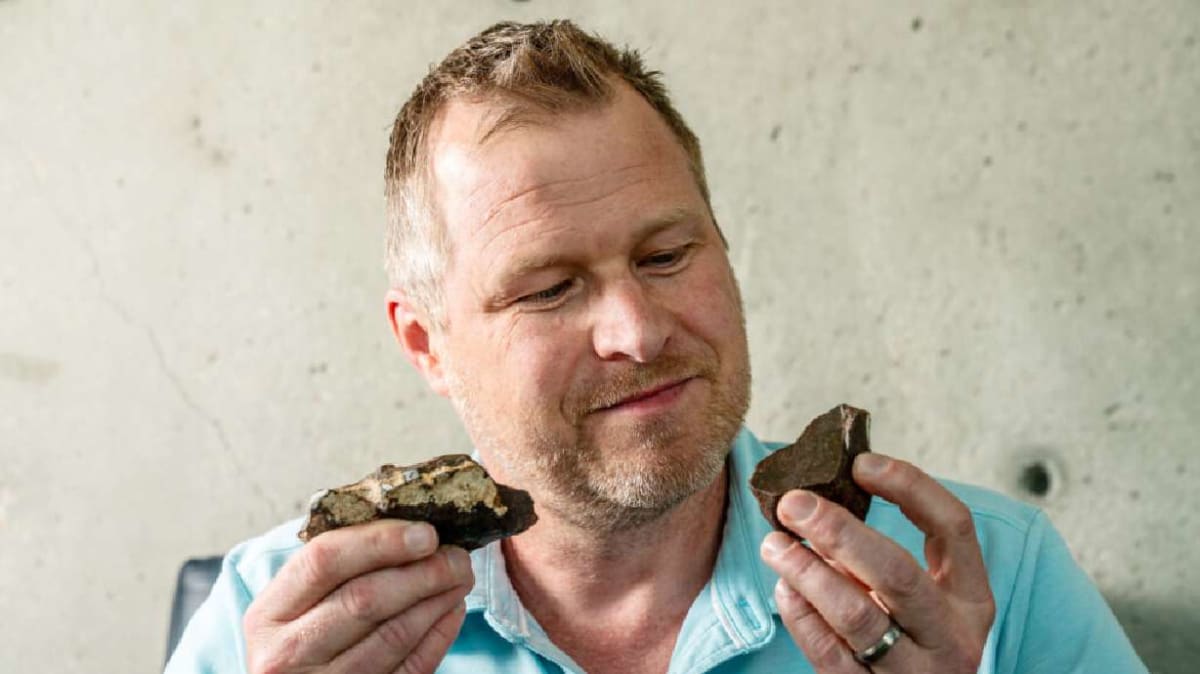
James Karner had spent years traveling to Antarctica hunting meteorites, but he'd never actually witnessed one fall. That changed when he heard the explosion from his own driveway, joining thousands of Utahns who experienced the rare cosmic event.
The meteorite crashed into the Great Salt Lake's south shore, captured on webcams and Doppler radar. Even Governor Spencer Cox heard the boom during his morning run.
Now, the largest fragment from that day, a 774-gram piece roughly the size of a fist, is on public display for the first time at the University of Utah's Sutton Building. It's only the second "fall" meteorite in Utah's history, meaning people actually witnessed its descent.
Arizona meteorite hunter Robert Ward discovered and donated the centerpiece fragment to the university. Dozens of additional pieces were recovered, totaling 3.2 kilograms, though Karner believes more fragments still lie hidden in the lake bed and surrounding salt flats.
The meteorite itself is an "ordinary chondrite," sharing composition with 80% of all meteorites. But what makes it extraordinary is what scientists learned by tracking its journey.
Why This Inspires
Using weather radar and eyewitness accounts, researchers calculated the meteorite's exact path backward through space to its home in the asteroid belt. This kind of precise tracking has only happened about 70 times in human history, allowing scientists to match specific space rocks to their asteroid families.
The exhibit includes video of the fireball streaking across the Midwest and Mountain States, plus interpretive materials explaining the science behind this once-in-a-lifetime event. It sits in the Department of Geology and Geophysics' main office, welcoming anyone curious about the universe.
Karner points out something profound: this unassuming rock is older than the dinosaur bones in nearby museums by billions of years. It formed when our solar system was still young, traveled through space for eons, and chose Utah for its final landing.
The event connected thousands of people who heard those booms, giving them a shared memory of touching the cosmic unknown.
More Images




Based on reporting by Google News - Science
This story was written by BrightWire based on verified news reports.
Spread the positivity!
Share this good news with someone who needs it