5 Natural Wonders That Scientists Finally Explained
From boiling rivers in Peru to rocks that move on their own in Death Valley, nature's most baffling mysteries are finally being solved. These discoveries prove that curiosity and persistence can unlock even the planet's strangest secrets.
For generations, these places seemed impossible: rivers hot enough to scald, boulders gliding across deserts, and islands that float. Scientists spent decades puzzling over them, locals wove legends around them, and travelers journeyed thousands of miles just to witness them.
Now, researchers have cracked some of nature's most stubborn riddles, and the real explanations are just as magical as the myths.
Deep in the Peruvian Amazon, the Shanay-Timpishka river reaches temperatures near 90°C, hot enough to boil small animals that fall in. For years, scientists couldn't explain it because no volcano exists nearby. Indigenous communities always knew it was special, calling it "boiled with the heat of the sun" and treating it as sacred.
Researchers finally discovered that geothermal faults deep underground heat the water as it rises. The river's sheer scale still astonishes experts who study it.
In Death Valley's Racetrack Playa, rocks weighing hundreds of pounds left mysterious trails across the desert floor. No one had ever witnessed them move, sparking wild theories about magnetic fields and supernatural forces.
The answer came in 2014 when patient scientists captured it on camera. Rare winter ice forms thin sheets around the rocks, and gentle winds push them slowly across the muddy surface when the ice melts. Even knowing how it works, watching it happen feels like witnessing magic.
Bolivia's Salar de Uyuni creates reflections so perfect that earth and sky become indistinguishable. The salt flat is so precisely level that space agencies use it to calibrate satellite equipment from orbit.
In Turkmenistan, the Darvaza Gas Crater has burned continuously since 1971 when Soviet engineers accidentally drilled into a gas cavern. They lit it on fire expecting it to burn out in days, but more than 50 years later, the "Door to Hell" still blazes in the desert night.
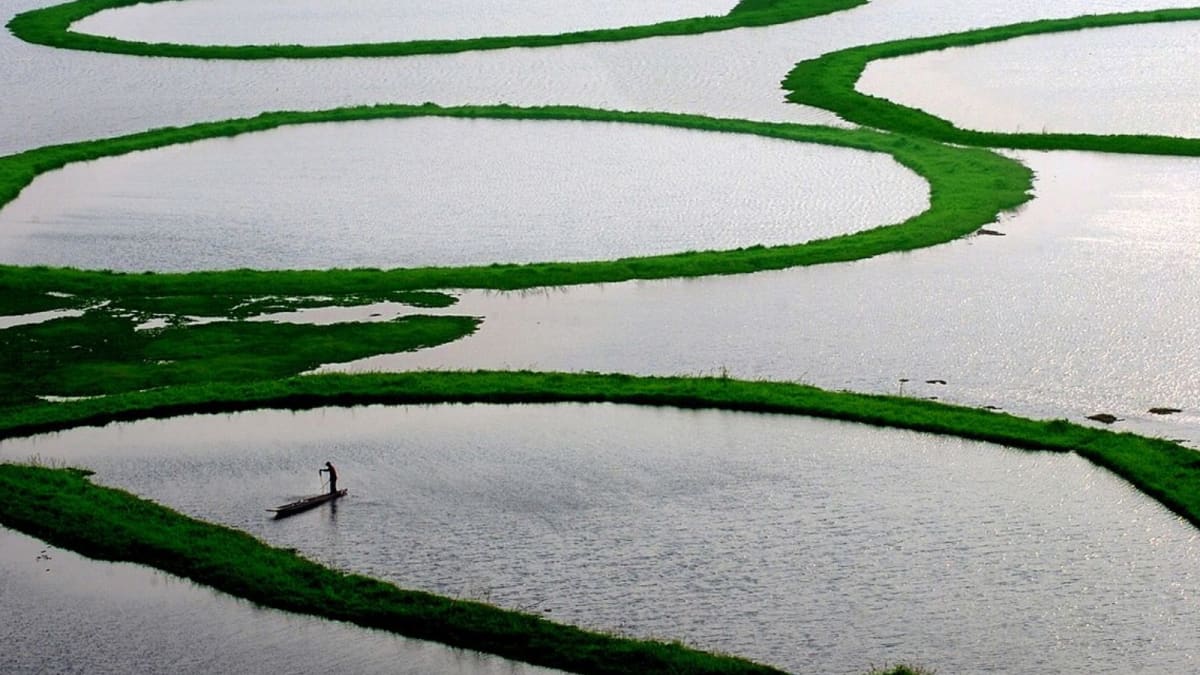
India's Loktak Lake in Manipur features floating islands called phumdis, masses of vegetation and soil that drift across the water. Some are large enough to support homes and wildlife, including the rare Sangai deer that lives nowhere else on Earth. The lake contains the world's only floating national park.
Why This Inspires
These discoveries show what happens when human curiosity meets nature's mysteries. Scientists spent decades studying, observing, and testing theories until they found answers. Local communities preserved these places through generations, treating them with respect long before the world understood their significance.
Each solved mystery opens doors to new questions and possibilities. The geothermal systems heating Peru's boiling river might help us understand renewable energy. The perfect flatness of Bolivia's salt flats advances satellite technology that connects our world.
Most importantly, these places remind us that Earth still holds wonders worth protecting and exploring.
Based on reporting by Indian Express
This story was written by BrightWire based on verified news reports.
Spread the positivity!
Share this good news with someone who needs it