50 Nations Meet in Uzbekistan to Challenge Islam Stereotypes
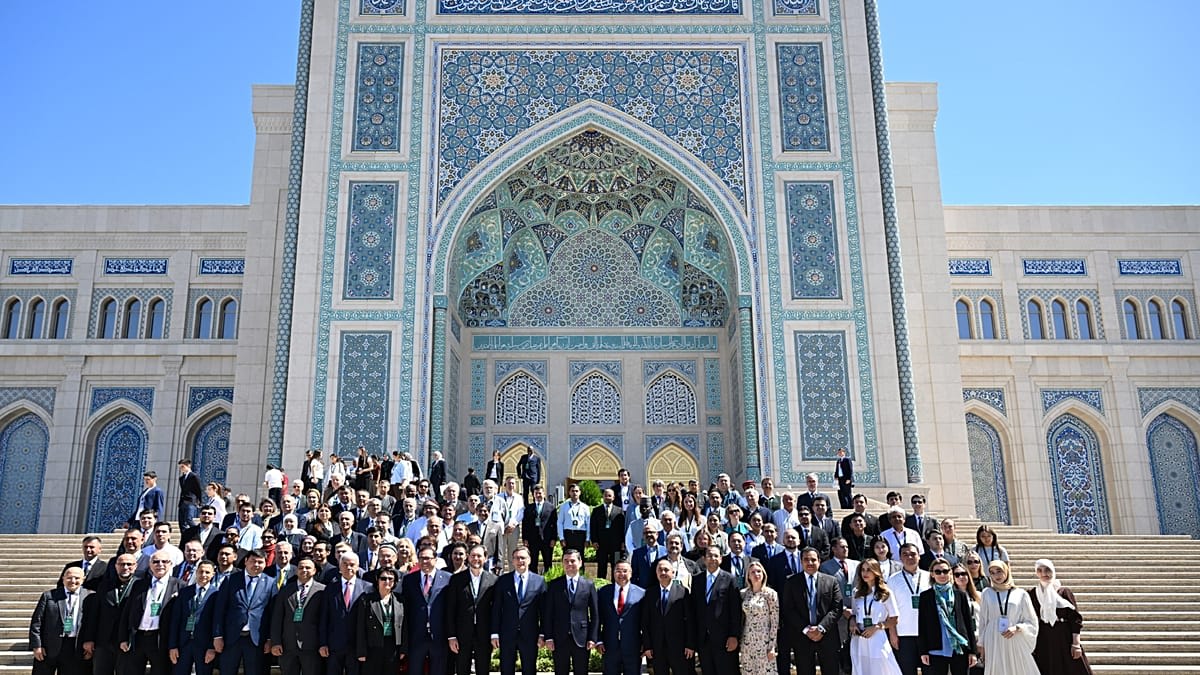
Nearly 300 media professionals from 50 countries gathered in Tashkent to discuss how better storytelling and historical knowledge can combat Islamophobia. The forum revealed centuries of scientific exchange between Islamic civilization and Europe that most people never learned about.
Media professionals, researchers, and filmmakers from 50 countries just proved that fighting misinformation starts with better conversation.
The International Media Forum in Tashkent, Uzbekistan brought together nearly 300 people to tackle a tough question: How can accurate knowledge replace harmful stereotypes about Islamic civilization? Instead of arguing, they chose education.
Firdavs Abdukhalikov, director of the Islamic Civilization Center, set the tone early. "The most effective response to Islamophobia is enlightenment," he said. "The strongest response to misconceptions is truth."
But the forum didn't just point fingers at Western media. Turkish publisher Hasanbey Kondu challenged everyone in the room, including Muslims themselves, to look inward. "As a Muslim, how are you presenting Islam? Perhaps we need to look first at our own shortcomings," he said.
The discussions revealed something most Europeans never learned in school. Italian researcher Dr. Mario Taddei, a Leonardo da Vinci specialist, described what he calls the "Knowledge Silk Road," showing how scientific ideas traveled from China through Islamic centers into Renaissance Europe. "We believe that we invented everything, but it's not true," Taddei explained, citing medieval engineers Al-Muradi and Al-Jazari.
These connections aren't just ancient history. In April 2025, the EU and Central Asia held their first joint summit in Samarkand, upgrading to a strategic partnership. Euronews CEO Claus Strunz admitted Europe had long ignored the region except for disaster coverage or romanticized Silk Road stories. "That was arrogant and blind then," he said.
Sherzod Asadov, press secretary to Uzbekistan's president, made clear that foreign journalists weren't being asked to write positive puff pieces. "We invite you to see it with your own eyes, talk to people, ask questions and draw your own conclusions," he told them.
The forum showcased new ways to share these stories. Publishers, filmmakers, and tech specialists presented books, documentaries, digital avatars, and immersive platforms bringing historical figures to life. Hungarian media executive Alpar Kato described it as bringing together "something modern and an old, traditional story."
The Ripple Effect
This gathering connects to a bigger shift happening across Europe and Central Asia. When President Shavkat Mirziyoyev addressed the UN in 2017, rejecting attempts to link Islam with violence, it led to a 2018 resolution on "Enlightenment and Religious Tolerance." Now that idea is translating into real media partnerships and cultural exchange.
The forum proved that combating stereotypes doesn't require choosing between honest journalism and respectful dialogue. Independent reporting and deeper understanding can work together, especially when journalists show up, ask real questions, and give audiences enough information to think for themselves.
Knowledge shared across borders has always made the world better, from medieval engineers to modern media forums.
Based on reporting by Euronews
This story was written by BrightWire based on verified news reports.
Spread the positivity!
Share this good news with someone who needs it