50 Years of Data Shows Australian Whales Thriving
Half a century of tracking southern right whales off Australia's coast reveals these once-hunted giants are making a remarkable comeback. Scientists have documented their recovery and changing behaviors in protected waters, offering hope for endangered marine life worldwide.
For 50 years, researchers have been watching one of nature's greatest comeback stories unfold along Australia's southern coastline. Southern right whales, once hunted to near extinction, are returning each winter to breed in the warm waters between Fremantle and Ceduna.
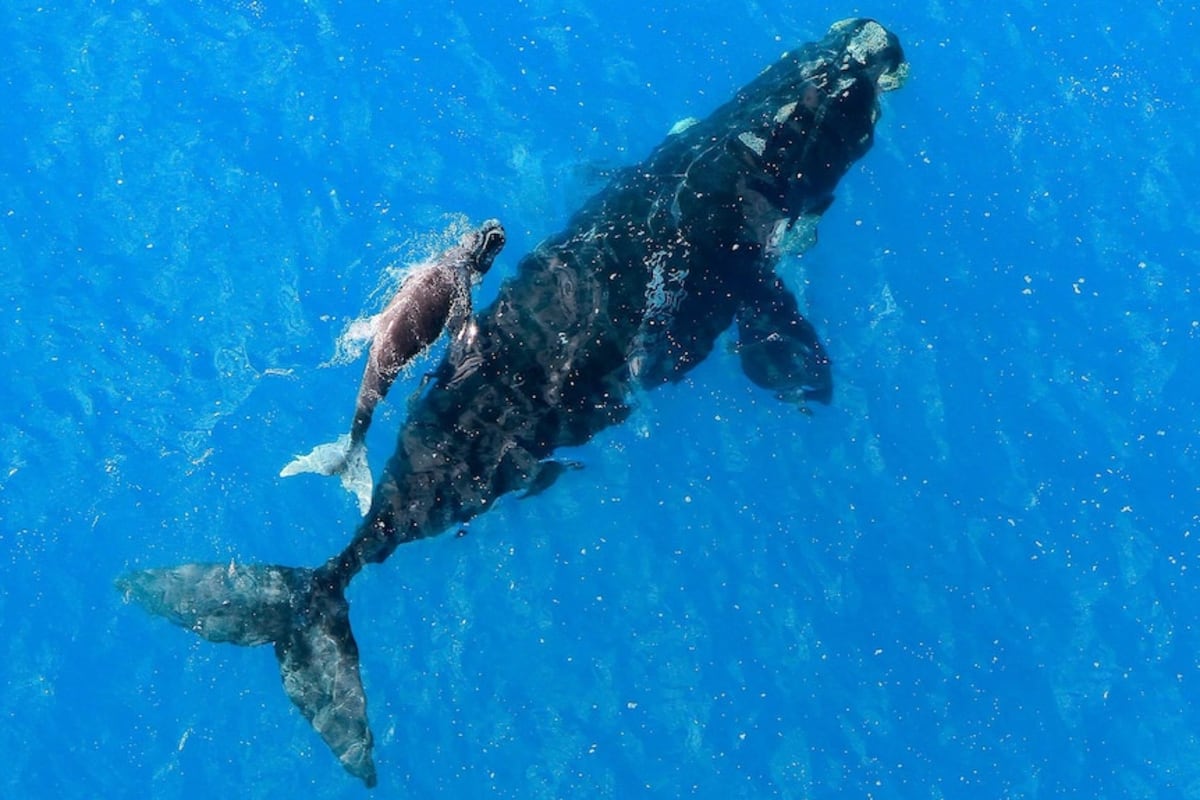
This year's aerial census counted 520 whales, including 235 mother-calf pairs, along the Great Australian Bight. While that's slightly lower than last year's count, it represents an incredible recovery from the devastating impacts of 20th century whaling that nearly wiped out the species entirely.
Dr. Joshua Smith from Murdoch University, who led this year's survey, has been tracking these gentle giants since 2018. His team flies over known breeding grounds each winter, documenting every whale they spot from the air.
The long-term data is revealing fascinating changes in whale behavior. Scientists discovered that breeding cycles are extending from every three years to every five years, likely because ocean warming is affecting the krill populations these whales depend on for food.
Dr. Claire Charlton, chief scientist with the Australian Right Whale Research Program, found encouraging news at the Head of the Great Australian Bight Commonwealth Marine Park. Despite overall lower numbers, the protected marine park hosted 61 mother-calf pairs, making up more than 30 percent of the region's total.
"It's a conservation success story for the marine park," Charlton said. The concentration of breeding pairs in protected waters shows that marine conservation efforts are working.
The Bright Side
The whale census that began in 1976 started as a hopeful check on whether these majestic creatures could recover. Today, researchers are no longer asking if southern right whales will survive, but rather how to help them thrive in changing oceans.
Protected areas like the Great Australian Bight Marine Park and the Yalata Indigenous Protected Area are proving crucial to whale recovery. These sanctuaries provide safe havens where mothers can nurse their calves without disturbance.
The research also helps scientists understand how climate change affects marine ecosystems. By tracking breeding patterns over decades, they can see how warming waters impact the entire food chain, from tiny krill to massive whales.
Popular viewing spots like Point Ann and Israelite Bay in Western Australia continue to attract healthy whale populations each year. These traditional breeding grounds show that whales remember and return to safe places generation after generation.
Five decades of careful monitoring shows what's possible when humans commit to protecting wildlife for the long haul.
More Images


Based on reporting by ABC Australia
This story was written by BrightWire based on verified news reports.
Spread the positivity!
Share this good news with someone who needs it