500 Ghana Students Graduate After Building Irrigation Robots
Students as young as 10 built smart irrigation systems, fire-fighting robots, and security alarms after a 12-week tech training program. The initiative has now trained over 2,300 young innovators across Ghana, with 70% being girls.
Five hundred students across Ghana just proved that age is no barrier to innovation, building everything from automated irrigation systems to fingerprint-activated car starters in just three months.
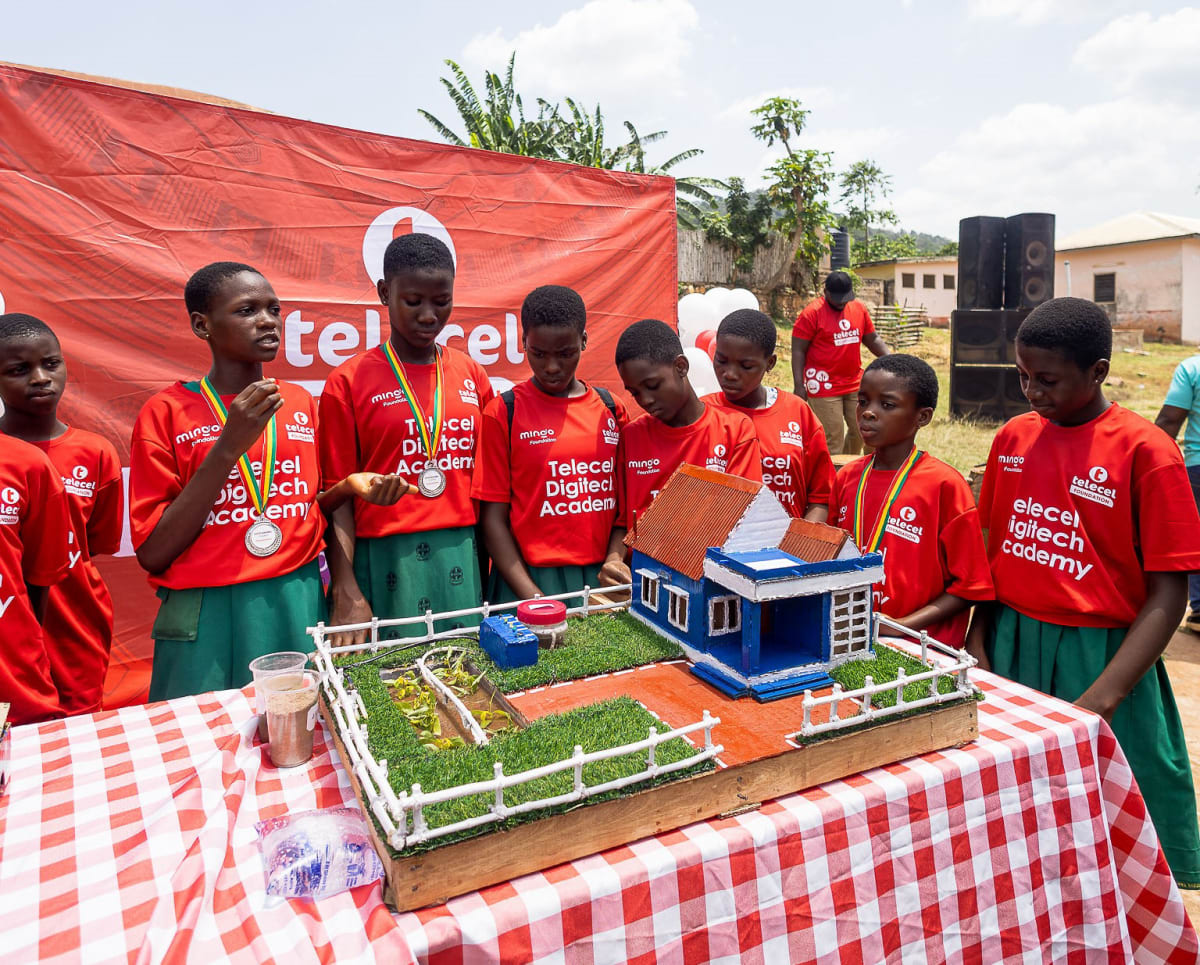
The Telecel DigiTech Academy graduated its third cohort of upper primary and junior high students from five regions after teaching them robotics, coding, web design, and Internet of Things applications. The 12-week after-school program partnered with Ghana Education Service and the National STEM Centre to bring hands-on tech education to communities often overlooked by such initiatives.
At the graduation ceremony in Peki Blengo, students showcased projects solving real problems in their communities. One team created a smart cocoa-seed drying system for local farmers. Another built a robot that detects forest fires and alerts authorities through SMS.
The creativity extended across all five regions. In Bolgatanga, students designed a drink dispenser using Radio Frequency Identification technology. Jirapa graduates presented a Bluetooth-controlled grass-cutting robot and developed an app for their local Fugu Marketplace.
Vincent Adzagbenu, headteacher at Peki Blengo EP JHS, watched his students transform over three months. "Our students are now thinking differently," he said. "They are applying what they learn to solve real problems around them, and that is the kind of education that truly prepares them for the future."
The program doesn't just train students and move on. Telecel Foundation trains local teachers to continue passing these skills forward, creating a sustainable pipeline of tech-literate youth in rural Ghana.
The Ripple Effect
Since launching in Ho in 2024, DigiTech Academy has reached more than 2,300 students across 13 regions with a 96% graduation rate. The initiative deliberately focuses on girls in STEM, achieving 70% female participation across all cohorts.
That gender balance matters in a field where women remain underrepresented globally. By starting young and making technology accessible in local languages and contexts, the program is reshaping who gets to be an innovator.
The projects students built address genuine community needs. The automated irrigation system helps farmers water crops efficiently in regions where water scarcity threatens harvests. The smart rain-detection system gives advance warning to protect outdoor goods and activities.
Komla Buami, Director of External Affairs at Telecel Ghana, emphasized the program's core belief. "These projects show that talent exists everywhere and what matters is creating access and giving students room to experiment, build and discover their own abilities."
Rita Agyeiwaa Rockson, Head of Foundation at Telecel Ghana, confirmed the academy will expand into more districts with deeper training in robotics, artificial intelligence, and advanced web design.
When 10-year-olds in rural Ghana can build robots that fight fires and apps that support local markets, the future of African innovation looks remarkably bright.
Based on reporting by Myjoyonline Ghana
This story was written by BrightWire based on verified news reports.
Spread the positivity!
Share this good news with someone who needs it