500-Million-Year-Old Fossil Fills Evolution Gap
A forgotten fossil in the Smithsonian's collection just revealed a missing chapter in animal evolution. Scientists rediscovered a thumb-sized creature that bridges a mysterious 12-million-year gap in Earth's history.
A tiny fossil sat in storage for 62 years before scientists realized they were looking at something extraordinary.
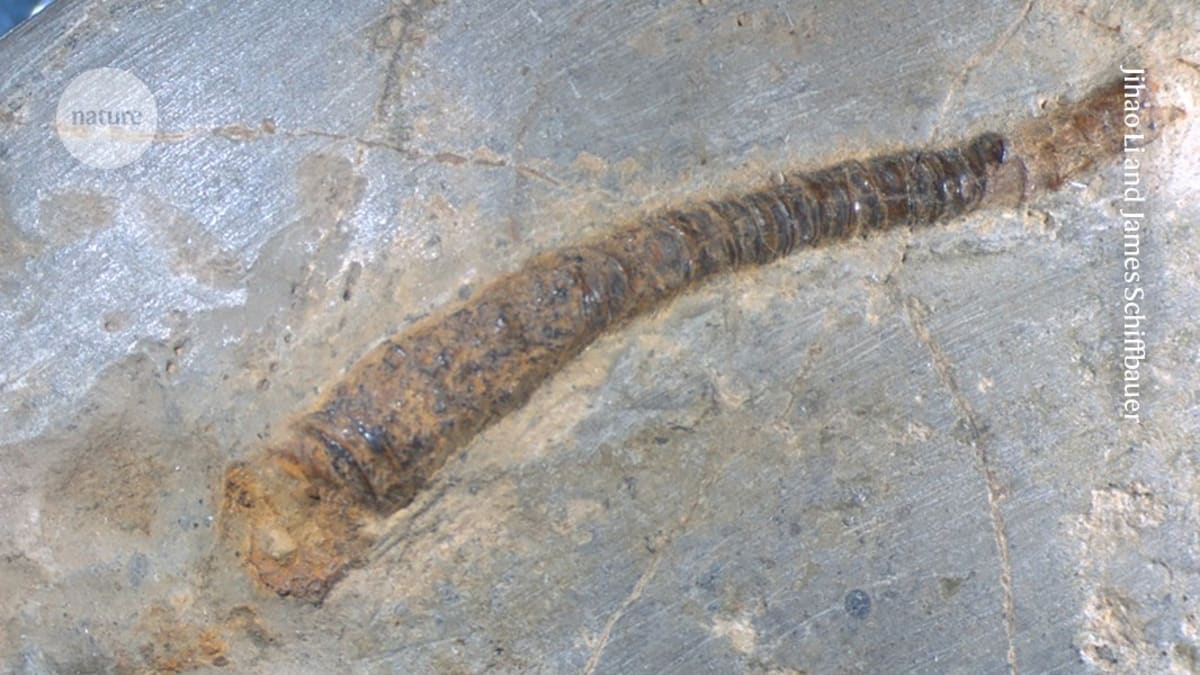
In 1962, a geologist near Québec found a thumb-sized creature preserved in black shale and sent it to the Smithsonian. The specimen was cataloged and forgotten until researchers took a second look with modern tools.
What they found rewrites part of evolutionary history. The 500-million-year-old arthropod, named Magnicornaspis garwoodi, comes from one of the most mysterious periods in ancient life.
Between 497 and 485 million years ago, fossils became strangely scarce. This period, called the Furongian, sits between two major evolutionary events and has puzzled scientists for decades.
The discovery suggests that life during this time wasn't actually sparse. Scientists may have simply been looking in the wrong places.
Magnicornaspis belongs to an early group of arthropods with segmented bodies and head shields. This particular specimen sports large forward-pointing spines near the front of its head, a defensive feature scientists thought appeared millions of years later.
The fossil came from Québec's Rivière-du-Loup Formation, a rock deposit not previously known for preserving delicate creatures. When researchers examined it with scanning electron microscopy, they found calcium phosphate and carbon-rich traces that point to exceptional preservation.
This means the formation might hold many more soft-bodied fossils waiting to be discovered.
Why This Inspires
The breakthrough didn't happen in a remote dig site. It happened in a museum basement with a specimen that had been sitting on a shelf since John F. Kennedy was president.
Julien Kimmig from Germany's Karlsruhe Institute of Technology explained that museum collections contain enormous quantities of understudied material from past expeditions. Revisiting these collections with modern techniques can fundamentally reshape our understanding of ancient ecosystems.
The species was named after paleontologist Russell Garwood, whose work has helped trace how spiders, scorpions, and their relatives evolved. Co-author Russell Bicknell noted that paleontologists had wondered whether the apparent gap in diversity was linked to ocean chemistry or climate changes.
The answer might be simpler: researchers weren't examining the right kinds of rocks.
Sometimes the biggest discoveries are already in our hands, just waiting for someone to look again with fresh eyes.
More Images


Based on reporting by Google: fossil discovery
This story was written by BrightWire based on verified news reports.
Spread the positivity!
Share this good news with someone who needs it