5.5 Million Bees Thrive in NY Cemetery for 100+ Years
Scientists discovered one of the world's largest wild bee colonies thriving beneath a New York cemetery since the early 1900s. The 5.5 million mining bees are pollinating nearby orchards and proving that old cemeteries can be vital urban wildlife sanctuaries.
A casual walk to work led a Cornell researcher to discover 5.5 million wild bees living beneath an Ithaca, New York cemetery, quietly pollinating the region's apple orchards for over a century.
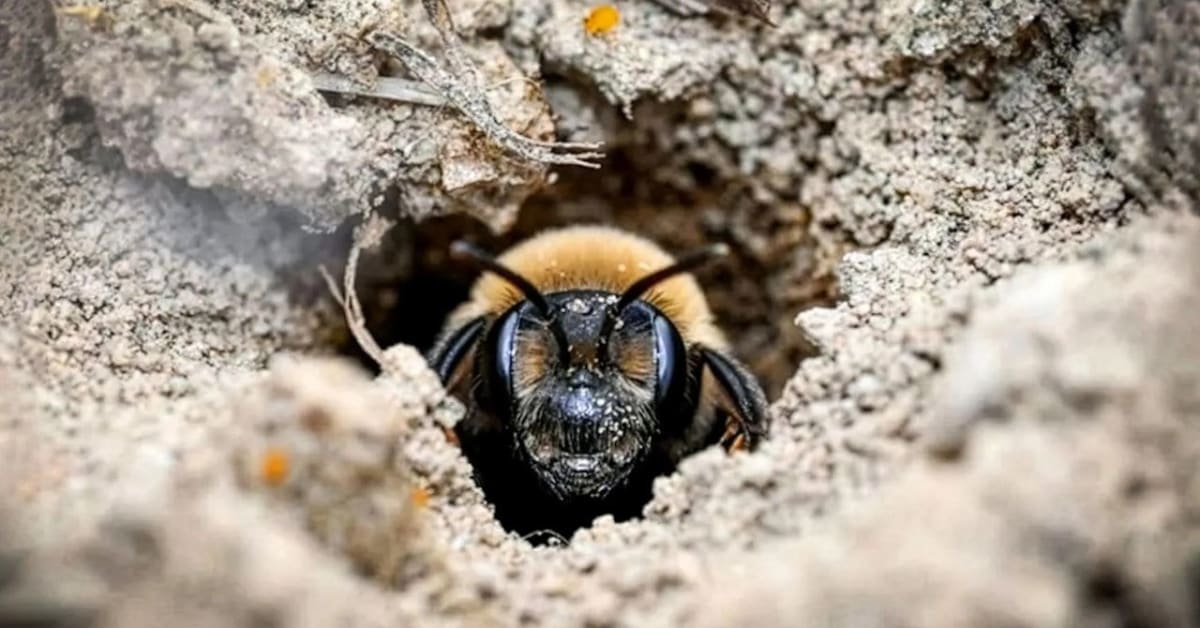
Rachel Fordyce noticed unusual insect activity during her spring 2022 walk through East Lawn Cemetery. After collecting samples, she brought them to Cornell entomologist Bryan Danforth, who confirmed they were Andrena regularis, a solitary mining bee species that nests underground.
The discovery turned out to be extraordinary. Historical records show these bees have called the cemetery home since at least the early 1900s, shortly after the burial ground opened in 1878.
To count the population, scientists set up 10 small traps across the 1.25-acre site from late March through mid-May 2023. The traps captured more than 3,000 insects, with mining bees making up the overwhelming majority.
Based on the density they found, researchers estimated between 3 and 8 million bees live there. That's equivalent to more than 200 honeybee hives, making it one of the largest wild bee aggregations ever documented worldwide.
The research revealed fascinating details about these little-studied pollinators. Male bees emerge first during April's warm days, giving them better mating opportunities, while females follow to dig nests and lay eggs in cells packed with pollen and nectar.
Unlike honeybees, mining bees winter as adults underground, which lets them wake up extra early in spring. Their timing perfectly matches the blooming of Cornell's nearby apple orchards, making them crucial pollinators for the region's fruit harvest.
The Ripple Effect
This discovery shows that old urban cemeteries offer unexpected havens for wildlife. The cemetery's sandy soil is easy to dig, pesticides are absent, and the land stays protected from development that destroys bee habitat elsewhere.
The find also sparked action. Cornell researchers launched a global citizen science project inviting people to report underground bee colonies in their communities, helping protect these vital pollinators before construction or development destroys their homes.
About 75 percent of wild bee species are solitary ground nesters like these mining bees. Protecting their habitat means protecting the pollinators that keep our food system thriving.
This quiet cemetery corner has been supporting millions of lives for generations, proving that conservation wins can hide in the most unexpected places.
More Images




Based on reporting by Wired
This story was written by BrightWire based on verified news reports.
Spread the positivity!
Share this good news with someone who needs it