6 Indian Colleges Harvest Millions of Litres of Rainwater
While monsoon rains flood Indian cities and drain away unused, six college campuses are capturing every drop to fight water scarcity. Together, they're harvesting millions of litres yearly and raising groundwater levels by metres.
Every monsoon, Indian cities watch rainwater flood streets and disappear down drains. But on six forward-thinking campuses, students walk above a hidden network of pipes, pits, and wells quietly solving one of India's biggest challenges.
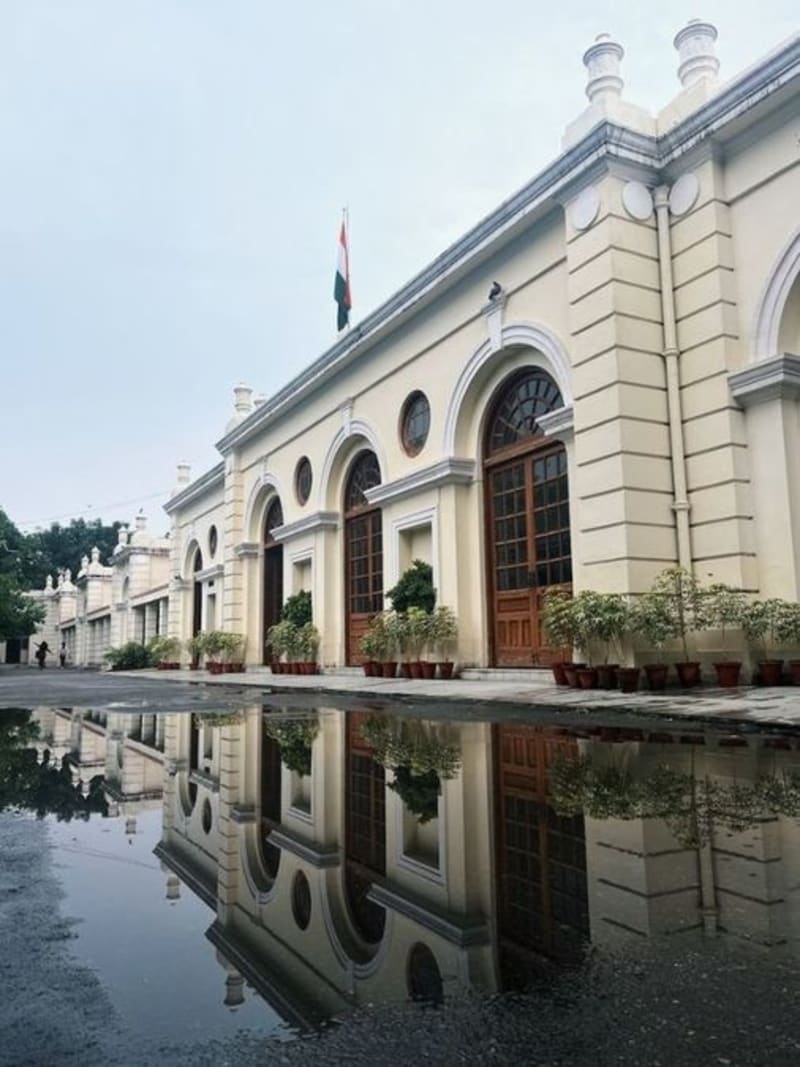
Kamala Nehru College in Delhi started the movement in the late 1990s. Rainwater from library and campus roofs now flows through pipes into recharge pits that send water back into the ground, fighting scarcity one monsoon at a time.
At Jamia Hamdard University, the scale is staggering. Since 2001, the campus has captured over 60,000 cubic metres of rainwater yearly from rooftops, runoff, and even the neighboring Jahanpanah Forest, channeling it through filters into wells reaching 30 metres deep.
IIM Ahmedabad takes it further with 18 recharge borewells and a central pond that captures nearly every raindrop across both campuses. Combined with greywater reuse for irrigation, the campus has become a model for water conservation in Gujarat's drought-prone landscape.
Indraprastha College for Women weaves rainwater harvesting into its Net Zero vision alongside solar panels and waste segregation. Seven recharge pits collect water from rooftops and paved areas, letting it slowly percolate into the soil beneath the botanical-rich campus.
The numbers at Janaki Devi Memorial College tell the success story. Since 2001, the campus has harvested 6.88 million litres yearly across 32,170 square metres, raising water levels by an incredible 10.6 metres and winning recognition from Delhi's Chief Minister.
Kristu Jayanti College in Bengaluru built a 44-lakh-litre storage system that feeds into tanks named 'matka' and 'Thunka.' Multi-layer natural filters clean the water before it dramatically reduces the campus's dependence on borewells and expensive tanker deliveries.
The Ripple Effect
These six campuses are doing more than saving water. They're educating thousands of students who witness sustainable solutions in action every single day, creating a generation that sees rainfall not as flooding but as opportunity.
The systems require minimal maintenance once installed, and the benefits multiply year after year as groundwater levels rise and communities around these campuses see their own wells replenish.
When students graduate from these colleges, they carry knowledge of what's possible when we work with nature instead of against it.
Based on reporting by The Better India
This story was written by BrightWire based on verified news reports.
Spread the positivity!
Share this good news with someone who needs it