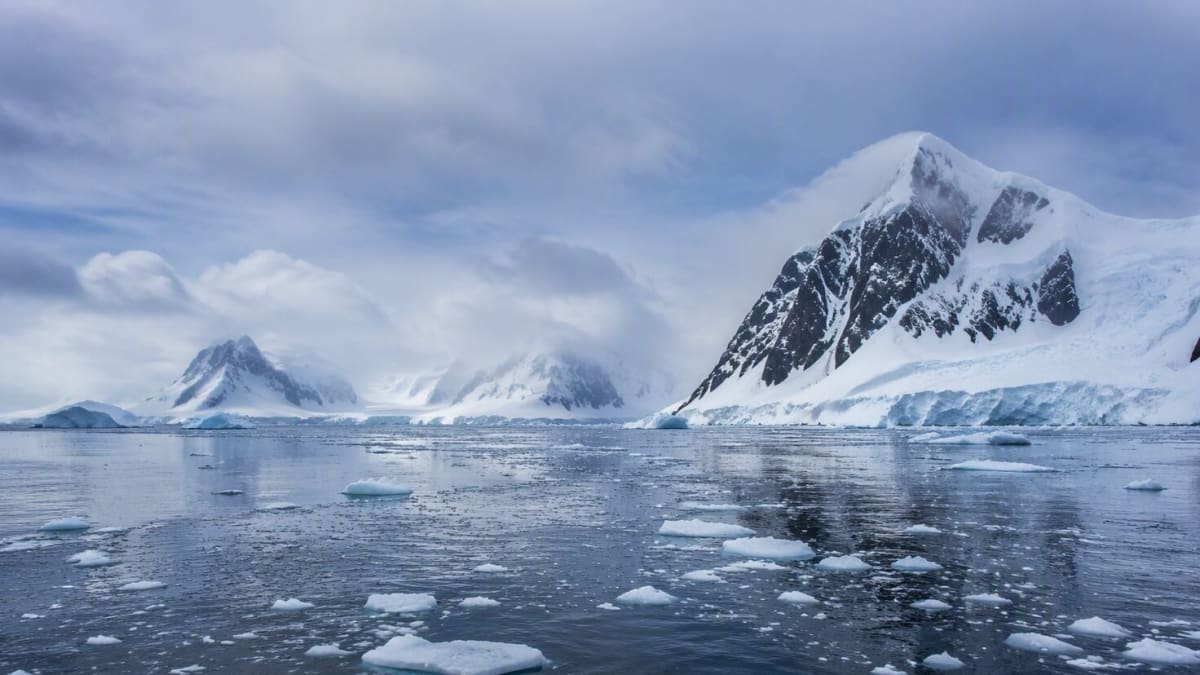
60 Million Icefish Nests Found Under Antarctic Ice
Scientists discovered the world's largest fish breeding colony beneath Antarctica's ice: 60 million icefish nests spanning 90 square miles. The hidden underwater city reveals how life thrives in Earth's most extreme environments.
Scientists just confirmed the existence of an underwater metropolis beneath Antarctic ice, where 60 million fish have built the largest breeding colony ever discovered on Earth.
The massive network of nests sits beneath the Filchner Ice Shelf in Antarctica's southern Weddell Sea, covering roughly 90 square miles. That's about the size of Orlando, Florida, but instead of theme parks, it's home to blackfin icefish carefully tending their young in near-freezing water.
Researcher Autun Purser from the Alfred Wegener Institute led the team that first spotted the colony during a 2021 expedition. They used a specialized seafloor observation system to survey one of the planet's most inaccessible regions, lowering cameras through hundreds of meters of ice to reach the ocean floor below.
What they found stunned the scientific community. Each circular nest measures about 30 inches across, with roughly one nest for every four square meters of seafloor. The fish had cleared away sediment to expose small stones perfect for protecting their eggs.
The architects of this frozen city are remarkable creatures in their own right. Blackfin icefish have transparent blood because they completely lack hemoglobin, the protein that makes our blood red. They also produce natural antifreeze proteins that prevent ice crystals from forming inside their bodies, allowing them to survive in waters colder than freshwater's freezing point.
Each female deposits around 1,700 eggs in her carefully prepared nest. The male then stays behind to guard the clutch until hatching, braving the frigid darkness for weeks.
Scientists solved the mystery of why millions of fish gather in this specific spot. Temperature measurements revealed a slightly warmer deep-water current flowing through the area, making it as much as two degrees Celsius warmer than surrounding waters. While still incredibly cold to us, that small difference creates ideal conditions for icefish reproduction.
The colony also attracts visitors. Satellite tracking shows Weddell seals regularly dive to the nests during breeding season, treating the gathering as an all-you-can-eat buffet.
Why This Inspires
This discovery reminds us how much of our own planet remains unexplored and full of wonder. While we search for life on distant planets, complex ecosystems thrive in Earth's most extreme environments, hidden beneath ice in permanent darkness.
The find also arrived at a critical moment for ocean conservation. Scientists deployed an autonomous underwater vehicle called LASSIE to monitor the colony continuously for 48 hours, gathering data that now supports proposals to expand Marine Protected Areas in the Weddell Sea.
Ongoing monitoring will help researchers track how these populations change in coming decades, providing crucial information about ecosystem health in a rapidly warming world. The little transparent-blooded fish building their stone nurseries might teach us important lessons about resilience and adaptation.
Life finds a way, even in the coldest, darkest places on Earth.
More Images


Based on reporting by Google News - Scientists Discover
This story was written by BrightWire based on verified news reports.
Spread the positivity!
Share this good news with someone who needs it