600-Year-Old Tools Reveal World's First Anesthetic Evidence
Scientists discovered traces of a powerful painkiller on ancient Chinese surgical instruments, proving doctors were using sophisticated anesthesia six centuries ago. The finding confirms what medical texts hinted at: Ming Dynasty surgeons knew how to safely harness toxic plants to ease their patients' pain.
A laser beam just unlocked a 600-year-old medical secret that's rewriting the history of surgery.
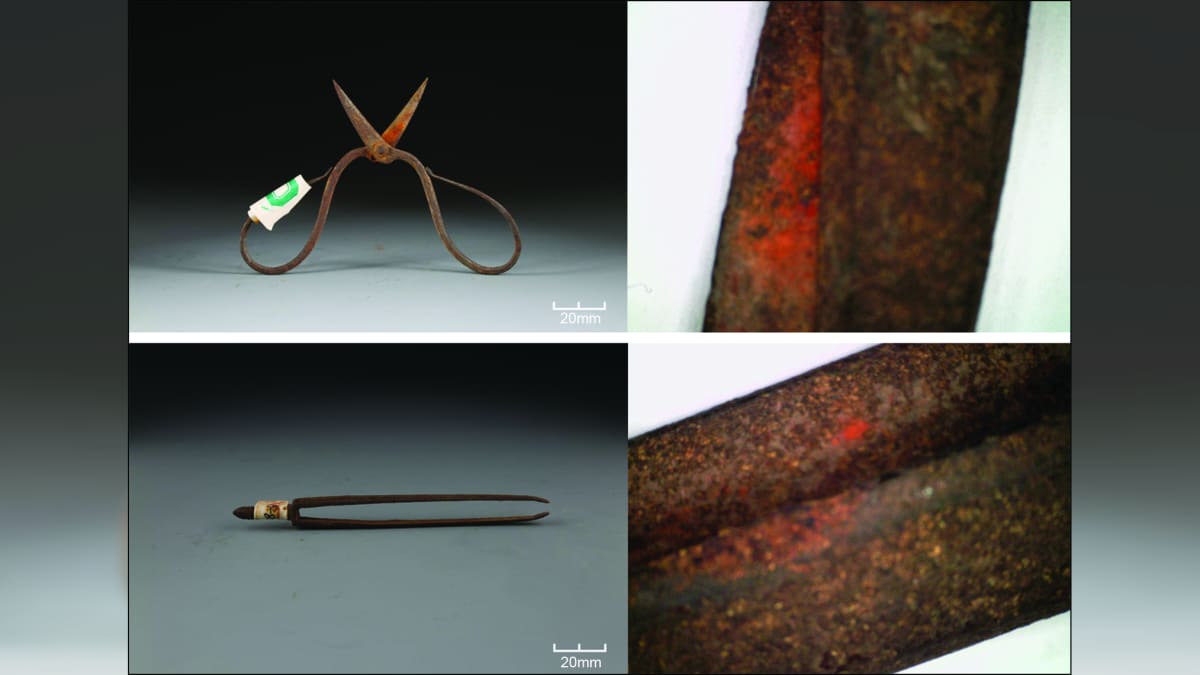
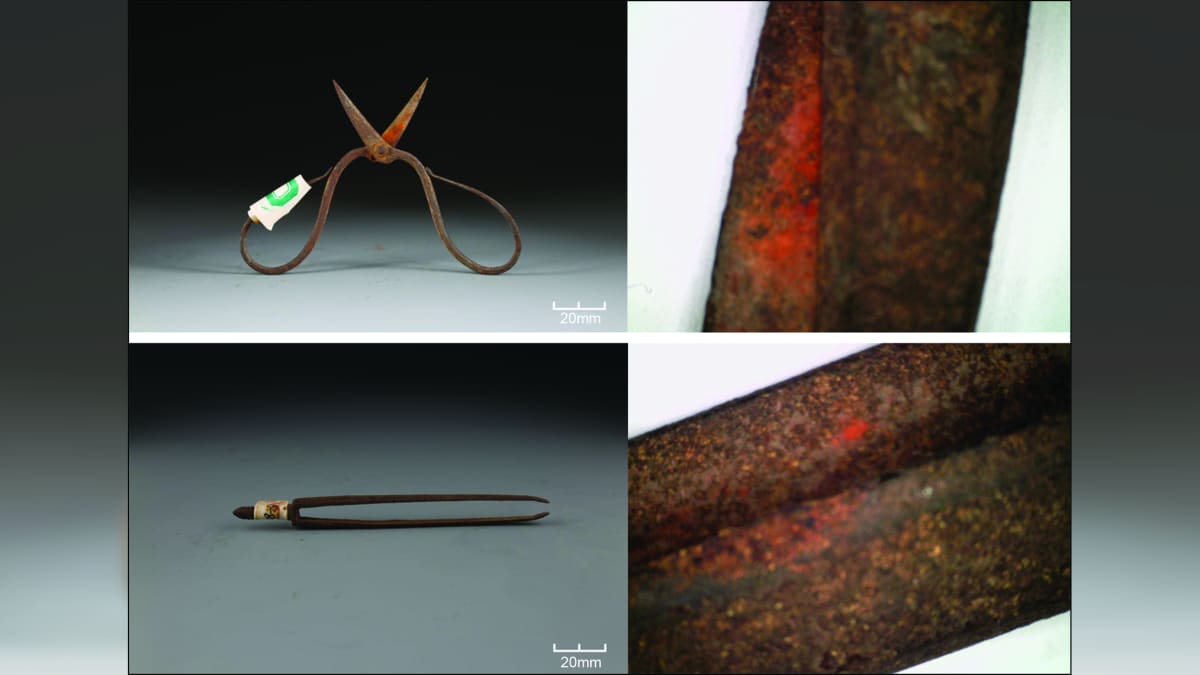
Researchers analyzing iron scissors and tweezers from a Ming Dynasty tomb in China found chemical traces of aconitine, a powerful anesthetic made from the highly toxic wolfsbane plant. It's the first direct physical evidence of topical anesthesia on ancient surgical tools anywhere in the world.
The instruments belonged to a surgeon who practiced during the Ming Dynasty, between 1368 and 1644. They were discovered decades ago in a tomb near Shanghai, but modern laser technology finally revealed what was hiding in the rust-colored residue on their surfaces.
Using a technique called micro-Raman spectroscopy, scientists beamed laser light at tiny particles on the tools. The way the light scattered created a molecular fingerprint revealing organic compounds consistent with medicinal anesthetics.
The wolfsbane plant is extremely poisonous in its natural form. But Ming Dynasty doctors had figured out how to detoxify it using acidic substances like vinegar, mung beans, or even the urine of young boys, transforming deadly poison into healing medicine.
The anesthetic residue appeared exactly where you'd expect it during surgery. Doctors would numb the patient's skin with the liquid anesthetic, use the tweezers to hold the area steady, then carefully trim away tissue with the scissors.
Why This Inspires
This discovery shows that ancient healers were far more sophisticated than we often imagine. Six hundred years ago, Chinese surgeons weren't just cutting and hoping for the best. They were carefully balancing powerful drugs to maximize pain relief while keeping patients safe.
The practitioners demonstrated what researchers call "a practical ability to balance drug potency with patient safety." They used compound prescriptions and strict procedures to control exactly how much medicine reached the patient's skin.
Medical texts from the Ming Dynasty described these anesthetic techniques, but historians had no physical proof until now. The residue that escaped cleaning and corroded into the iron tools became an unexpected time capsule of medical innovation.
Archaeologist Congcang Zhao from Northwest University in China captured the wonder of the finding perfectly: "Six centuries ago, a Ming Dynasty surgeon performed an operation with a pair of iron scissors and tweezers, and today we have read the traces of anesthetic medicine left on those instruments using a beam of laser light."
The discovery bridges ancient wisdom with modern science, proving that compassionate medical care has always been part of human nature.
More Images

Based on reporting by Live Science
This story was written by BrightWire based on verified news reports.
Spread the positivity!
Share this good news with someone who needs it