650 NASA Volunteers Now Published Scientific Co-Authors
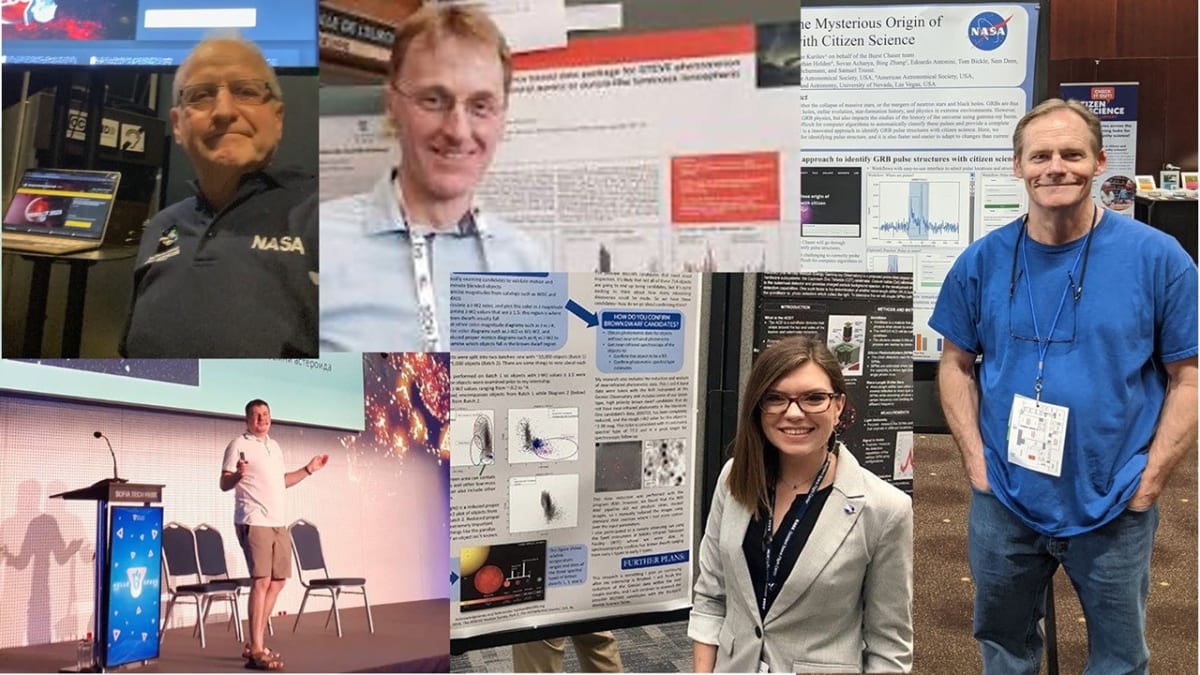
More than 650 everyday people who volunteered for NASA citizen science projects have become published co-authors on peer-reviewed research papers. They discovered comets, tracked auroras, and studied exoplanets from their own backyards.
Imagine spotting a brown dwarf from your laptop or tracking an aurora that ends up in a scientific journal with your name on it.
That's exactly what 650 NASA volunteers have done. These everyday citizens turned their curiosity into real scientific contributions, co-authoring peer-reviewed research papers alongside professional scientists.
The discoveries they made are remarkable. Some spotted gamma-ray bursts and comets in space telescope data. Others observed sprites and noctilucent clouds from Earth or used backyard telescopes to gather data on distant exoplanets.
A few even used their cell phones to map mosquito breeding sites or their ham radios to study Earth's ionosphere. Every single one of them contributed something meaningful to science that will inform researchers for generations.
Marc Kuchner, NASA's citizen science officer, says getting involved is simpler than you might think. Pick a project that excites you and participate regularly until you develop a sense of what's normal in the data. That's when you can start noticing the unusual patterns that lead to breakthroughs.
The key is choosing projects where you can communicate directly with scientists. Many NASA citizen science teams hold regular calls with participants and share opportunities through email lists. Some host virtual bulletin boards where volunteers can discuss findings with the science team.
Citizen scientist Les Hamlet, who has co-authored three papers, encourages newcomers not to fear asking questions. Read the project materials thoroughly, connect with other participants, and dig into the research pages before reaching out to the science team.
Students especially benefit from this pathway. There's no better way to explore a potential science career than doing actual scientific work and seeing your name on a published paper.
Why This Inspires
These 650 people prove you don't need a PhD to advance human knowledge. They turned hobbies and curiosity into lasting scientific contributions that matter. Some used equipment they already owned, like telescopes or phones. Others simply learned to recognize patterns in online data.
Their journey from volunteer to published author shows that science isn't locked behind university doors. It's accessible to anyone willing to learn, observe carefully, and ask meaningful questions. Each publication represents someone who refused to see themselves as just an observer and instead became a real contributor to discovery.
NASA's Do NASA Science Live events happen monthly, offering anyone the chance to meet project scientists and explore opportunities. The path from curious volunteer to published researcher is open right now.
Your name could be next on a scientific paper that changes what we know about the universe.
More Images



Based on reporting by NASA
This story was written by BrightWire based on verified news reports.
Spread the positivity!
Share this good news with someone who needs it