67,800-Year-Old Hand Art Rewrites Human Creativity Story
Scientists just discovered the world's oldest known cave painting on an Indonesian island, pushing back the timeline of human creativity by more than 28,000 years. The ancient artist didn't just trace their hand—they transformed it into something symbolic, proving our ancestors were creative thinkers long before we thought.
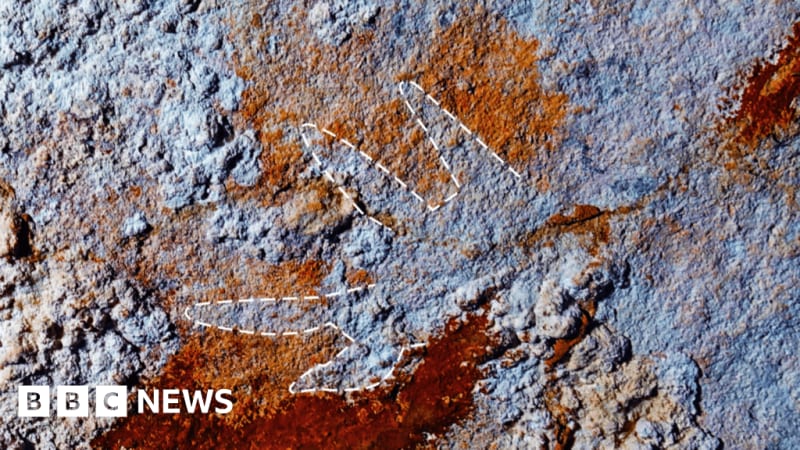
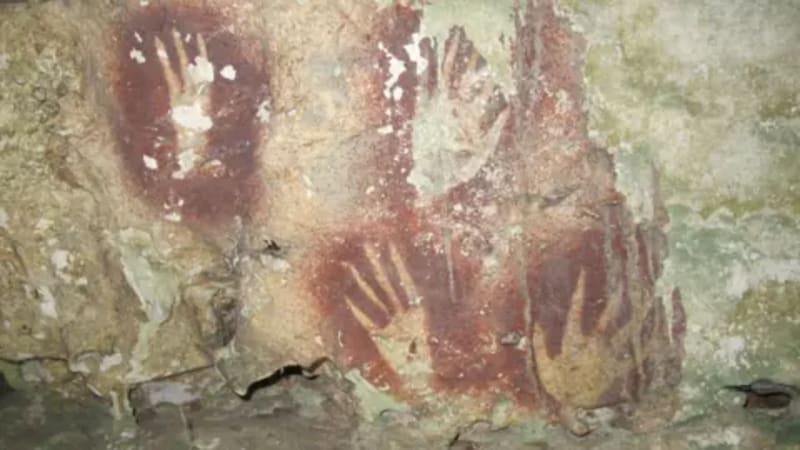
A red hand stencil found deep in an Indonesian cave just became the oldest known piece of human art in the world, and it's changing everything we thought we knew about when our species learned to create.
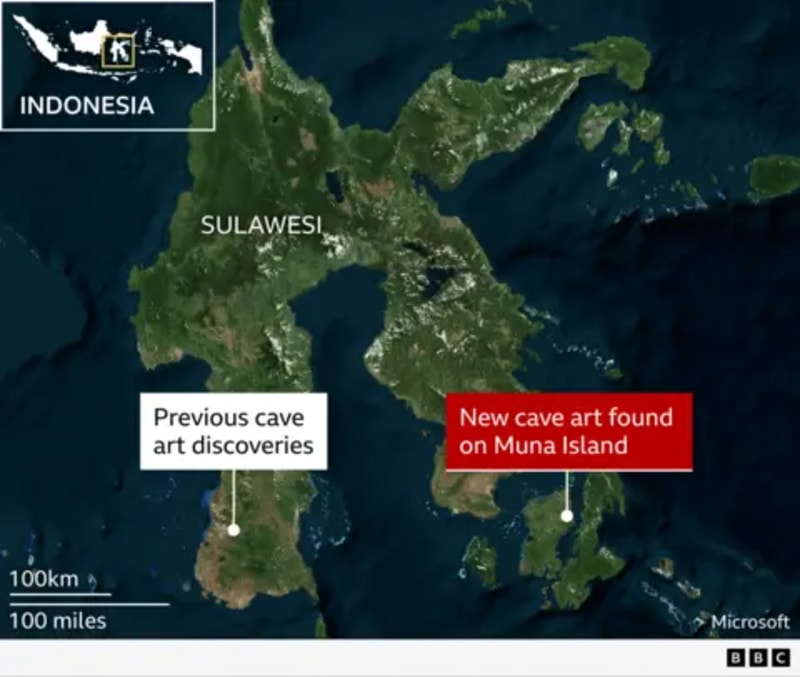
The painting, discovered on the island of Sulawesi, dates back at least 67,800 years. That's more than 1,100 years older than the previous record holder in Spain.
Here's what makes this discovery truly special. The ancient artist didn't just spray pigment around their hand pressed against the cave wall. They went back and carefully changed the finger outlines, narrowing and lengthening them to create a claw-like design.
That creative transformation is what excites Professor Adam Brumm of Griffith's University. "It's a very us thing to do," he says, noting that even our sister species, the Neanderthals, never showed this kind of imaginative experimentation in their cave art.
The painting comes from a limestone cave called Liang Metanduno. The artist created it by pressing their hand flat against the wall, then blowing or spitting pigment around it to leave a ghostly outline when they pulled away.
For decades, students learned that human creativity exploded suddenly in Ice Age Europe and spread from there. That old theory is crumbling fast. "Now we're seeing traits of modern human behavior, including narrative art in Indonesia, which makes that Eurocentric argument very hard to sustain," Brumm told BBC News.
The Ripple Effect
This discovery reaches far beyond one ancient hand print. The find proves that making art wasn't a lucky accident in one location but something deeply woven into human culture across vast distances.
Indonesian researchers have now found hundreds of rock art sites across remote areas of Sulawesi. Some caves were used as creative spaces for over 35,000 years, with the newest paintings at Liang Metanduno dating to just 20,000 years ago.
The timeline also strengthens evidence that human ancestors reached Australia much earlier than many scientists believed. If people were settled on Sulawesi making complex symbolic art 67,800 years ago, the controversial claim that humans arrived in northern Australia around 65,000 years ago suddenly looks much more credible.
Cave art matters because it shows when humans began thinking in truly abstract, symbolic ways. It's the kind of imagination that underpins language, religion, and science. These paintings prove our ancestors weren't just reacting to their world but representing it, sharing stories and identities in ways no other species ever has.
Creativity wasn't something that awakened in one place and spread outward—it was always part of being human.
More Images

Based on reporting by BBC Science
This story was written by BrightWire based on verified news reports.
Spread the positivity!
Share this good news with someone who needs it