68,000-Year-Old Hand Art Shows Early Human Creativity
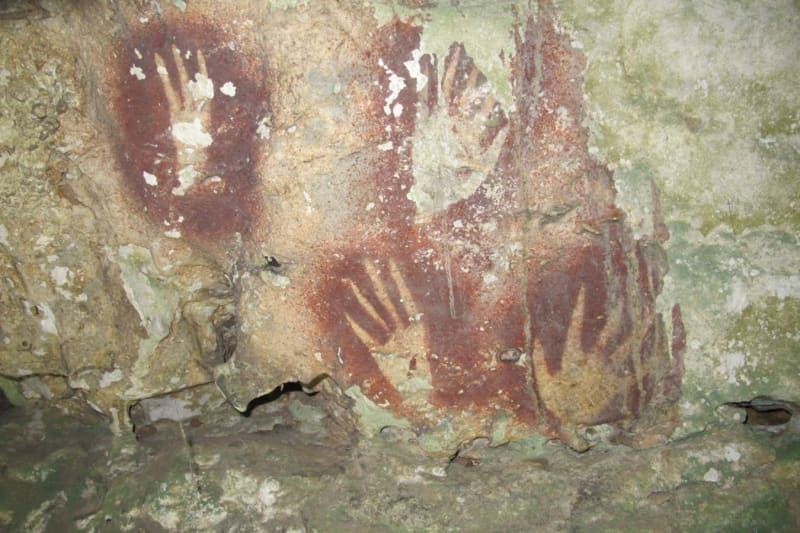
A modified hand stencil discovered in an Indonesian cave is now the world's oldest known rock art, created by ancient humans who playfully transformed their handprint to look like an animal claw. This stunning find reveals that our ancestors were thinking creatively and symbolically tens of thousands of years before reaching Australia.
Scientists just discovered the world's oldest rock art, and it shows that ancient humans had a playful, creative streak 68,000 years ago.
Maxime Aubert and his team at Griffith University found a hand stencil on a cave wall in Sulawesi, Indonesia, that beats the previous record holder by over 1,000 years. But what makes this find truly special isn't just its age.
The ancient artist didn't simply press their hand against the rock and spray pigment around it. They modified the stencil, narrowing the fingertips to make them look more pointed and claw-like, transforming a human hand into something resembling an animal.
"It's more than just a stencil of a hand," says Aubert. The artist either added extra pigment or moved their hand while spraying to create the effect, a technique previously seen only in Sulawesi.
This creative touch reveals something profound about our ancestors' minds. While Neanderthals in Spain made simple hand stencils around the same time, this early human was doing something different. They were playing with reality, using their imagination to transform one thing into another.
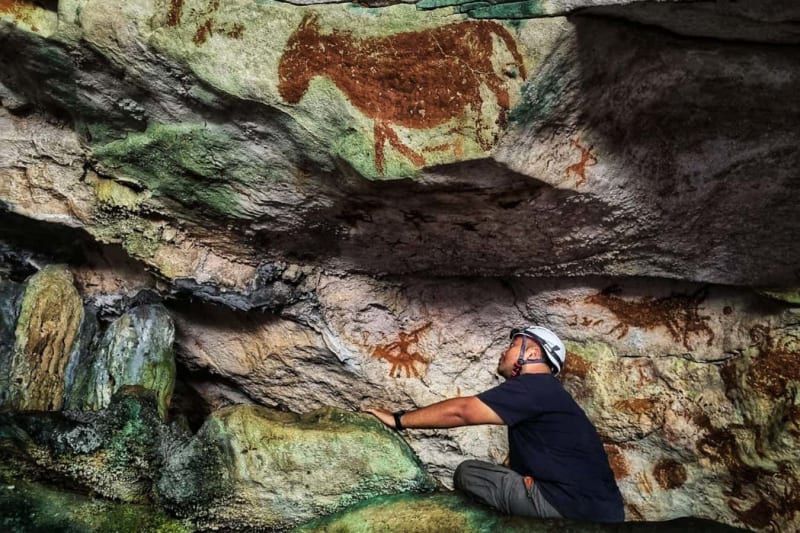
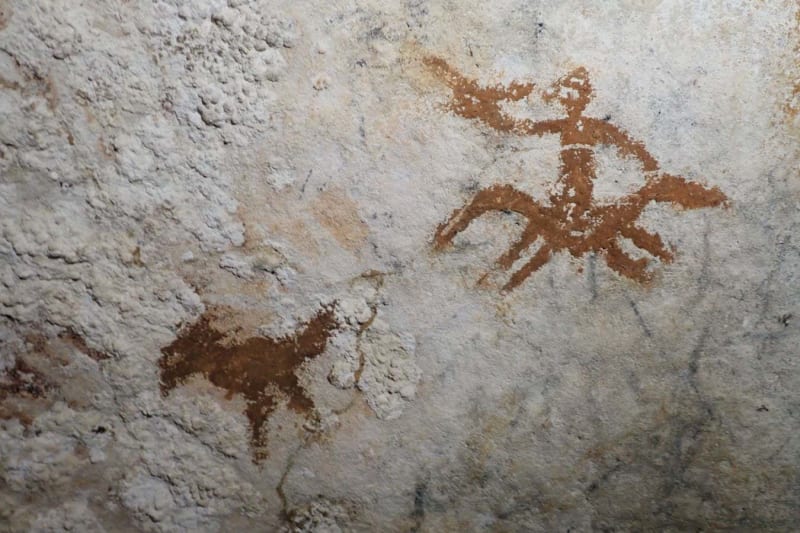
The discovery adds 44 new rock art sites to Sulawesi's already impressive collection. The island sits between Southeast Asia and Australia, serving as a crucial stepping stone for early human migration.
Why This Inspires
This playful hand stencil shows that creativity and imagination aren't modern luxuries. They're fundamental to what makes us human.
The people who made this art were likely ancestors of the first Australians, who reached that continent at least 60,000 years ago. As they journeyed across islands and open ocean, they weren't just surviving. They were stopping to create, to play, to transform reality into something more.
Adam Brumm, another team member, sees deeper meaning in that artistic choice. The deliberate alteration shows "creative imagination and abstract thinking" that sets modern humans apart.
Today, we still transform reality through art, still play with perspective, still blur the lines between human and animal in our stories and images. This 68,000-year-old handprint connects us directly to that ancient artist, reminding us that the spark of creativity has burned bright in humanity since the very beginning.
Every time we create something just for the joy of it, we're honoring that ancient impulse to make the world more interesting than we found it.
More Images

Based on reporting by New Scientist
This story was written by BrightWire based on verified news reports.
Spread the positivity!
Share this good news with someone who needs it