6G Networks Make Robots Cheaper and More Reliable
China's new 6G test facility is solving robotics' biggest problem: making AI-controlled robots work flawlessly in the real world. The breakthrough could slash costs and enable mass production by 2027.
Robots can jump, climb, and navigate obstacle courses, but getting them to work reliably outside controlled labs has remained frustratingly out of reach. Now 6G wireless technology is cracking the code that stumped engineers for years.
At a specialized test site in China, four-legged robots tackle punishing terrain while connected to AI brains in the cloud. The secret is 6G's near-instant response time, which lets cloud computers control physical robots within milliseconds.
"A complete loop of sensing, decision, and execution must be fully functional," explains Liu Guangyi, Chief Scientist at ZGC-XNET. "A delay of just a fraction of a second can trigger critical errors."
Previous networks including 5G hit hard limits here. Slow signals couldn't support the split-second precision robots need for long hours of reliable work.
The new facility replicates real-world working conditions like slopes and rubble-strewn surfaces. Robots undergo performance evaluations that smooth their transition from lab prototypes to actual deployment in factories and businesses.
The Ripple Effect
The 6G breakthrough solves more than just the speed problem. By moving the AI brain to the cloud, robots no longer need heavy onboard computers. That makes them lighter, cheaper to build, and able to run longer on battery power.
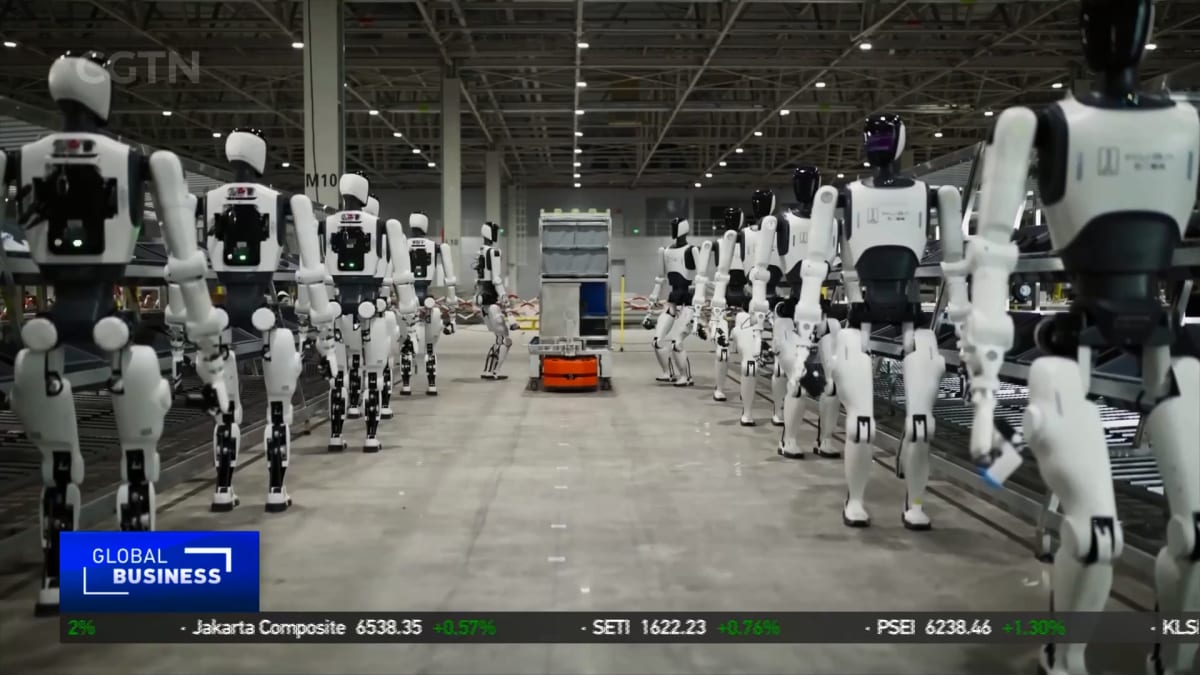
One company at the facility has already secured orders for nearly 100 humanoid robots, with mass delivery expected by the end of this year. The test site projects local robot industry output will exceed $1.4 billion by 2027.
The facility offers end-to-end support covering research, training, and certification for local companies. Even when hundreds of devices connect simultaneously, data transmission and command synchronization remain stable.
With large-scale 6G commercial rollout expected around 2030, the technology is pulling AI out of virtual simulations and into tangible real-world applications. Affordable, reliable robots could soon transform manufacturing, logistics, and countless other industries that struggled to justify the cost and complexity of earlier generations.
Based on reporting by Google: robotics innovation
This story was written by BrightWire based on verified news reports.
Spread the positivity!
Share this good news with someone who needs it