7 Smuggled Coffee Beans Gave Birth to South India's Kaapi
A Sufi saint smuggled seven coffee beans from Yemen to Karnataka in the 1600s, launching a brewing tradition that would become South India's most beloved daily ritual. From those humble beans grew filter kaapi, the frothy, aromatic drink that now defines millions of South Indian mornings.
Before coffee became an Instagram aesthetic, South Indian homes had already perfected the art of turning seven smuggled beans into a daily ritual of warmth and comfort.
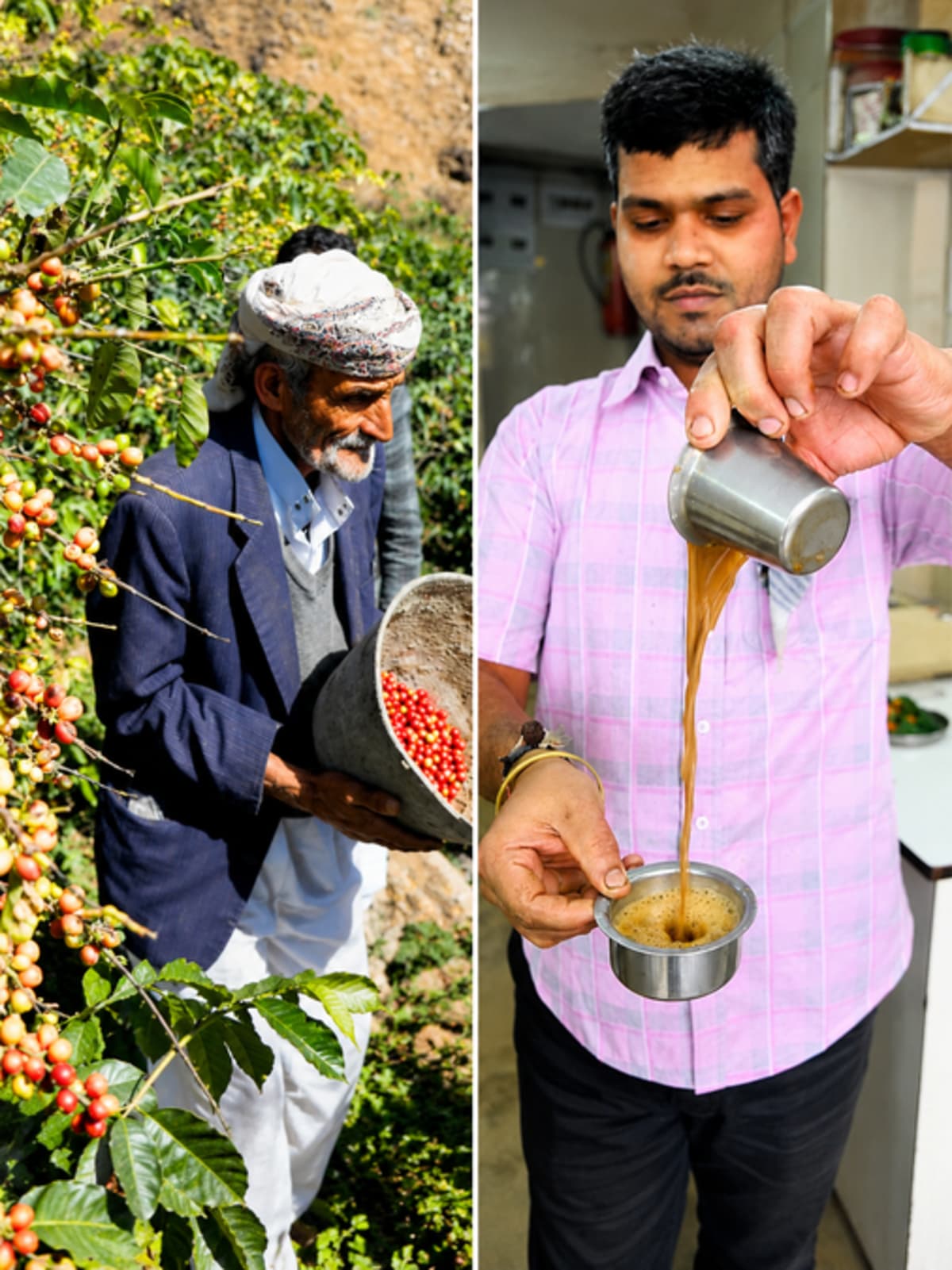
The story starts in the 17th century with an act of quiet rebellion. A Sufi saint secretly carried seven coffee beans from Yemen to the Chikmagalur hills of Karnataka. Those seven beans took root in the rich soil and gradually spread coffee cultivation across the entire region.
But growing coffee and creating filter kaapi are two different stories. Under British rule, coffee plantations expanded rapidly as Europeans drank it black or simply filtered. South Indian kitchens, however, had other ideas.
Homes began experimenting with a slower, richer brewing method that fit their everyday rhythms. The innovation came through the steel filter, a simple device that would change everything. Hot water dripped slowly through finely ground coffee powder, creating a concentrated decoction that collected in the bottom chamber.
That strong decoction mixed with boiled milk and sugar became something special. Pouring the mixture repeatedly between a tumbler and dabarah created the signature frothy top that makes filter kaapi instantly recognizable. The pouring wasn't just for show; it cooled the drink and added air that made each sip silky smooth.
During coffee shortages, cooks started adding chicory to make their supply last longer. The earthy depth of chicory became so beloved that it stayed in the recipe even after shortages ended, giving filter kaapi its distinctive bitter-sweet taste.
Why This Inspires
Filter kaapi shows how communities take what they're given and make it entirely their own. Seven beans became a plantation industry, which became a colonial export crop, which became something the colonizers never imagined: a deeply personal daily ritual.
The drink traveled from private kitchens to coffee houses, darshinis, and railway station stalls. Today, filter kaapi defines the pace of South Indian mornings. It's the drink you can't rush, the aroma that fills homes before sunrise, the froth that makes waking up worthwhile.
From smuggled seeds to millions of morning cups, filter kaapi became more than a beverage. It became home.
Based on reporting by The Better India
This story was written by BrightWire based on verified news reports.
Spread the positivity!
Share this good news with someone who needs it