70-Million-Year-Old Fossil Reveals Dinosaur Highways
A newly discovered titanosaur fossil in Morocco is rewriting the story of how dinosaurs moved across ancient continents. The find suggests massive herbivores traveled along "dinosaur highways" between Africa and South America during the Late Cretaceous period.
Scientists in Morocco have unearthed a fossil that's changing everything we thought we knew about how dinosaurs spread across the prehistoric world.
The fossil belongs to a new species of titanosaur, one of the largest land animals ever to walk the Earth. Named Phosphatotitan khouribgaensis, this long-necked herbivore lived roughly 70 million years ago in what is now Morocco's Oulad Abdoun Basin.
For decades, scientists believed Africa was completely isolated during the Late Cretaceous period, meaning dinosaur species evolved separately on different continents. This new discovery tells a different story.
The Moroccan fossil shares striking similarities with titanosaur species found in South America, thousands of miles away. That connection shouldn't exist if the continents were truly isolated from each other.
Researchers now believe dinosaurs may have traveled along what they're calling "dinosaur highways." These weren't permanent land bridges but temporary routes created when ocean levels dropped. Chains of islands might have also provided stepping stones between continents.
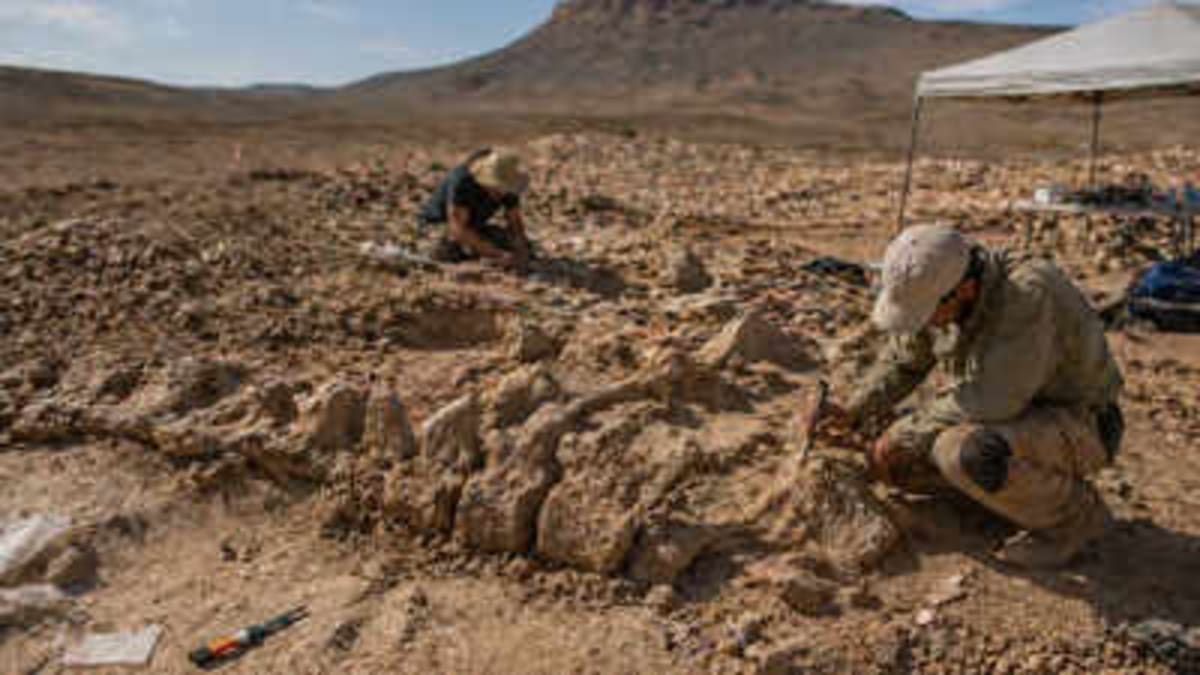
The fossilized remains include partial vertebrae, tail bones, and pieces of the pelvis. These fragments were enough for paleontologists to identify an entirely new genus of titanosaur and recognize its South American characteristics.
Why This Inspires
This discovery reminds us that ancient Earth was far more dynamic and connected than we imagined. Dinosaurs weren't trapped on isolated landmasses but adapted to changing conditions and found ways to explore new territories.
The find also fills a crucial gap in Africa's dinosaur fossil record. The continent has yielded fewer Late Cretaceous fossils than other regions, making each new discovery especially valuable for understanding global dinosaur evolution.
Scientists published their findings in the journal Diversity, noting that these temporary connections between continents allowed species to move, mix, and evolve in ways previously thought impossible. The coastal location of the fossils provides additional clues about how these massive creatures lived near shorelines and possibly migrated during favorable conditions.
The research team believes fluctuating sea levels created windows of opportunity when land-based animals could move between continents. These weren't permanent highways but occasional passages that opened and closed as Earth's climate and geography shifted.
Understanding these ancient migration patterns helps scientists piece together how life adapted to a changing planet, a story that feels especially relevant today.
More Images



Based on reporting by Google: fossil discovery
This story was written by BrightWire based on verified news reports.
Spread the positivity!
Share this good news with someone who needs it