715 Students Show Off Research at UTC Spring Conference
Students as young as first-years presented cutting-edge research alongside K-12 students at UTC's annual showcase. From cookie recipe math to robots teaching teachers, 355 projects proved innovation starts early.
When Gracie Crooks explains her advanced mathematics research, she talks about cookie recipes. The UTC junior found a way to make complicated equations more practical by figuring out which ingredients actually matter.
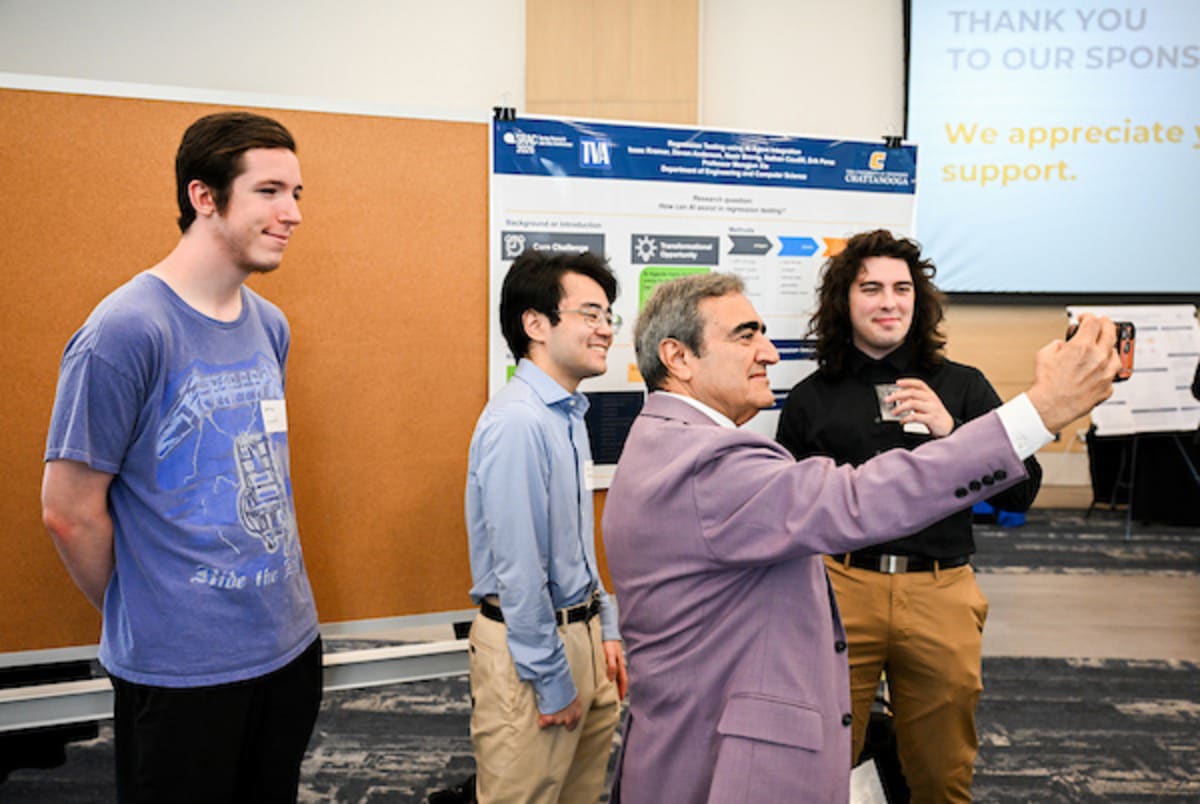
She was one of 715 presenters at the University of Tennessee at Chattanooga's Spring Research and Arts Conference on April 15, 2026. The event showcased 355 unique projects from UTC students and local elementary through high school students.
"Some of these students I meet are in orientation, and a year later are already presenting as first-year students," said Dr. Lisa Piazza, who runs UTC's undergraduate research office. The range of topics was stunning, from helping teachers use robots in classrooms to understanding how exercise affects memory.
Crooks received a SEARCH Award, which helps students pursue original research with faculty mentors. Her project on optimization shows how complex math can solve real problems by stripping away the unnecessary parts.
Graduate student Anna Grace Sorrells returned for her second conference presentation. This time she studied how the Ozobot Evo robot helped teachers learn coding and computer science over summer professional development sessions.
Her team measured teachers' confidence before and after the training. Every single area improved significantly, from logical thinking to debugging skills.
The Ripple Effect
The conference welcomed students from Baylor School, Chattanooga School for the Arts and Sciences, Tyner Middle High Academy, and other local schools. Seeing K-12 students present alongside college researchers creates a pipeline of young innovators who know research is accessible.
Senior Jamie Wilson compressed computational fluid dynamics simulations from hours to 10 seconds. His work on silicon carbide production compared new methods against 30-year-old data, showing how undergraduate research builds on decades of discovery.
Alex Morris studied whether regular exercise improves working memory in young adults. While her results weren't statistically significant, the experience taught her valuable lessons about research design and the many factors that influence cognitive studies.
Many presenters worked on their projects for one to two years. The conference gives them a chance to share that hard work with their community and practice explaining complex ideas to broader audiences.
These students aren't just learning theory in classrooms. They're conducting original research, solving real problems, and discovering what's possible when curiosity meets mentorship.
More Images


Based on reporting by Google News - School Innovation
This story was written by BrightWire based on verified news reports.
Spread the positivity!
Share this good news with someone who needs it