78,000 Kids Now Learn by Growing Their Own Food
When Pragati Chaswal tried to get her son to eat more vegetables, she discovered something powerful: children who grow their own food transform into engaged learners. Now her school farming program reaches 78,000 students across India.
A mother's simple plan to improve her son's diet just changed how 78,000 children learn across 28 schools in India.
Pragati Chaswal started with one kitchen garden in Delhi, hoping her son would eat more vegetables. What happened next surprised her completely.
"He was connecting with soil, observing how plants grew and beginning to understand that plants, like him, needed care," she says. Her son wasn't just learning about nature. He was experiencing it with his own hands.
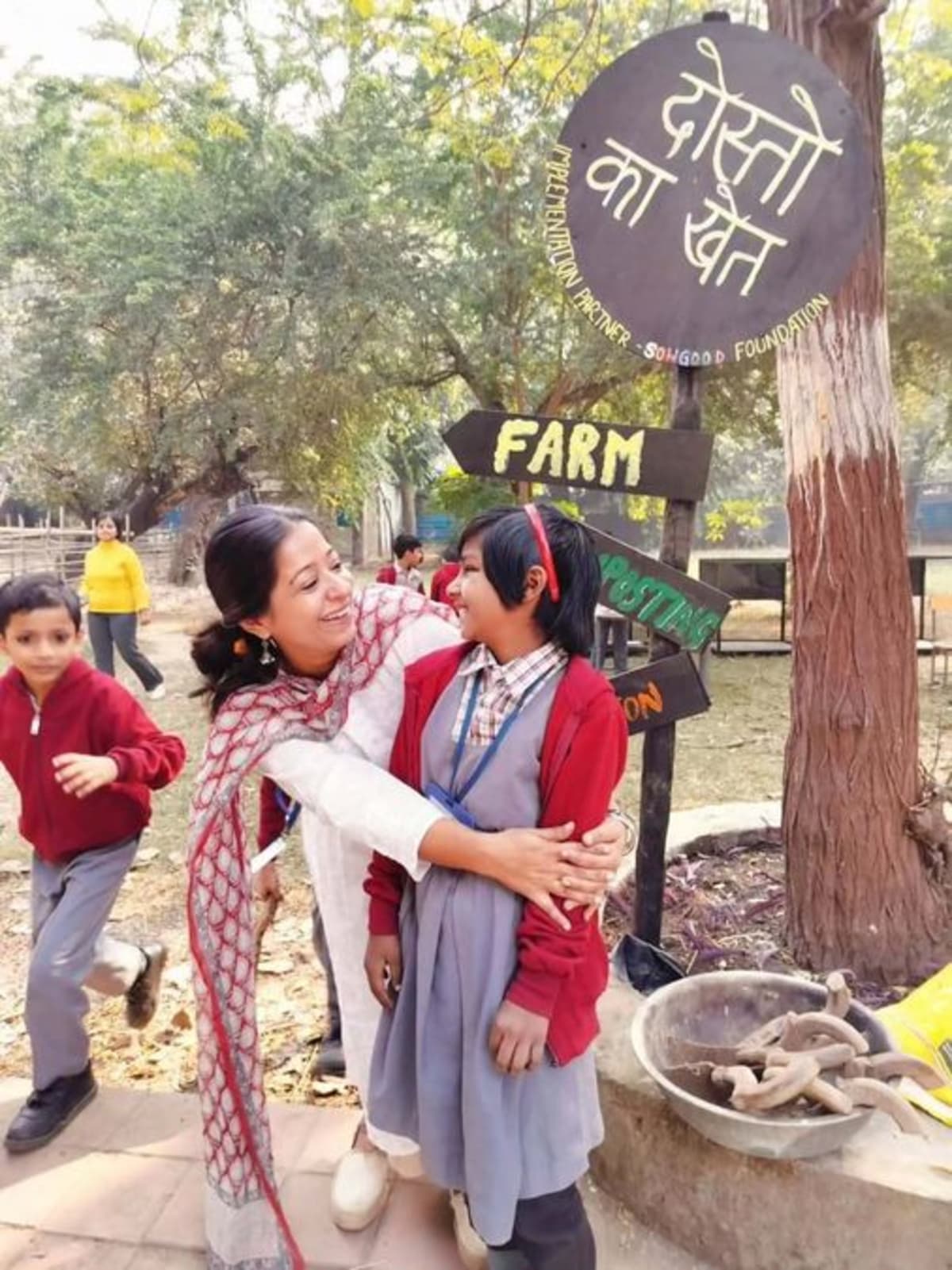
That small garden sparked a movement. Pragati founded SowGood Foundation and created a three-year farming curriculum for schools.
Today, thousands of children trade their notebooks for planters several times a week. They don't read about composting in textbooks. They make it, use it, and watch their plants thrive because of it.
Space isn't a problem. Rooftops, corridors, classroom windows, and recycled bottles all become mini farms. "There is always a way to find space," Pragati tells schools that say they can't participate.
The curriculum focuses on fast-growing crops like microgreens, methi, and spinach. Children see results quickly, which keeps them excited and engaged. They harvest their produce, take it home to cook, and proudly share their experiences with classmates.
These gardens transform regular subjects into hands-on adventures. Math lessons happen while measuring plots and tracking growth rates. Science comes alive as children observe germination and photosynthesis in real time. Language skills grow as students write detailed observations about their plants.
The real magic happens in how children change. As they water, compost, and care for their plots, they start making decisions together and solving problems on their own. "When children feel that the farm is theirs, they start taking ownership," Pragati explains.
The Ripple Effect
The impact reaches far beyond school walls. Parents report their children eating vegetables they previously refused. Kids teach their families about composting and sustainability. One small garden in each school creates waves of change in entire communities.
Pragati's vision isn't about one-off gardening activities. She wants farming to become a permanent part of education, giving every child the chance to understand where food comes from and how to care for the planet.
Seventy-eight thousand children now know that learning doesn't only happen in textbooks, and that's a lesson worth growing.
Based on reporting by The Better India
This story was written by BrightWire based on verified news reports.
Spread the positivity!
Share this good news with someone who needs it