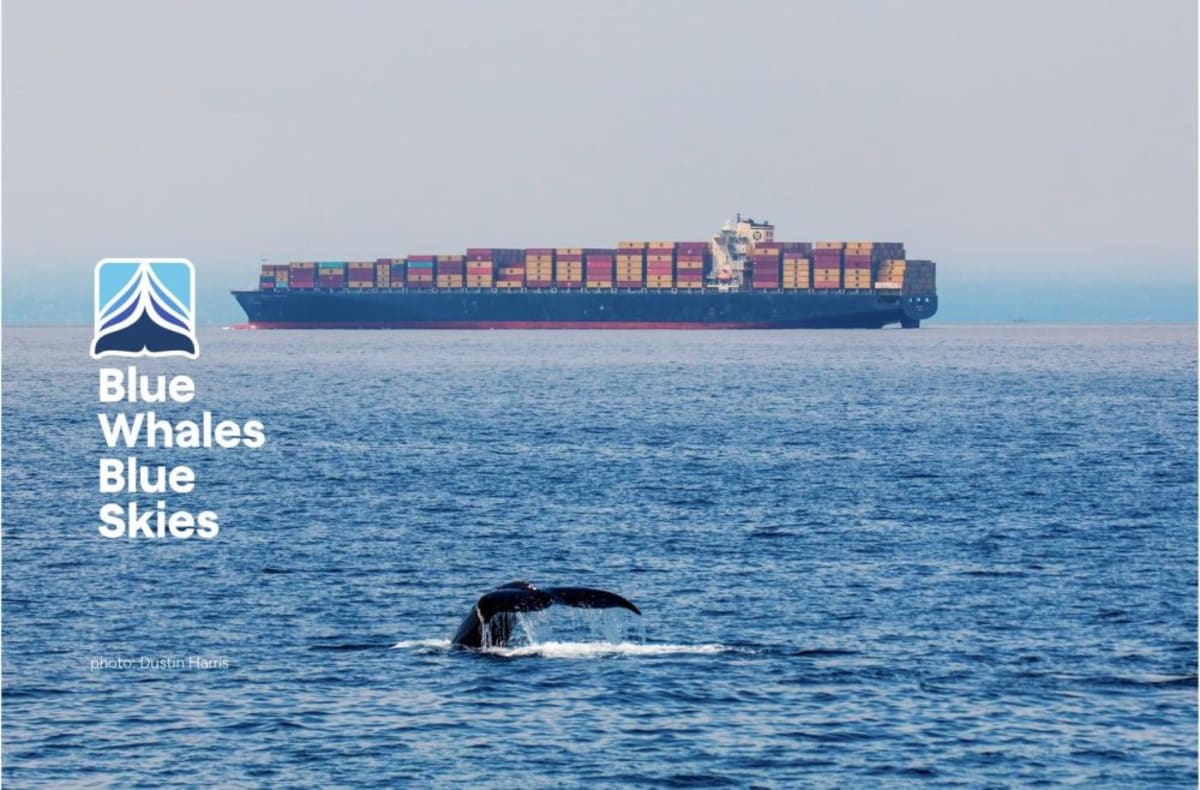
787 Ships Slash Whale Deaths 40% Off California Coast
Nearly 800 cargo ships voluntarily slowed down along California's coastline this year, cutting the risk of fatal whale strikes by 40% while eliminating over 55,000 metric tons of greenhouse gases. The simple act of slowing down is saving lives above and below the water.
Slowing down saves lives, and 787 cargo ships just proved it works on a massive scale.
The Blue Whales and Blue Skies program convinced nearly 800 vessels from 44 global shipping companies to reduce their speeds to 10 knots or less while traveling California's coast during the 2025 season. The results stunned even the researchers: a 40% drop in fatal whale strike risk, 55,000 metric tons of avoided greenhouse gases, and a 70% reduction in underwater noise pollution.
Dr. Anna Nisi from the University of Washington's Center for Ecosystem Sentinels led the whale strike research. "Reducing speed remains critical in lowering the likelihood of collisions by giving whales more time to avoid approaching ships," she explained. The numbers back her up: participating vessels traveled 481,000 nautical miles at safer speeds.
Ship strikes and entanglement kill more whales globally than any other human cause. The slower speeds give endangered blue whales, fin whales, and humpback whales precious extra seconds to detect and dodge approaching vessels in California waters.
The program delivered major wins for coastal communities too. Slower ships burn less fuel, cutting nitrogen oxide emissions by 1,491 tons and eliminating 9 tons of diesel particulate matter. Those pollutants create smog and harm human health, especially in coastal towns where ocean breezes carry ship exhaust inland.
Dr. Vanessa ZoBell from Scripps Institution of Oceanography measured the underwater impact. The 70% noise reduction means ship sounds traveled across smaller ocean areas, exposing fewer marine animals to disruptive noise. Whales rely on sound to navigate, find food, and communicate, so quieter oceans mean healthier whale populations.
The Ripple Effect
What started as a voluntary environmental program has become an industry standard. Twenty-two shipping companies earned top Sapphire Awards for their participation, including giants like CMA CGM, MSC, and COSCO. Another 10 earned Gold Awards, proving that major corporations can prioritize environmental protection without government mandates.
The success comes from cooperation at scale. Each participating ship multiplies the benefit, creating safer migration routes for whales during peak presence periods and cleaner air for millions of Californians breathing coastal air during summer months when smog hits hardest.
The program expands to include cruise lines in 2026, meaning even more vessels will join the effort. If nearly 800 ships can cut whale deaths by 40% in one season, imagine what twice that number could accomplish.
More Images


Based on reporting by Google News - Emissions Reduction
This story was written by BrightWire based on verified news reports.
Spread the positivity!
Share this good news with someone who needs it