8-Year-Old's Backyard Find Reveals Hidden Ant Network
A curious boy mistook wasp-created oak galls for seeds, sparking a Penn State study that uncovered how wasps chemically trick ants into protecting their young. The discovery shows how everyday observations can unlock nature's hidden secrets.
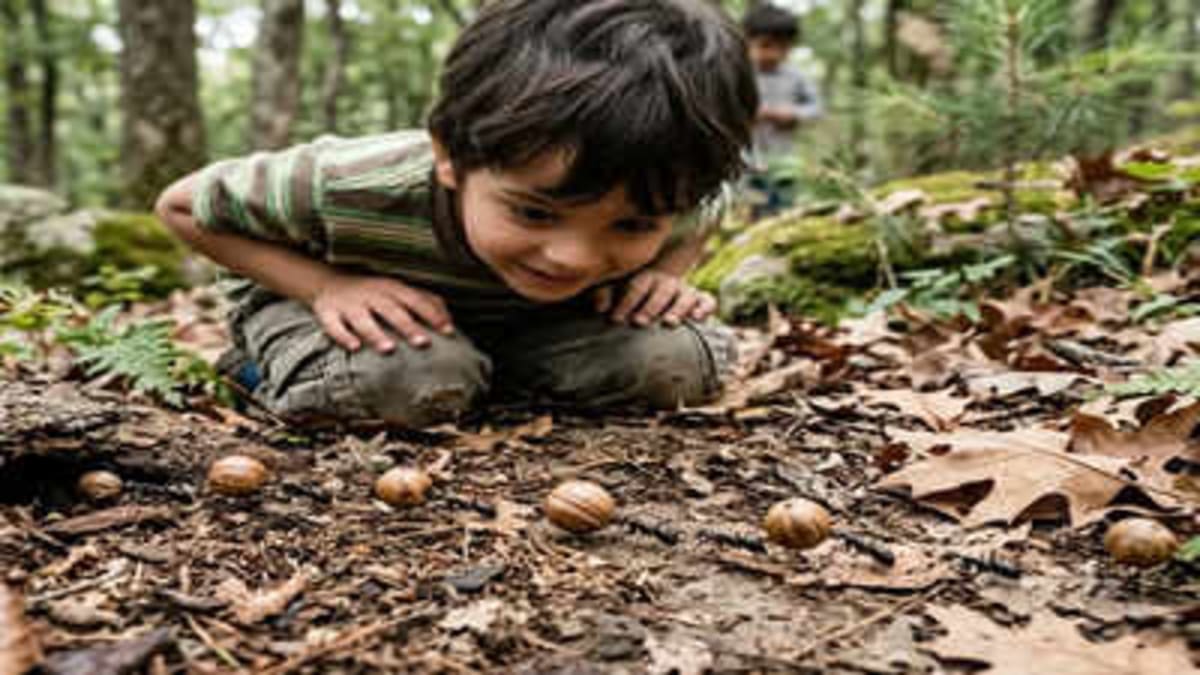
Sometimes the biggest scientific breakthroughs start with a child's simple question. Eight-year-old Hugo Deans noticed strange round objects near an anthill in his backyard and thought he'd discovered seeds, but his observation led to a groundbreaking discovery about how three species secretly cooperate.
Hugo's father, Andrew Deans, is an entomologist at Penn State University. When Hugo showed him the "seeds," Andrew recognized them as oak galls, which are created when wasps lay eggs inside oak trees. But what puzzled him wasn't the galls themselves. It was watching ants carefully carry them away.
Ants are famous for collecting seeds in a process called myrmecochory. They carry seeds to their nests, eat a fatty part called an elaiosome, then leave the seed to sprout safely underground. This natural partnership between ants and plants has been textbook science for over a century.
The Penn State and SUNY research team discovered that ants treated the oak galls exactly like seeds. Through field and lab experiments, they found ants showed equal interest in both. The key was a small cap-shaped structure on the galls that researchers named "kapéllo" from the Greek word for hat.
Chemical analysis revealed the kapéllo contains the same fatty acids found in seed elaiosomes: oleic acid, palmitic acid, and stearic acid. The wasps essentially evolved to mimic plant chemistry perfectly. Without the kapéllo cap, ants ignored the galls completely.
This deception benefits the wasps brilliantly. While adult wasps can fly, their developing larvae need protection from predators, parasites, and fungi. Ant nests provide the perfect safe house with underground chambers and natural antimicrobial properties.
The research, published in The American Naturalist, shows convergent evolution in action. Multiple species independently developed similar solutions to the same problem. In this case, both plants and wasps learned to speak the chemical language that ants understand.
Why This Inspires
Hugo didn't set out to challenge scientific understanding. He simply noticed something interesting and asked about it. His curiosity opened a window into chemical communication happening right beneath our feet in backyards everywhere.
The discovery extends beyond a cool nature fact. It reveals that ants may play a larger role in forest ecosystems than previously understood, potentially affecting nutrient cycles and microorganism distribution through their underground transport networks.
Scientists often use sophisticated technology and expensive equipment to make discoveries. This study started with a child paying attention to his backyard. It proves that the natural world still holds countless secrets waiting for someone curious enough to notice.
The next scientific breakthrough might be hiding in plain sight, just waiting for someone to ask the right question.
More Images



Based on reporting by Google: scientific discovery
This story was written by BrightWire based on verified news reports.
Spread the positivity!
Share this good news with someone who needs it