8,000-Year-Old Rock Art Discovered in Venezuela
Archaeologists in Venezuela just uncovered a massive petroglyph complex that could be 8,000 years old, featuring ancient symbols of the sun, water, and ancestral spirits. The discovery is reshaping what we know about early human creativity in South America.
Deep in the Venezuelan highlands, carved stones are telling a story that's been waiting thousands of years to be heard.
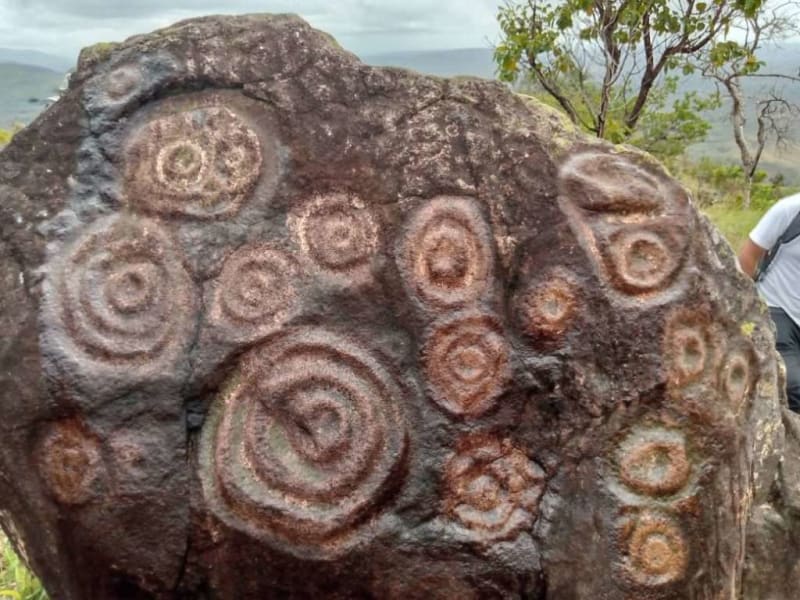
On January 30, authorities confirmed the discovery of a major petroglyph complex in Quebrada Seca, a highland community in northeastern Venezuela's Monagas state. The ancient rock carvings, estimated to be between 4,000 and 8,000 years old, feature spirals, concentric circles, and humanoid figures that researchers believe represent the cosmology of the region's earliest inhabitants.
The location itself is significant. Sitting 647 meters above sea level, the site is in an area historians call the "capital of petroglyphs" in Monagas, preserving the cultural legacy of Indigenous groups like the Chaimas and Kariñas who inhabited the region millennia ago.
Historian Luis Peñalver called the find a milestone. The engravings suggest the area served as a strategic corridor for migrating groups during the Paleoindian and Mesoindian periods, roughly between 6000 and 1700 BCE.
The craftsmanship is remarkably sophisticated. Ancient artisans used abrasive stones combined with sand and water, along with stone hammers and chisels, to carve grooves averaging 1.24 centimeters deep and 1.71 centimeters wide.
The symbols themselves offer glimpses into how early humans understood their world. The spirals and circles likely represented connections to the sun and water cycles, while the humanoid figures may have symbolized ancestral spirits or territorial boundaries.
Why This Inspires
This discovery reminds us that the human urge to create, communicate, and connect stretches back thousands of years. These ancient artists carved their beliefs and stories into stone not knowing anyone would see them millennia later, yet here we are, reading their messages.
If scientific testing confirms the earlier end of the proposed timeframe, it would mean complex spiritual and cosmological systems developed in eastern Venezuela far earlier than previously documented. That's a game changer for understanding early human societies in South America.
Local authorities are now prioritizing protection of the site while exploring sustainable tourism plans. The goal is to share this incredible window into the past while preserving it for future generations.
Some researchers believe these highly visible petroglyphs may have functioned as guide markers for migrating groups, signaling water sources or safe passage corridors. Others propose they marked ancestral burial grounds or ceremonial gathering sites.
What's certain is that thousands of years ago, people stood in this exact spot and created something beautiful that would outlast them by millennia.
Based on reporting by Google: archaeological discovery
This story was written by BrightWire based on verified news reports.
Spread the positivity!
Share this good news with someone who needs it