9 Nations Join Forces on North Sea Wind Power Network
The UK and eight European countries are building a revolutionary offshore wind network in the North Sea that will share clean energy across borders. By 2050, these connected wind farms could power millions of homes while slashing energy costs and boosting security.
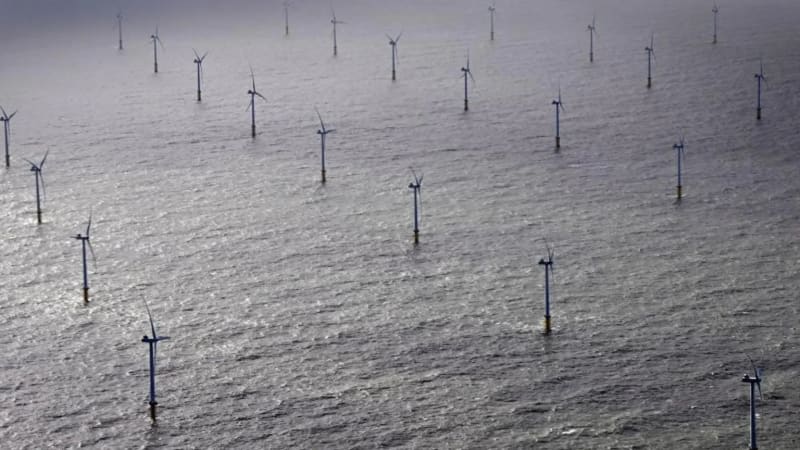
Picture a vast network of wind turbines spinning across the North Sea, feeding clean electricity not just to one country but to nine nations at once. That ambitious vision just moved closer to reality.
The UK, Norway, Germany, the Netherlands, and five other European nations signed an agreement Monday to develop 100 gigawatts of jointly built offshore wind capacity by 2050. Energy Secretary Ed Miliband committed Britain to the groundbreaking project at a summit in Hamburg focused on the North Sea's energy future.
What makes this different from existing wind farms? For the first time, these turbines will connect directly to multiple countries through undersea cables called interconnectors. Think of it as an international power grid where clean energy flows to wherever it's needed most.
The partnership aims to have 20 gigawatts operational by 2030, building toward the total goal of 300 gigawatts across the region. That's enough to power tens of millions of homes with renewable energy.
Jane Cooper from industry group RenewableUK says the arrangement will "drive down costs for billpayers" while significantly boosting energy security across the entire North Sea region. The UK already saves £1.6 billion annually from its nine existing undersea cables to Europe, according to recent data.
The system works beautifully because of time zones. When it's off-peak in one country, they can sell surplus wind power cheaply to nations where demand is higher. This smooths out price spikes and reduces waste.
The UK National Grid released research showing these connections could cut "constraint payments," the money currently paid to wind farms to shut down when the network gets too congested. That's money that ultimately comes from consumer bills.
The Ripple Effect
This isn't just about lower electricity costs. The project strengthens Europe's energy independence at a crucial time.
The nine nations are committing to "escape the fossil fuel rollercoaster," as the UK government puts it, by building a resilient network that doesn't rely on imported gas and oil. When winds blow strong in one region, multiple countries benefit. When they're calm elsewhere, power flows the other direction.
The partnership also includes security pledges to protect offshore infrastructure from sabotage and unsafe maritime activity, concerns that have grown recently. NATO and the European Commission are participating in these discussions.
The UK currently ranks second globally in offshore wind capacity with nearly 16 gigawatts already spinning. China leads with 43 gigawatts of the world's 83-gigawatt total. But this new partnership could shift that balance, demonstrating how international cooperation can accelerate the clean energy transition.
The government recently awarded contracts for an additional 20 gigawatts of UK offshore wind, including a record-breaking 8.4 gigawatts approved this month. These turbines will feed into the growing international network.
Countries working together to share clean power proves that climate solutions don't have to stop at borders.
Based on reporting by Myjoyonline Ghana
This story was written by BrightWire based on verified news reports.
Spread the positivity!
Share this good news with someone who needs it