9 Nations Pledge 100 GW of North Sea Wind Power by 2050
Nine European countries just committed to a massive expansion of offshore wind energy in the North Sea that could slash electricity bills by 30% within 15 years. The ambitious plan targets 100 gigawatts of clean power through cross-border cooperation, creating energy independence and lower costs for millions of households.
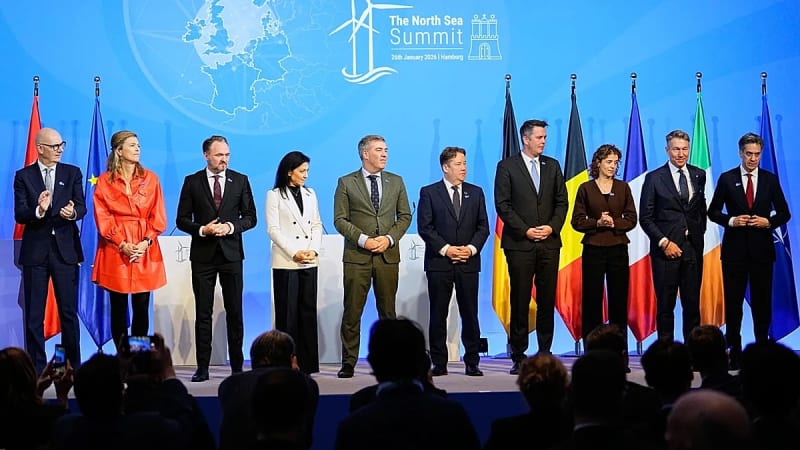
Nine European governments gathered in Hamburg this week with a bold promise: transform the North Sea into the world's largest source of clean energy while cutting electricity costs for families and businesses across the continent.
Belgium, Denmark, France, Ireland, Luxembourg, the Netherlands, the United Kingdom, Norway, and Iceland signed a declaration to expand offshore wind capacity to 100 gigawatts by 2050. The partnership brings together industry leaders and government ministers united around a shared vision of energy security and affordability.
The timing couldn't be more critical. Since Russia's invasion of Ukraine exposed Europe's dependence on foreign fossil fuels, nations have accelerated their push toward homegrown renewable energy. This agreement builds on commitments made in 2023 and represents a major step toward energy independence.
British Energy Secretary Ed Miliband called the approach "hard-headed, not soft-hearted," emphasizing that offshore wind makes economic sense. "Offshore wind is for winners," he said, rejecting criticism and doubling down on clean energy as the smartest path forward.
EU Energy Commissioner Dan Jørgensen highlighted that renewables now cost less than fossil fuels, making them the practical choice for lowering energy prices. The challenge isn't technology or economics but speed, as current permitting processes take too long and slow deployment.
Irish Climate Minister Darragh O'Brien stressed that success requires strong grid infrastructure and cross-border connections to maximize renewable energy use. These interconnections will allow countries to share clean power efficiently across borders.
The Ripple Effect
The benefits extend far beyond environmental wins. Ministers project that completing these offshore wind farms could drive down electricity costs by 30% by 2040 compared to today's prices, putting real money back in household budgets.
The plan requires massive private investment, with industry experts estimating €1 trillion needed over the next decade. Governments committed to creating financing frameworks using targeted mechanisms that guarantee developers stable returns, encouraging the capital investments needed to make this vision real.
WindEurope's interim CEO Malgosia Bartosik called the collaboration "the best possible response to those who doubt Europe," emphasizing that cooperation can unlock the trillion-euro investment needed. "This is energy that is homegrown, secure and affordable," she said.
Currently, the EU has about 37 gigawatts of offshore wind capacity from more than 6,000 turbines. While deployment has faced challenges from high capital costs and supply chain issues, this new coordinated approach aims to overcome those obstacles through government cooperation and clear project pipelines.
German Chancellor Friedrich Merz called North Sea collaboration "critical" for Europe's security and independence, signaling strong political will behind the initiative.
The message is clear: Europe is betting big on offshore wind as the path to affordable, secure, clean energy for generations to come.
Based on reporting by Euronews
This story was written by BrightWire based on verified news reports.
Spread the positivity!
Share this good news with someone who needs it