90-Million-Year-Old Fossil Rewrites Dinosaur History
Scientists discovered a nearly complete skeleton of a tiny bird-like dinosaur in Argentina that fills a decades-long gap in understanding how these mysterious creatures evolved. The "missing link" fossil proves these dinosaurs were tiny long before they developed their famous stubby arms and ant-eating adaptations.
A perfectly preserved fossil from Patagonia just solved a 90-million-year-old mystery about how bird-like dinosaurs evolved across the ancient world.
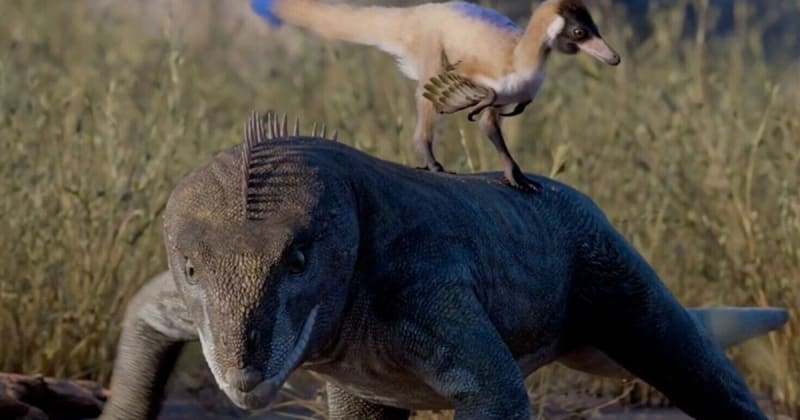
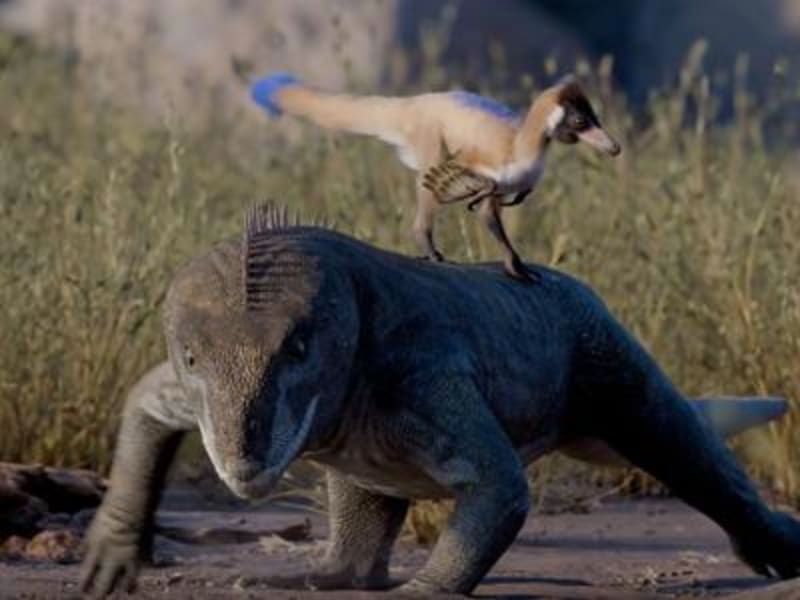
An international research team led by University of Minnesota Professor Peter Makovicky discovered the nearly complete skeleton of Alnashetri cerropoliciensis, a tiny dinosaur that weighed less than two pounds. The fossil was found in northern Patagonia, Argentina, at a site famous for Cretaceous discoveries.
What makes this find special is timing and preservation. An advancing sand dune rapidly covered Alnashetri 90 million years ago, keeping it almost perfectly intact. The team spent a decade carefully preparing and piecing together the delicate bones without damaging them.
For decades, scientists struggled to understand alvarezsaurs, a group of bird-like dinosaurs famous for their tiny teeth and stubby arms ending in a single large thumb claw. Most well-preserved fossils came from Asia, while South American records were fragmented and hard to interpret.
Makovicky called the discovery a "paleontological Rosetta Stone." Going from fragmentary skeletons to having a near-complete animal gives researchers a reference point to identify other finds and map out how these creatures changed over time.
The fossil revealed something surprising about alvarezsaur evolution. Unlike its later relatives, Alnashetri had long arms and larger teeth. Microscopic bone analysis confirmed the animal was an adult at least four years old, proving these dinosaurs evolved to be tiny long before developing specialized features for ant-eating.
The Ripple Effect
The discovery did more than solve one puzzle. By identifying previously found alvarezsaur fossils in museum collections across North America and Europe, the team proved these animals originated much earlier than expected when continents were still connected as the supercontinent Pangaea.
Their global distribution happened because of continental breakup, not unlikely ocean crossings. This reshapes our understanding of how small dinosaurs spread across the ancient world.
Dr. Sebastian Apesteguía, a researcher at Universidad Maimónides in Buenos Aires, highlighted the broader importance of the La Buitrera fossil area. After more than 20 years of work there, the site has yielded unique insights into small dinosaurs, primitive snakes, and tiny saber-toothed mammals found nowhere else in South America.
The research doesn't stop here. Makovicky confirmed the team has already found the next chapter of the alvarezsaurid story at the same location, currently being prepared in the lab.
One tiny fossil is rewriting millions of years of evolutionary history and proving there's always more to discover.
More Images


Based on reporting by Google: fossil discovery
This story was written by BrightWire based on verified news reports.
Spread the positivity!
Share this good news with someone who needs it