97-Million-Year-Old Fossil Reveals Ocean's First Navigators
Scientists discovered magnetic fossils from an ancient marine creature that may have been one of the first animals to navigate using Earth's magnetic field. The 97-million-year-old find hints at evolutionary secrets we've never seen before.
A mysterious ocean creature from 97 million years ago might have been among Earth's first natural navigators, and scientists just found the proof locked inside ancient magnetic fossils.
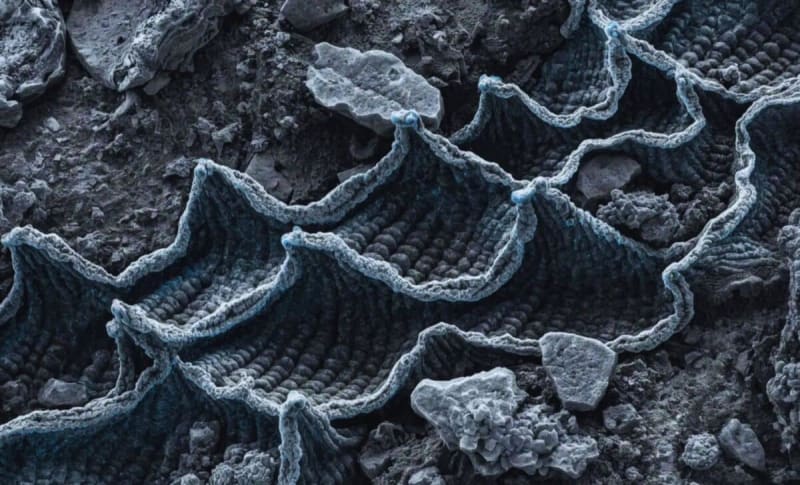
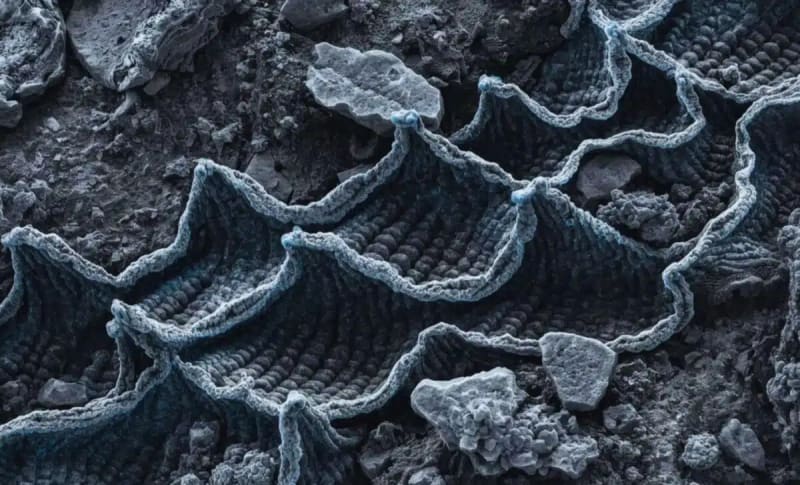
Researchers from the University of Cambridge and Helmholtz-Zentrum Berlin discovered unusually large magnetofossils containing precisely arranged magnetic crystals. These tiny structures suggest the extinct animal possessed an internal compass, allowing it to align itself with Earth's magnetic field long before modern species evolved similar abilities.
The breakthrough happened when traditional X-ray methods failed to reveal what was inside the fossils. So the team turned to a cutting-edge technique called magnetic tomography, which maps internal magnetic structures in three dimensions.
"It's fantastic to see our method being used for the first time to study natural samples," said Jeffrey Neethirajan, a doctoral student who helped conduct the scans at Oxford's Diamond Light Source facility. The technology revealed magnetic moments arranged in patterns strikingly similar to those found in today's migratory birds and sea turtles.
The fossils were too large to have come from bacteria, confirming they belonged to a multicellular marine animal. But which creature remains a mystery.
Dr. Richard Harrison, who co-led the research, pointed out what makes this discovery so significant. "This tells us we need to look for a migratory animal that was common enough in the oceans to leave abundant fossil remains," he explained.
The team suspects the creature was capable of long-distance navigation across ancient seas. Eels, which evolved around the same time and migrate globally today, could be candidates, though no definitive link exists yet.
Why This Inspires
This discovery rewrites our understanding of how animals learned to navigate Earth's vast oceans. The magnetic structures represent an evolutionary stepping stone between simple bacterial magnetoreception and the sophisticated GPS-like systems modern animals use to cross continents and oceans.
These ancient navigators prove that nature was solving complex problems millions of years before humans walked the planet. Their magnetic compass technology, preserved perfectly in stone for nearly 100 million years, shows us that innovation isn't just a human trait.
The fossils also demonstrate how new imaging techniques can unlock secrets hidden in plain sight for decades. What seemed like ordinary rocks turned out to contain evidence of biological sophistication we never knew existed in ancient marine life.
The findings suggest that magnetically guided migration has roots far deeper in evolutionary history than scientists previously imagined, opening new questions about what other navigation secrets lie buried in Earth's geological record.
More Images

Based on reporting by Google News - Science
This story was written by BrightWire based on verified news reports.
Spread the positivity!
Share this good news with someone who needs it