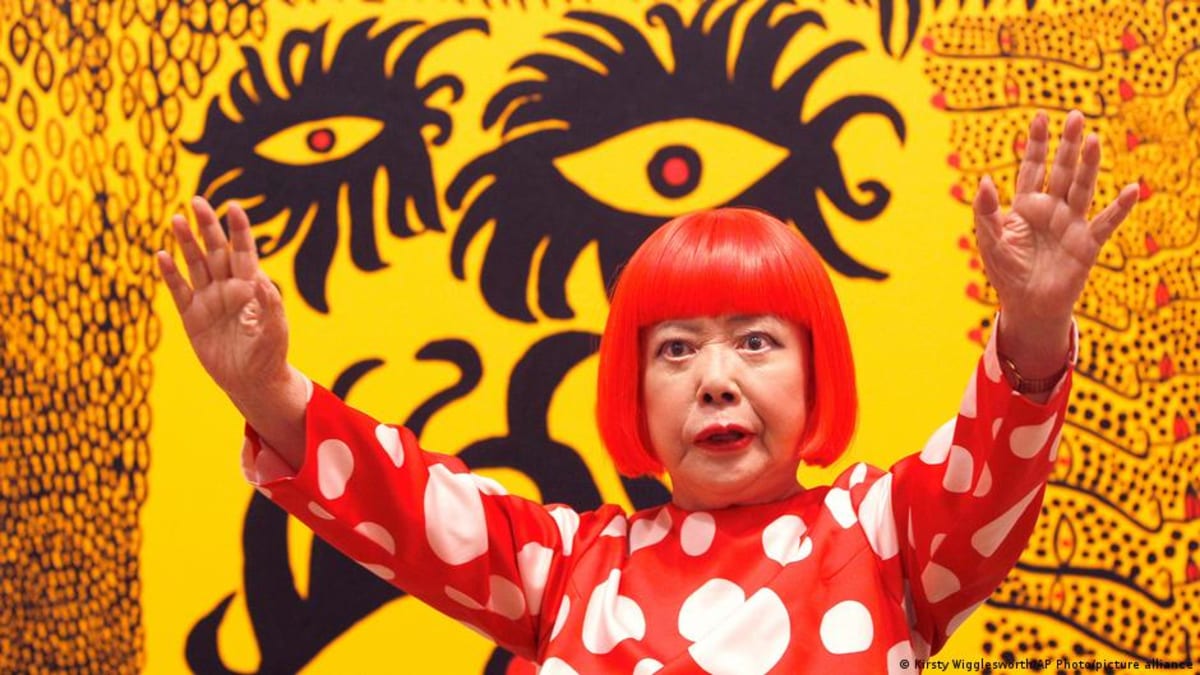
97-Year-Old Artist Yayoi Kusama's Fame Keeps Growing
Japanese artist Yayoi Kusama turned mental health challenges into a celebrated global art career spanning seven decades. Her "Infinity Rooms" now sell out instantly, proving that creativity and resilience know no age limits.
At 97 years old, Yayoi Kusama creates art that millions of people wait in line to experience, with some exhibitions selling 90,000 advance tickets before opening day.
The Japanese artist started seeing hallucinations of dots and patterns at age 10, a symptom of mental health struggles linked to growing up with an unloving mother who forbade her from painting. Instead of hiding her condition, Kusama did something radical for her time: she talked about it openly and channeled those visions into her art.
"My artwork is an expression of my life, particularly of my mental disease," Kusama once explained. For her, creating art became both survival strategy and therapy.
Born in 1929, Kusama felt suffocated by post-war Japan's expectations for women. Her family pushed arranged marriages while she dreamed of painting. In 1958, she escaped to New York with financial support from her mother, who made one condition: never return to Japan.
In New York's art scene, Kusama held her own alongside contemporaries like Andy Warhol. Her "Infinity Net" paintings captivated viewers with their hypnotic patterns. She confidently stated that she set benchmarks other artists later followed, though her male colleagues enjoyed far more commercial success.
That inequality drove Kusama to create powerful statements about gender. Her sculpture "Traveling Life" featured a ladder covered in phallic shapes with women's shoes on the steps, directly confronting the gender pay gap.
During the 1960s, Kusama staged provocative anti-war "happenings" and created her now-famous concept of "self-obliteration." She painted nude bodies with dots to erase individuality, believing that "by obliterating one's self, you return to the infinite universe."
Why This Inspires
Kusama's journey shows how vulnerability can become strength. At a time when mental health carried heavy stigma, she refused to hide. She transformed her hallucinations into immersive "Infinity Rooms" that now attract millions of visitors worldwide.
Her persistence paid off later in life. In 1993, she returned to the Venice Biennale as Japan's official representative after crashing it decades earlier as an uninvited artist. Today, museums from Los Angeles to London host year-long exhibitions of her work that sell out almost instantly.
Kusama proves that creative passion, honest self-expression, and determination can turn personal struggles into universal connection. At 97, she's still creating, still innovating, and still inspiring people of all ages to see beauty in unexpected places.
More Images

Based on reporting by DW News
This story was written by BrightWire based on verified news reports.
Spread the positivity!
Share this good news with someone who needs it