97-Year-Old Yayoi Kusama Turns Mental Illness Into Art Empire
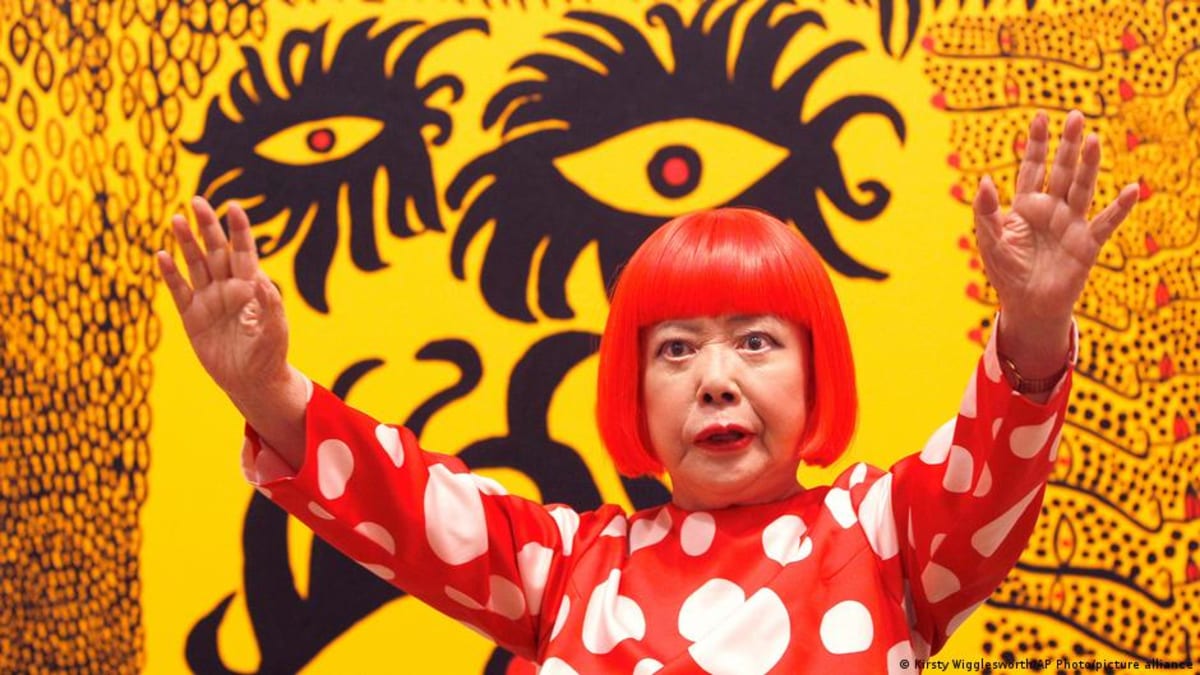
Japanese artist Yayoi Kusama transformed childhood hallucinations into a global art phenomenon, proving that mental health struggles can fuel creativity rather than limit it. At 97, her "Infinity Rooms" sell out worldwide and inspire millions on Instagram.
At 97, Yayoi Kusama has turned the hallucinations that began haunting her at age 10 into some of the most celebrated art installations in the world. Her mirror-filled "Infinity Rooms" and signature polka dot sculptures now attract millions of visitors and sell out exhibitions within hours.
Kusama's story began in 1930s Japan, where she grew up seeing dots and net patterns consuming everything around her. Her mother forbade her from painting and tried forcing her into arranged marriages, pushing young Yayoi toward what she later called "mental breakdown."
But Kusama refused to let mental illness define her limits. Instead, she made it her superpower.
"My artwork is an expression of my life, particularly of my mental disease," she once explained. At a time when mental health was deeply stigmatized in Japan, Kusama spoke openly about her experiences and used art as therapy.
In 1958, at 29, she escaped to New York with financial support from her mother on one brutal condition: never return to Japan. Artist Georgia O'Keeffe helped her get started, and Kusama threw herself into work, sometimes painting entire days without stopping.
She joined New York's avant-garde scene alongside Andy Warhol and Claes Oldenburg, confidently claiming she set benchmarks her male colleagues later followed. Yet those same male artists earned far more recognition and money, a reality that contributed to a suicide attempt she fortunately survived.
Kusama fought back through her art. In 1966, she crashed the Venice Biennale uninvited, placing 1,500 mirrored spheres outside and selling them for $2 each to mock the commercialization of art. Officials shut her down, but she made her point.
The Ripple Effect
Today, Kusama's openness about mental health has helped millions feel less alone. Her 2022 autobiography details her "fear of sex" and other struggles with remarkable honesty, showing that vulnerability and success aren't opposites.
In 1993, she returned to the Venice Biennale as Japan's official representative. By 2018, The Broad museum in Los Angeles sold 90,000 advance tickets for her exhibition. London's Tate Modern sold out a yearlong show in 2022 before it even opened.
Her "Infinity Rooms" have become Instagram sensations, with fans of all ages waiting hours for their chance to step inside the endless reflections. What started as one woman's coping mechanism for hallucinations now gives millions a moment to contemplate their place in the infinite universe.
Curator Stephan Diederich, who organized Kusama's retrospective at Cologne's Museum Ludwig (running until August 2026), calls her approach extraordinary. "For her, art was a survival strategy and a form of therapy," he notes.
Kusama calls her artistic philosophy "self-obliteration," the idea that erasing individual identity through dots and patterns helps us return to the infinite universe. Her nude body-painting performances in the 1960s protested the Vietnam War while exploring this concept of dissolving boundaries between self and others.
At 97, Kusama continues creating daily, proving that the challenges that could have destroyed her instead became the foundation for touching millions of lives.
More Images
Based on reporting by DW News
This story was written by BrightWire based on verified news reports.
Spread the positivity!
Share this good news with someone who needs it