Accra Gets 50+ Air Sensors to Fight Pollution
Ghana's capital now has the largest real-time air quality monitoring network in West Africa, giving city leaders the data they need to protect public health. For the first time, 13 municipal assemblies can track dangerous pollution levels in their neighborhoods and take action.
📺 Watch the full story above
For years, Accra's city officials watched pollution cloud their streets but had no hard evidence to fight back. Vehicle exhaust, illegal waste burning, and dust from busy roads choked communities, yet most assemblies didn't own a single air quality monitor.
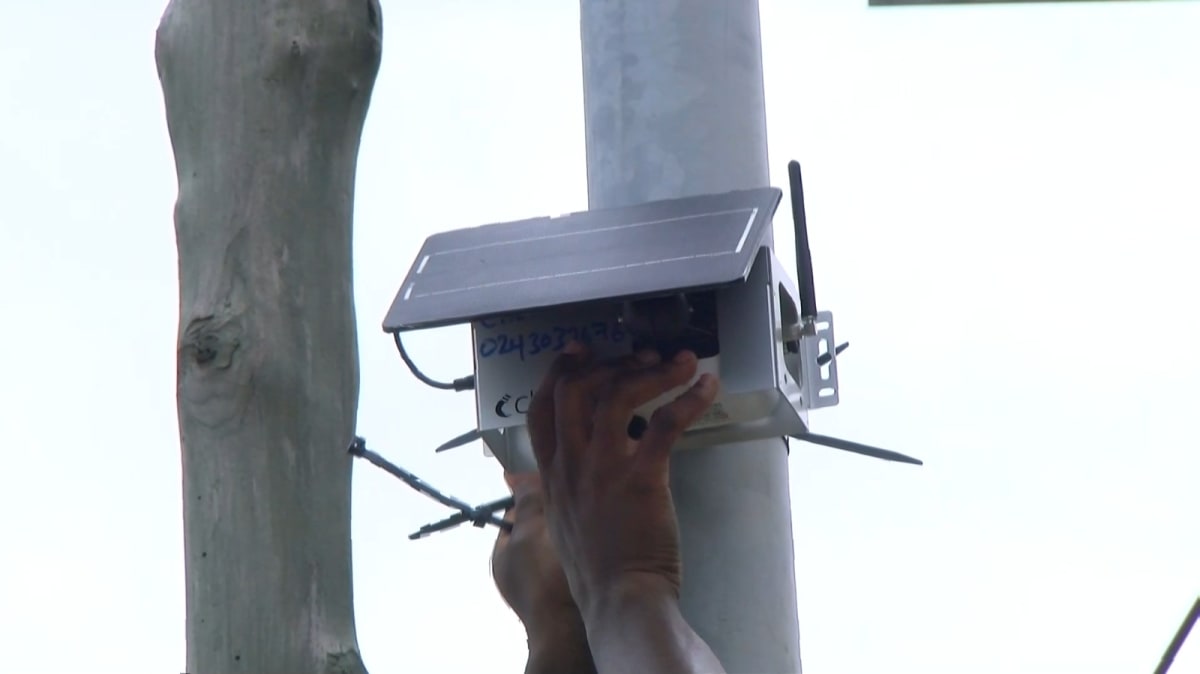
That just changed. Breathe Accra has installed more than 50 real-time air sensors across Ghana's capital, creating the largest air quality monitoring network in the sub-region.
The project, funded by Breathe Cities, gave each of 13 municipal assemblies three sensors. These devices track dangerous pollutants like particulate matter and nitrous oxide, substances linked to serious respiratory illnesses and heart disease.
The data is already revealing troubling patterns. Richard Donkor, Environmental and Municipal Health Officer for Ayawaso North, discovered that a cluster of schools recorded the highest levels of harmful PM 2.5 particles in his district.
"I am super excited in that I'll have real data to convince people," Donkor said. Before the sensors, his team had no monitoring equipment at all.
The sensors provide hyperlocal information that helps officials spot pollution hotspots, educate residents, and prosecute illegal waste burners. Alhaji Shaani Murtala from Ayawaso West Municipality said the difference is dramatic.
"Before the sensors, we had not seen the effect of it as compared to when the sensor was mounted at Tetteh Quarshie," Murtala explained. The data now shows exactly which areas need urgent intervention.
Desmond Appiah from Clean Air Fund points out that Africa struggles with extremely low air quality data collection. Without reliable information, policymakers can't make informed decisions about public health.
Now Accra's assemblies can change that pattern. Kelvin Yeboah, Project Coordinator for Breathe Accra, says the sensors give local governments the evidence they need to enforce anti-pollution bylaws and take offenders to court when necessary.
The Ripple Effect
This network doesn't just help Accra. It sets a model for cities across West Africa struggling with invisible air pollution.
When one city proves that affordable sensors can drive real policy change, neighboring regions take notice. The technology costs far less than traditional monitoring stations while providing crucial neighborhood-level detail that broad measurements miss.
Ghana's assemblies can now package their public education campaigns around concrete evidence from their own communities. Residents can see pollution levels in real time, understanding exactly when and where the air becomes dangerous to breathe.
As more sensors go live across the capital, city authorities finally have tools to understand what their residents inhale every day and protect them before invisible pollution causes irreversible harm.
Based on reporting by Myjoyonline Ghana
This story was written by BrightWire based on verified news reports.
Spread the positivity!
Share this good news with someone who needs it