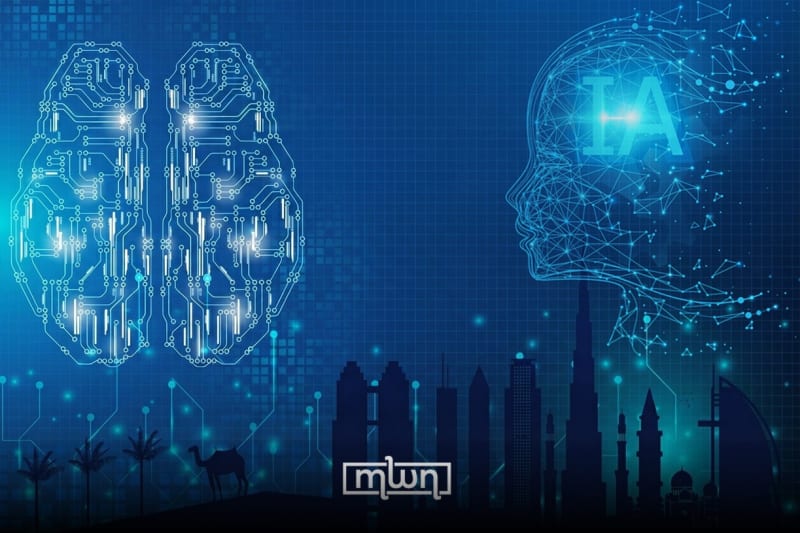
Africa and Middle East Build Their Own AI Future
Countries across Africa and the Middle East are creating their own artificial intelligence technology instead of relying on Western companies. From Egypt's new national AI model to Morocco's network of AI centers, the region is taking control of its digital future.
Africa and the Middle East are no longer content to be consumers of artificial intelligence. They're building their own.
At the Ai Everything MEA summit in Cairo this February, over 350 companies from 60 countries gathered to witness something historic. Nations across the region unveiled homegrown AI systems designed for their own people, in their own languages, solving their own problems.
Egypt, now ranked first in Africa for Government AI Readiness, launched Karnak, a national language model named after the ancient temple complex. The system lets local startups and government agencies build applications without sending data abroad or adapting to foreign cultural standards.
Morocco is taking a different approach with its JAZARI ROOT Institute, a central hub connecting AI centers across all twelve regions of the country. The AI Made in Morocco roadmap aims to add $10 billion to the national GDP by 2030, ensuring rural farmers benefit as much as urban financial districts.
The Gulf states are playing a different role by sharing their resources. The UAE and Saudi Arabia are investing roughly $100 billion annually in AI infrastructure, with the UAE's Falcon model becoming a free, open-source tool that nations with smaller budgets can use.
Further south, Kenya and Nigeria are solving a different puzzle entirely. Voice AI tools now let farmers diagnose crop diseases using Swahili, Yoruba, or Amharic on basic mobile phones, bypassing literacy and internet barriers that traditionally block technology adoption.
The African Development Bank and UNDP recently launched the AI 10 Billion Initiative, a fund designed to create 40 million jobs by 2035. This isn't about Silicon Valley's vision of the future, it's about tools that work for the people who need them most.
The Ripple Effect goes beyond technology. For decades, 80% of Africa's data was routed through Western servers, meaning healthcare and agricultural models were built on information that didn't represent the region's reality. The African Union's Continental Internet Exchange is now working to keep data local, ensuring AI learns from the communities it serves.
Challenges remain, particularly around energy and talent. Africa holds less than 1% of global data center capacity, and 50% of organizations cite engineer shortages as their biggest obstacle. But countries are responding creatively with solar-powered data centers, closed-loop cooling systems, and education initiatives like Egypt's youth-tech academy, which aims to graduate 750,000 AI specialists annually.
The Ripple Effect of this movement stretches far beyond the region. When countries build AI that speaks local languages and understands local needs, they prove that technology doesn't have to follow a single blueprint. Morocco is hosting GITEX Africa Morocco in Marrakech from April 7 to 9, bringing together governments, investors, and tech giants to accelerate this transformation.
The MEA AI market is expected to reach nearly $47 billion in 2026, but the real value can't be measured in dollars alone. It's measured in farmers getting crop advice in their mother tongue, in healthcare data staying within national borders, and in a future where technology serves everyone, not just those who can afford to import it.
Based on reporting by Morocco World News
This story was written by BrightWire based on verified news reports.
Spread the positivity!
Share this good news with someone who needs it