Africa Builds Its Own Solutions as Aid Funding Drops 28%
As foreign aid to Africa falls sharply, a new generation of local innovators is proving homegrown solutions work better than imported fixes. From a 9-year-old who stopped lion attacks to design thinkers reimagining development, Africa is writing its own playbook.
A nine-year-old Maasai boy just solved a problem that stumped conservationists for decades, and he did it with $20 worth of parts.
Richard Turere faced an impossible choice: watch lions kill his family's cattle outside Nairobi National Park, or kill the lions. Neither option worked. So he paid attention to what did work: lions avoided areas where he walked with a flashlight at night.
Turere built a system of LED lights powered by a solar panel and car battery that mimicked his walking pattern. His cattle losses dropped to zero. Today, his Lion Lights protect over 2,300 farms across Kenya, Botswana, Namibia, Tanzania, Zimbabwe, Argentina, and India.
He had no lab, no funding, and no design degree. What he had was intimate knowledge of the problem and the people it affected.
That pattern is becoming Africa's blueprint for the future, and the timing couldn't be more critical. Foreign aid to sub-Saharan Africa has fallen between 16% and 28% according to the IMF, with further cuts expected. More than half of that funding supported health, education, and humanitarian programs.
The numbers make the shift urgent. Africans under 25 already represent 60% of the continent's population. By 2050, one in four young people on Earth will be African.
"We don't always have to look elsewhere for solutions," says Tebogo Chaka, Design Thinking Programme Lead at the Hasso Plattner d-school Afrika at the University of Cape Town. "We know how to do things. We just need to give ourselves the agency and the confidence to do it."
Chaka points to a gap in how innovation has been taught globally. For decades, design thinking case studies and frameworks came almost exclusively from the global north. The thinking happened there, and the application happened in Africa.
But Africa's biggest innovations tell a different story. M-Pesa reimagined financial access for millions locked out of traditional banking, built not from a Silicon Valley blueprint but from understanding how money moves between people in East Africa.
The Ripple Effect
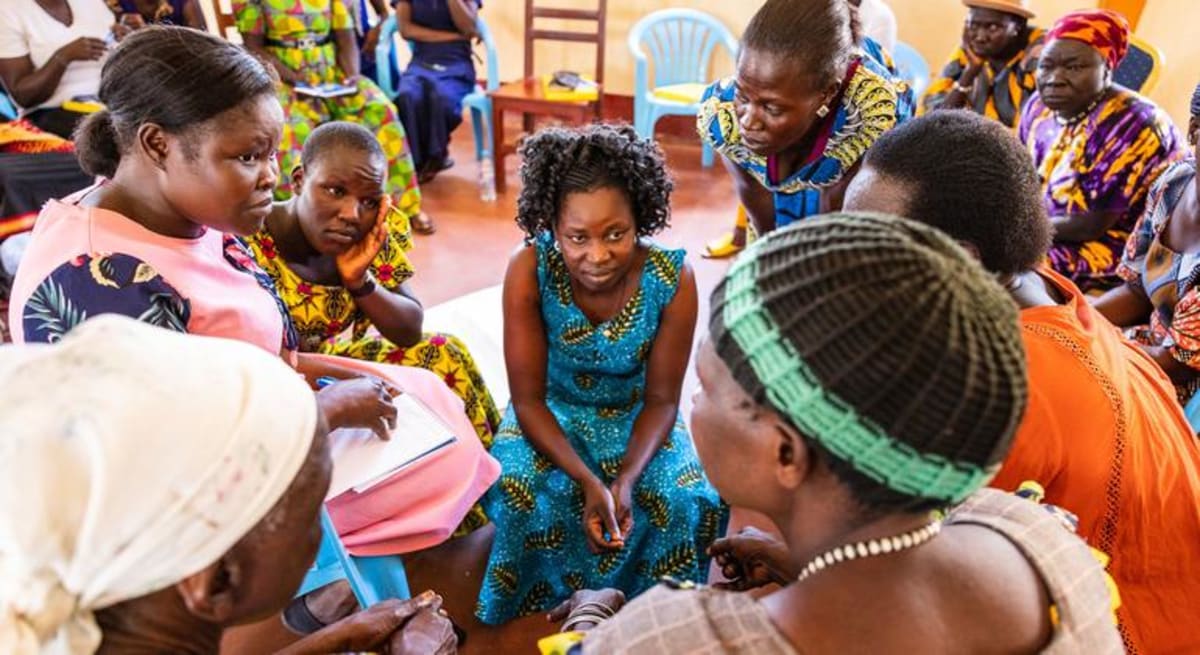
The shift goes deeper than individual inventions. Ubuntu, the African ethic of collective humanity, is reshaping what design is for. Where conventional approaches center the individual user, Ubuntu centers the relationship.
"People are used to sitting around and really listening to others' stories," Chaka reflects. "What can I take from this to make the situation better? That spirit of Ubuntu is something the rest of the world can learn from too."
The approach starts with observation and listening, then moves to rapid prototyping and testing in the real world. It's how Africa has always solved problems, even when that work wasn't called design.
With external funding withdrawing and demand for local capacity rising, backing African-led problem-solving has become harder to ignore. The continent isn't just adapting to change but owning it.
"Our forefathers opened the way for us," Chaka concludes. "Now we get to create a new world and reshape it for the next generation."
Based on reporting by Google News - Africa Innovation
This story was written by BrightWire based on verified news reports.
Spread the positivity!
Share this good news with someone who needs it