Africa Imported 18 GW of Solar Panels—Most Are Missing
Africa imported enough solar panels in 2025 to power millions of homes, but official reports only track a quarter of them. The missing panels reveal a hidden clean energy revolution happening off the books.
📺 Watch the full story above
Africa brought in four times more solar panels last year than official statistics show being installed, and that gap tells a remarkable story about how electricity is quietly transforming the continent.
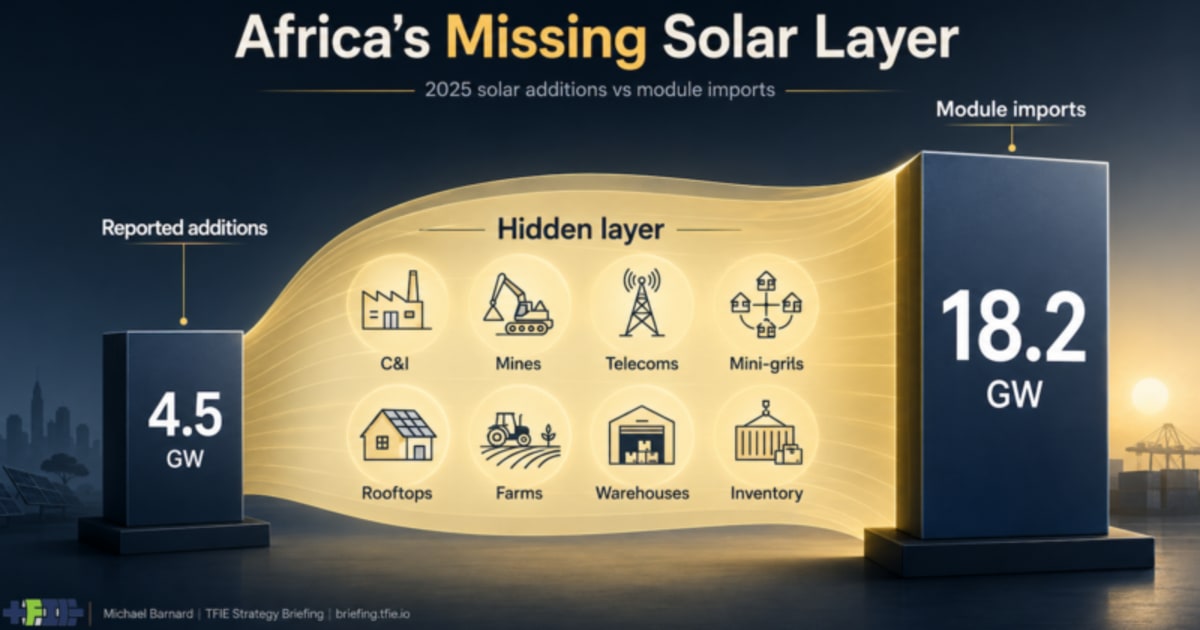
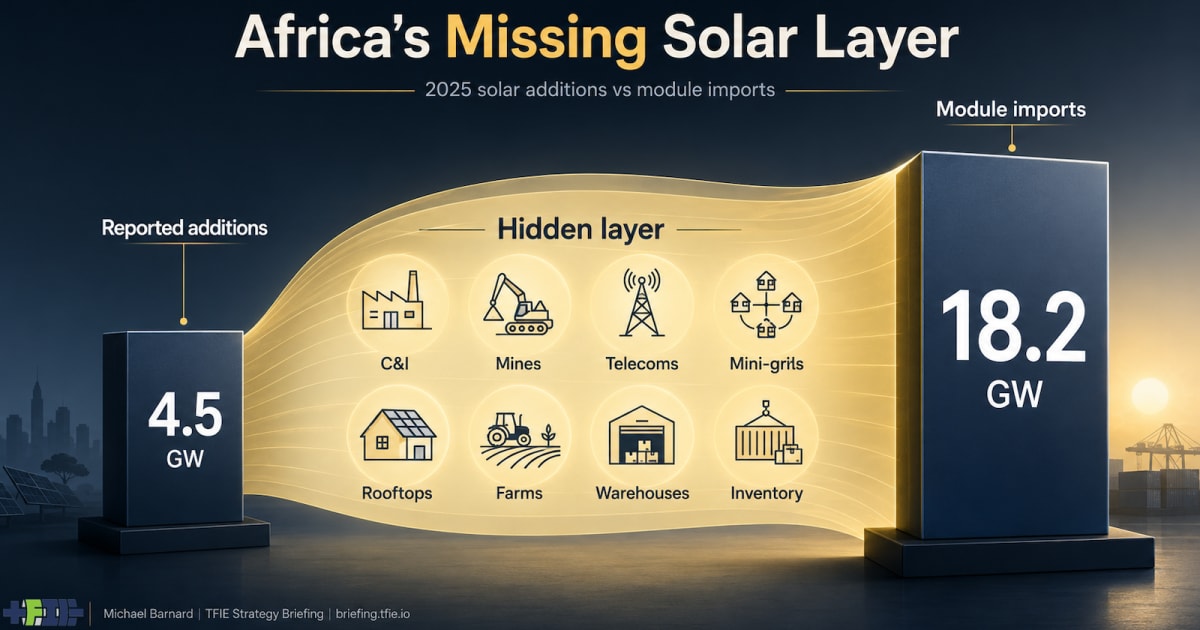
In 2025, African countries imported 18.2 gigawatts worth of solar modules. Yet official reports only counted 4.5 gigawatts of new installations. The difference isn't an accounting error—it's a glimpse of progress happening faster than governments can measure it.
Solar panels are physical objects that arrive in shipping containers and end up somewhere. Many are sitting in warehouses waiting for batteries, installers, or financing. But a significant portion are already working—on farm pumps, clinic roofs, telecom towers, mine operations, factory buildings, and millions of homes where waiting for the electrical grid isn't a viable option.
This matters because it represents a different kind of energy transition. Traditional renewable energy projects involve government announcements, ribbon cuttings, and official reports. This African solar boom is driven by practical economics: businesses cutting diesel costs, farmers powering irrigation, hospitals ensuring reliable electricity, and families buying panels because they work better than fuel generators.
The math adds up in ways it never has before. Chinese solar modules are cheaper than ever. Batteries keep dropping in price. African logistics networks—new ports, roads, and trade corridors—make moving equipment easier. Meanwhile, diesel remains expensive and many electrical grids stay unreliable or incomplete.
Africa's reported solar installations grew 54% year over year, hitting that 4.5 gigawatt mark. That's meaningful progress, even if it doesn't match India's 36.6 gigawatts or Brazil's distributed generation boom. But the import numbers suggest the real story is much bigger.
The Ripple Effect
This hidden solar revolution creates cascading benefits beyond the panels themselves. Reliable electricity means clinics can refrigerate vaccines, schools can use computers, and businesses can operate predictably. Farmers with solar-powered irrigation grow more food. Telecom towers with solar backup connect more people.
Better electricity attracts industrial development. Electrified transport creates battery demand and manufacturing opportunities. Larger, more connected markets reward better governance. None of this happens overnight or automatically, but the pieces are fitting together in ways most outside observers miss.
The disconnect between imports and official installation numbers isn't a problem to solve—it's a signal to watch. Energy transitions don't always announce themselves with press releases. Sometimes they arrive quietly in shipping containers and get bolted to roofs by people tired of waiting for alternatives.
Africa's solar story is being written in procurement decisions, not just policy papers, and the real numbers may be hiding in plain sight.
More Images
Based on reporting by CleanTechnica
This story was written by BrightWire based on verified news reports.
Spread the positivity!
Share this good news with someone who needs it