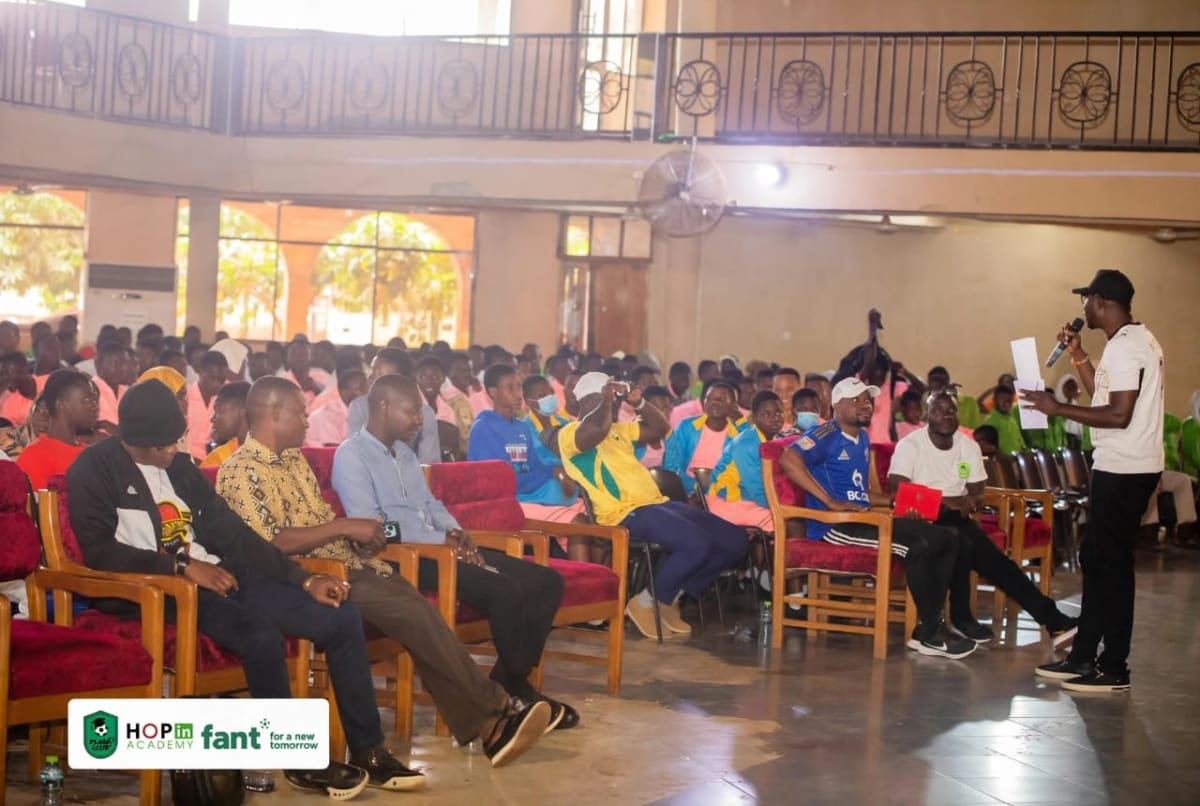
African Investor Pushes Universities to Teach Real Business
George Odo, senior partner at AfricInvest, says African universities teach business plans but skip the crucial lessons about how capital actually works. His two-decade journey from humanitarian aid to private equity revealed what founders really need to know.
A private equity veteran who helps deploy millions across Africa thinks universities are missing the most important lesson: how money actually moves in real markets.
George Odo spent a decade at CARE International fighting poverty through microfinance before joining AfricInvest, a pan-African private equity firm. The shift taught him something startling: aid wasn't sustainable, and commercial capital doesn't offer second chances.
Now, after nearly 20 years reading African markets, Odo sees a troubling pattern. Business schools across the continent teach students to write pitch decks and business plans, but they rarely explain how dilution works or when a founder should choose a SAFE note over equity.
"I advised him not to take it as equity," Odo recalls of a founder offered $1 million. "Take it as a SAFE note or convertible bond to avoid dilution." This kind of advice circulates in investment committees but rarely reaches African lecture halls.
The gap matters because African founders face unique challenges. Fragmented demand, thin capital markets, and political volatility shape how deals get structured and how far capital can stretch. Intra-African trade sits below 20%, far behind other regions where it exceeds 50%.
Odo points to another blind spot: Africa's formal economy misreads its informal strength. "A micro business selling secondhand clothes gets cash flow all day," he notes. Banks like Kenya's Equity Bank caught on and shifted to cash-flow-based lending, but the lesson took years to sink in.
He also sees family businesses struggling with succession planning because universities don't teach the transition from founder to professional management with urgency. Without that knowledge, scale remains limited.
The Ripple Effect
Odo now teaches at Columbia Business School, bringing African market realities to global classrooms. At AfricInvest, where Nairobi stands as the second-largest office after Tunis, he bridges the gap between global capital and African complexity.
His message isn't that African universities are failing. It's that they sit too far from the mechanics of real deal-making, where risk gets priced and founders negotiate from unequal positions. Students graduate with enthusiasm but without exposure to how capital actually behaves in early-stage environments.
Even small observations reveal market truths to Odo. He thinks about elderly people in restaurants struggling to read menus with phone flashlights, a reminder that systems evolve faster than people adapt. Context matters everywhere, especially in markets where investors remain cautious and infrastructure gaps persist.
African markets now attract returning investment flows to Kenya, Nigeria, South Africa, and Egypt, but capital arrives selectively. Emerging markets account for roughly 30% of global private equity activity, yet Africa captures only a fraction.
The solution starts in classrooms where the next generation of founders learns not just how to dream big, but how to structure deals that actually work in African contexts.
Based on reporting by TechCabal
This story was written by BrightWire based on verified news reports.
Spread the positivity!
Share this good news with someone who needs it