African Rice Farms Cut Methane with New Growing Methods
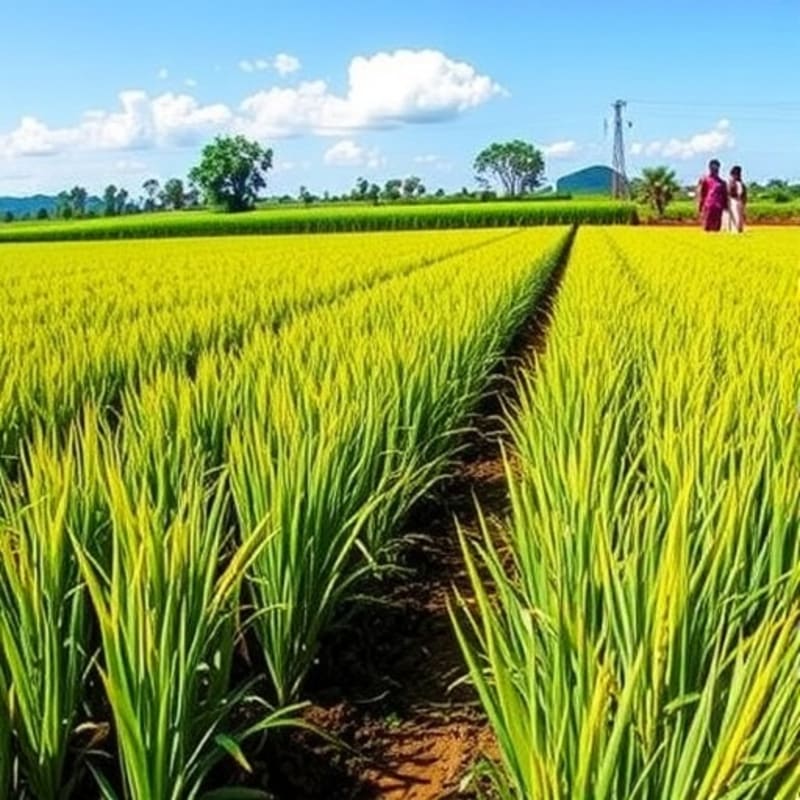
Scientists have discovered ways to grow rice in Sub-Saharan Africa that dramatically reduce methane emissions while still feeding growing populations. By combining specially bred rice varieties with smarter water management, farmers can fight climate change from their fields.
Rice feeds more than half the world, but flooded rice paddies produce methane, a greenhouse gas far more potent than carbon dioxide. Now researchers are showing African farmers how to grow rice that's better for both people and the planet.
A groundbreaking study by researcher Lyimo reveals that specially bred rice varieties can thrive with less flooding, cutting methane production while maintaining the high yields communities need. These low-emission rice types work because they need less waterlogged soil, disrupting the oxygen-starved conditions where methane-producing bacteria flourish.
The timing couldn't be better for Sub-Saharan Africa, where rice farming is expanding rapidly to meet rising food demands. Instead of repeating the high-emission patterns of other regions, African agriculture can leapfrog to cleaner methods from the start.
The real magic happens when farmers combine these new rice varieties with improved irrigation techniques. Alternate wetting and drying, where fields are allowed to dry out periodically between flooding, gives plants healthier roots while stopping methane production in its tracks.
Scientists emphasize that technology alone won't solve the problem. Farmers need support systems and policy reforms to adopt these practices, especially in regions where resources are limited and every planting decision carries financial risk.
The Ripple Effect
This research reaches far beyond rice paddies. If methane reduction strategies succeed in African rice farming, they create a blueprint for sustainable agriculture worldwide, showing that feeding people and protecting the climate aren't competing goals.
Community involvement is proving essential to success. When farmers participate in decisions about their land and livelihoods rather than having solutions imposed from outside, adoption rates soar and innovations stick.
Precision agriculture tools are making the transition easier by giving farmers real-time data about field conditions. These technologies help optimize irrigation and fertilizer use, making low-emission farming more practical and profitable.
The research arrives as global leaders face mounting pressure to reduce agriculture's environmental footprint. Rice production accounts for a significant share of agricultural methane emissions, making these breakthroughs critical for climate action.
Every rice field converted to low-emission practices represents progress toward both food security and climate stability, proving that smart science can create wins for everyone.
More Images
Based on reporting by Google News - Emissions Reduction
This story was written by BrightWire based on verified news reports.
Spread the positivity!
Share this good news with someone who needs it