AfricaRice Partners with China to Boost Food Security
Africa and China are teaming up to revolutionize rice production across the continent through cutting-edge breeding technology and scientist training. The partnership could help reduce Africa's heavy reliance on imported rice while feeding a growing population.
African rice farmers could soon access breakthrough varieties that dramatically boost harvests, thanks to a groundbreaking partnership between AfricaRice and China's leading agricultural research institutions.
AfricaRice Director General Dr. Baboucarr Manneh led a mission to China that resulted in multiple cooperation agreements with five top research centers. The deals focus on hybrid rice breeding, advanced genetics, and training the next generation of African agricultural scientists.
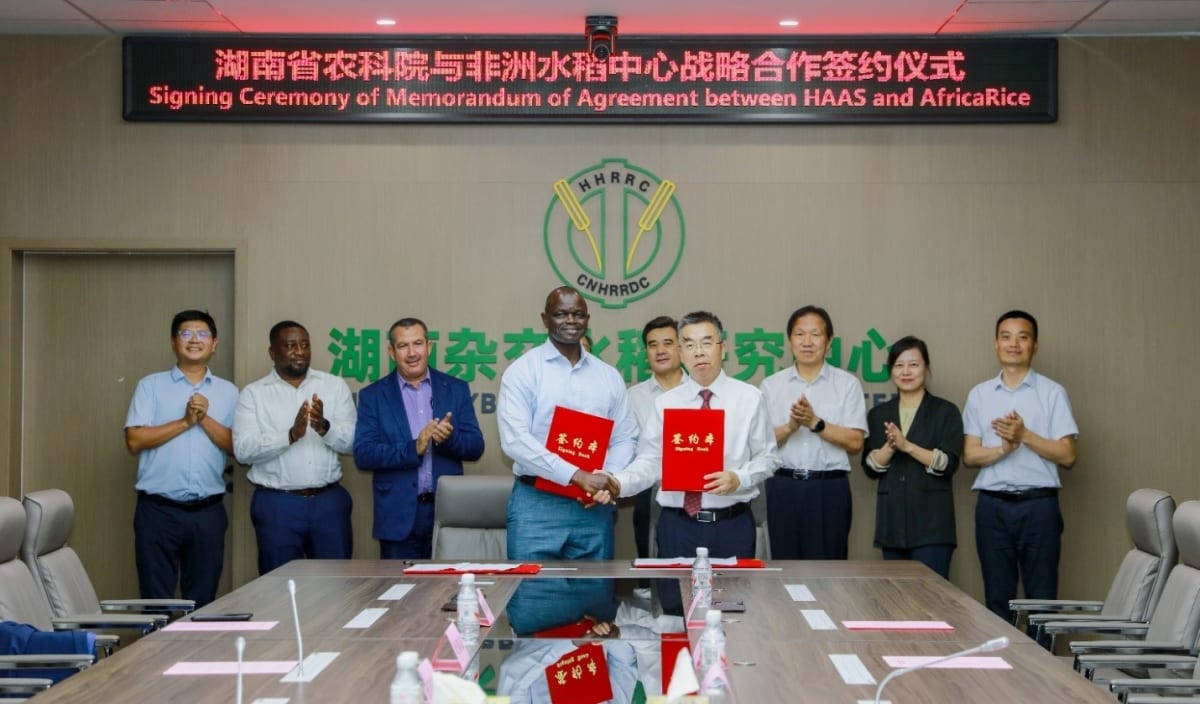
On May 27, 2026, AfricaRice signed a strategic partnership with the Hunan Academy of Agricultural Sciences to share expertise in hybrid rice breeding and molecular genetics. Three days later, another major agreement with the China National Rice Research Institute established a Joint Laboratory for Rice Research and Innovation.
These aren't just paper agreements. The partnerships will bring African scientists to China for masters, PhD, and postdoctoral training, building the continent's own research capacity for decades to come.
One exciting development involves clonal rice technology, funded by the Bill & Melinda Gates Foundation. Scientists are working to create rice varieties that keep their high-performing characteristics across multiple generations, eliminating the need for farmers to buy new hybrid seeds every season. AfricaRice has already developed two gene-edited hybrids without foreign DNA traces.
The collaboration with the Hunan Hybrid Rice Research Center explores third-generation hybrid rice breeding systems ready for African conditions. These technologies could help farmers grow more rice even as climate change makes farming more challenging.
The Ripple Effect: Africa currently spends billions importing rice despite having vast agricultural potential. Successful technology transfers from these partnerships could transform African countries from rice importers to self-sufficient producers. Higher yields mean more affordable food for growing cities, more income for rural farmers, and stronger food security across the continent.
The Joint Laboratory will serve as a hub where African and Chinese researchers work side by side, developing solutions tailored to African farmers' real-world challenges. From drought-resistant varieties to crops that thrive in different soil types, the research will address the specific conditions African farmers face daily.
Dr. Manneh emphasized that international cooperation is essential for turning scientific breakthroughs into seeds that farmers can actually plant. Rice consumption continues rising across Africa, making local production both an agricultural priority and an economic necessity.
The partnerships signal Africa's commitment to feeding itself through homegrown scientific capacity and smart international collaboration, putting farmers at the center of agricultural innovation.
More Images
Based on reporting by Google News - Africa Innovation
This story was written by BrightWire based on verified news reports.
Spread the positivity!
Share this good news with someone who needs it