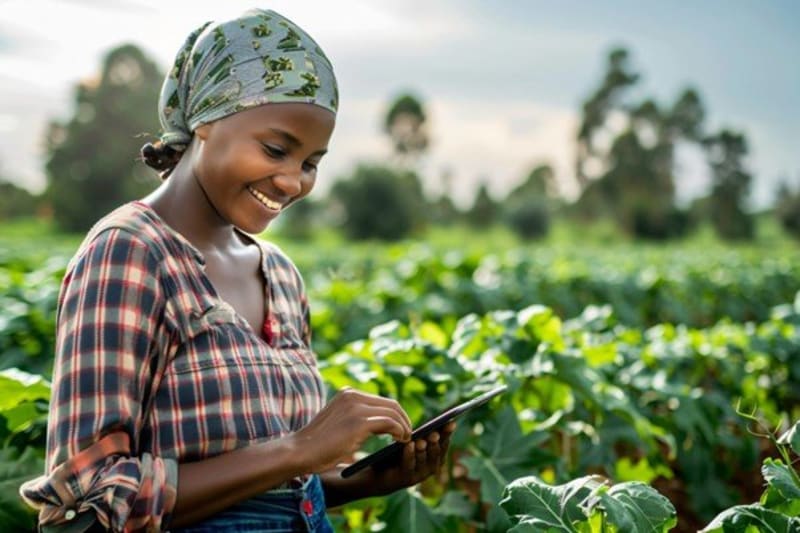
Africa's Digital Farm Revolution Could Feed 2.5 Billion
African farmers are transforming the continent's food future with smartphones, climate tools, and local processing. The shift could unlock a $1 trillion food market by 2030 while cutting dependence on $75 billion in annual imports.
Africa holds 60% of the world's uncultivated farmland but imports $75 billion worth of food every year. That contradiction is about to change.
Across the continent, farmers are swapping traditional methods for digital tools that predict weather, connect them directly to buyers, and process payments instantly. The African Development Bank estimates these innovations could boost farm productivity by up to 30%.
The timing couldn't be more critical. Africa's population will hit 2.5 billion by 2050, and feeding everyone means reimagining how food gets grown, sold, and processed. More than 60% of sub-Saharan Africa's workforce already depends on farming, mostly through small family operations that cultivate 80% of the continent's agricultural land.
Climate-smart agriculture is proving essential as droughts and floods become more frequent. Precision irrigation systems and improved seeds help farmers adapt while protecting fragile soil. The UN's Food and Agriculture Organization calls agricultural innovation "essential to strengthen the resilience of food systems to economic and climate shocks."
Women farmers represent the sector's most untapped potential. They make up 50% of Africa's agricultural workforce and reach 70% in some rural areas, yet they own less than 15% of farmland and rarely access credit or training.
Closing that gap would increase yields by 20 to 30% and could lift 150 million people out of food insecurity worldwide, according to FAO data. It's not just fair—it's smart economics.
The Ripple Effect
Local food processing is creating millions of jobs while keeping more money in African communities. Right now, most agricultural value escapes the continent because of limited processing capacity and infrastructure. Building those value chains means young people can find work close to home instead of migrating to cities or abroad.
The potential market tells the story. Africa's food economy could explode from $280 billion today to $1 trillion by 2030, making agriculture and agribusiness the continent's fastest-growing sectors.
Challenges remain real. Farmers lose 30 to 40% of their harvest after picking due to poor storage and transportation, undermining both income and food supply. Climate change continues testing systems that were already stretched thin.
But the agricultural revolution isn't waiting for perfect conditions. From smartphones in rural villages to women-led cooperatives to drought-resistant crops, Africa is building the infrastructure to feed itself and create prosperity from its own soil.
The continent's future depends on turning potential into production, and that transformation is already underway.
More Images
Based on reporting by Google News - Africa Innovation
This story was written by BrightWire based on verified news reports.
Spread the positivity!
Share this good news with someone who needs it