Agricultural Waste Now Powers Clean Energy Batteries
Scientists have cracked the code on turning fruit peels, wood scraps, and crop leftovers into high-performance materials for next-generation batteries and fuel cells. This breakthrough could replace fossil fuel-based battery components with sustainable alternatives already sitting in landfills.
Your banana peel might one day help power your phone. Researchers have discovered how to transform agricultural waste into advanced materials that store and convert energy as well as traditional fossil fuel-based options.
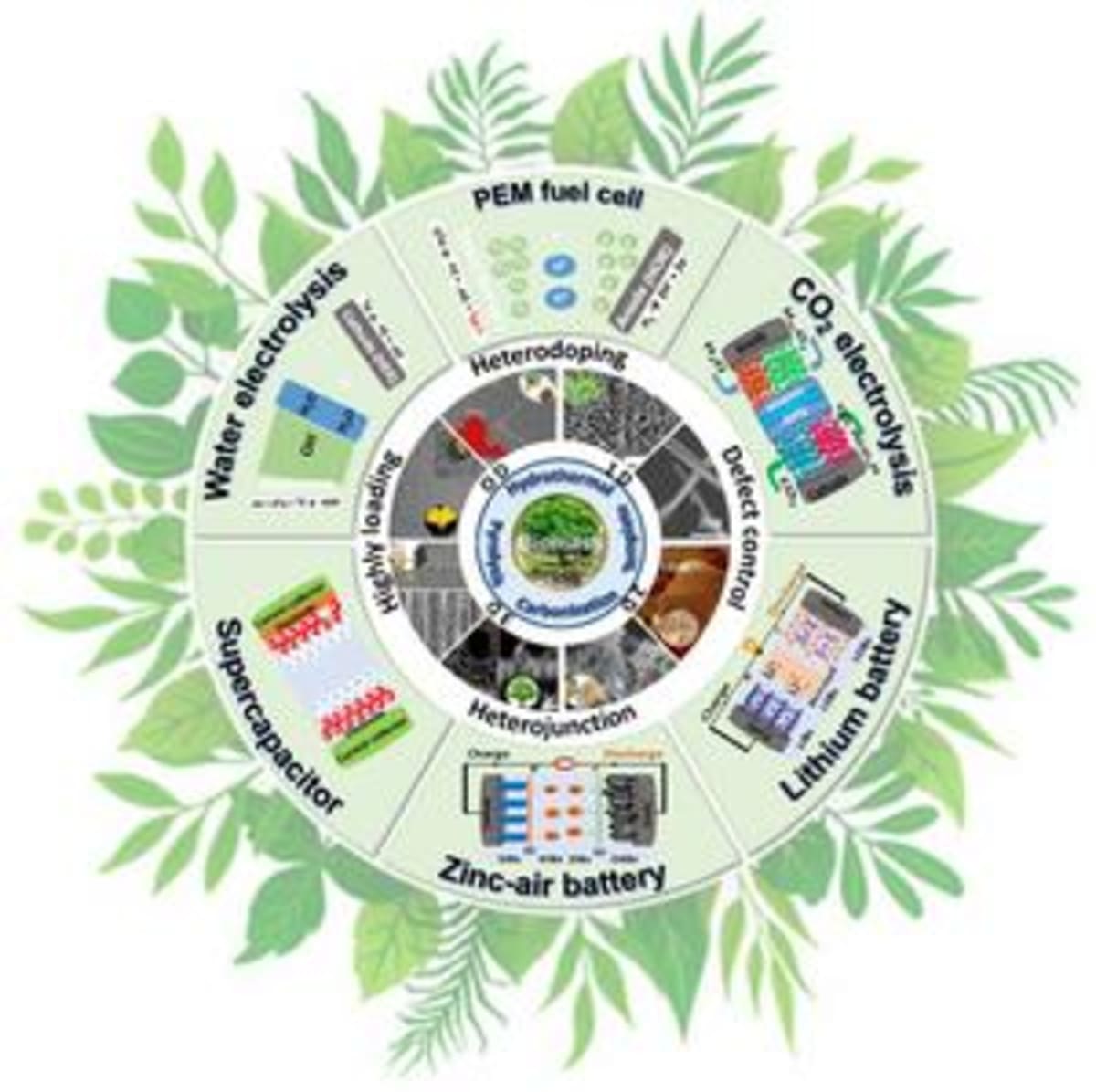
A comprehensive review published in Biochar reveals how scientists are converting everyday biomass like fruit peels, wood chips, crop residues, and shells into carbon materials for batteries, supercapacitors, and fuel cells. The natural structure of these organic materials creates perfect pathways for electricity to flow and energy to store.
Unlike conventional battery materials made from petroleum through energy-hungry processes, these biomass alternatives are renewable, abundant, and already available. Agricultural waste that normally ends up in landfills can now become the building blocks of clean energy technology.
The secret lies in the natural architecture of plants. Their built-in porous structures create highways for ions and electrons to move quickly. Their surfaces contain nitrogen, phosphorus, and other elements that boost conductivity and performance without expensive processing.
Scientists use methods like pyrolysis and hydrothermal carbonization to cook raw biomass into different carbon shapes. Some become tiny dots, others form fibers or sheets, and some create three-dimensional sponge-like networks. Each structure serves different energy storage needs.
The materials have already shown promise in supercapacitors and as supports for catalysts in hydrogen production and carbon dioxide reduction. They help reduce dependence on expensive noble metals while maintaining high performance and durability.
The Ripple Effect
This innovation solves multiple problems at once. It provides a use for agricultural waste that would otherwise rot or burn, releasing greenhouse gases. It creates sustainable alternatives to petroleum-based battery components. And it could make clean energy storage cheaper and more accessible worldwide.
Farmers and food processors could become unlikely players in the renewable energy supply chain. Their waste streams suddenly have value as raw materials for battery production. Developing nations with abundant agricultural resources could manufacture their own energy storage materials instead of importing expensive components.
The research team acknowledges challenges remain. Producing consistent, high-quality materials at scale requires more work. Manufacturing costs need to come down, and greener processing methods need development.
Still, the researchers are optimistic. With better control over pore structures and surface chemistry, biomass materials could become mainstream in energy storage within years, not decades.
The vision is clear: a future where your electric car battery started as corn husks, your home energy storage began as coconut shells, and the fuel cell powering your neighborhood originated in a pile of wood chips. Clean energy powered by yesterday's lunch scraps.
Based on reporting by Google News - Clean Energy
This story was written by BrightWire based on verified news reports.
Spread the positivity!
Share this good news with someone who needs it