AI Camera Detects Drunk Driving with 90% Accuracy
Australian researchers created an AI system that spots drunk, drowsy, and angry drivers using just a camera. The technology could save thousands of lives without requiring invasive breathalyzer tests.
A new AI system can tell if you're too drunk to drive just by looking at your face.
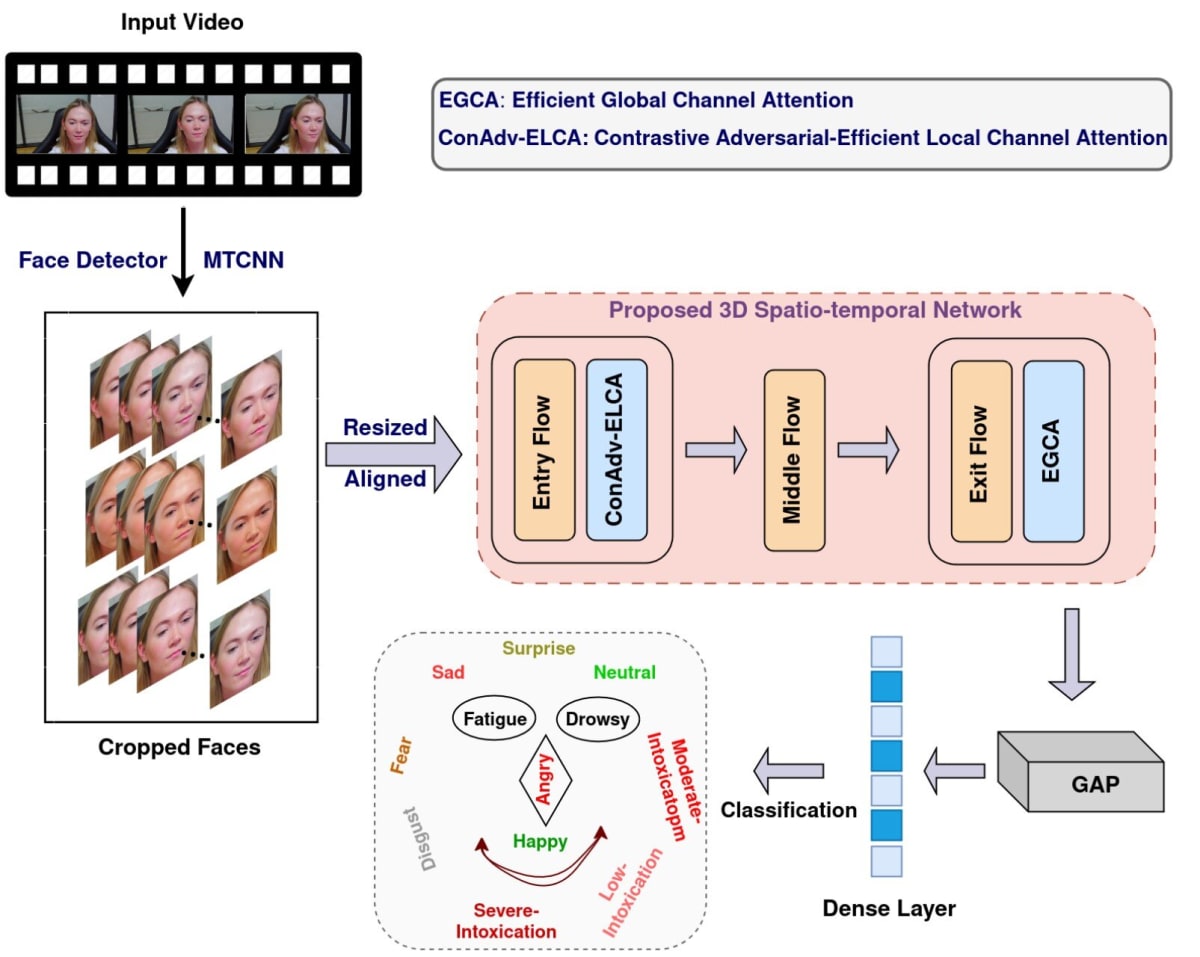
Researchers at Edith Cowan University in Australia developed technology that simultaneously detects three major causes of car accidents: intoxication, fatigue, and dangerous emotions like anger. The system identifies blood alcohol levels with nearly 90% accuracy and drowsiness with 95% accuracy using only video footage.
"Drink driving is a major public safety challenge across the globe and the number one contributing factor of crashes in Australia," said Ph.D. candidate Abdullah Tariq, who led the research. About 30% of accidents in Australia involve drunk driving.
The breakthrough comes from using a single 3D deep learning model instead of multiple separate systems. The AI analyzes facial features like eye blinking, subtle movements, and progressive changes that indicate impairment.
Traditional breathalyzers and blood tests are highly accurate but require cooperation from drivers and can't monitor continuously. This new approach works passively through a camera, making it possible to check drivers in real time without any physical interaction.
Dr. Syed Zulqarnain Gilani from ECU's Centre of AI and Machine Learning explained this is the first study to identify fatigue, expression, and blood alcohol simultaneously. "Using a single algorithm from a video, we can detect whether the person is tired, intoxicated, and their mood," he said.
The system is smart enough to distinguish between someone who's sleepy, making a facial expression, or actually affected by alcohol. This separation helps the AI understand a driver's true physical state rather than confusing similar-looking conditions.
In follow-up research, the team improved the technology even further by combining regular color video with infrared cameras. This combination works especially well in poor lighting conditions, making the system practical for nighttime driving when most drunk driving occurs.
The AI automatically captures diverse facial dynamics without manual measurement. Previous methods required people to manually check pupil dilation and eye closing ratios, which didn't work well in varying conditions.
Why This Inspires
This technology represents a gentler way to keep roads safe. Instead of requiring invasive tests or relying on drivers to cooperate, it could work continuously and automatically to identify dangerous conditions before crashes happen.
The system can even classify impairment into three categories: sober, moderate, or severe. This precision means authorities could respond appropriately to different levels of danger.
The researchers presented their findings at two major conferences in 2025, earning recognition from the international scientific community. Their work shows how artificial intelligence can protect people while respecting privacy and dignity.
Technology that saves lives without making people feel like criminals could change how we think about road safety forever.
More Images



Based on reporting by Phys.org - Technology
This story was written by BrightWire based on verified news reports.
Spread the positivity!
Share this good news with someone who needs it