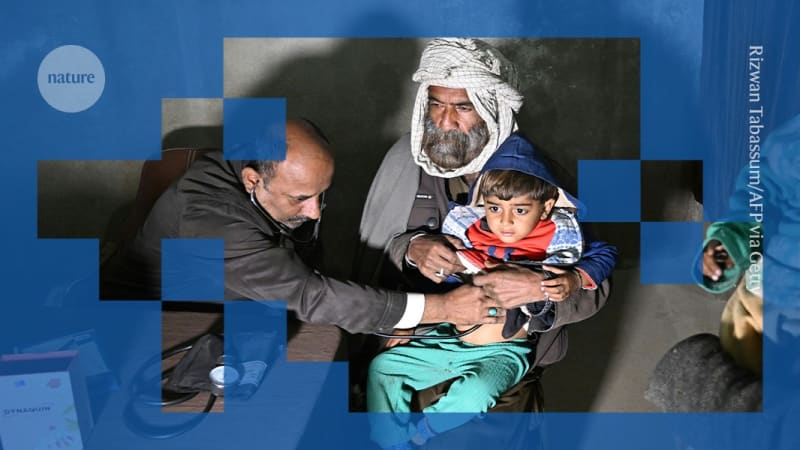
AI Chatbots Boost Medical Accuracy in Rwanda and Pakistan
New studies show affordable AI chatbots are helping doctors diagnose patients more accurately in countries where healthcare resources are scarce. The technology costs just half a penny per answer and works around the clock.
In places where there aren't enough doctors to see every patient, artificial intelligence just proved it can save lives.
Two groundbreaking studies in Rwanda and Pakistan show that cheap AI chatbots are dramatically improving medical diagnoses in areas where healthcare is hardest to access. The results aren't just promising. They're transformative.
In Rwanda, researchers tested five AI language models against trained local clinicians across more than 500 real medical questions that community health workers regularly receive from patients. The AI outperformed human doctors and nurses on every single measure, including medical accuracy, understanding patient questions, and avoiding harmful advice.
The cost difference is staggering. Doctor-generated answers averaged $5.43 each, while nurses cost $3.80 per response. The AI? Less than half a penny at $0.0035 per answer. That's 500 times cheaper.
In Pakistan, where massive patient loads and too few specialists lead to frequent diagnostic errors, doctors using AI achieved something remarkable. Physicians trained to use the GPT-4o chatbot reached a 71% diagnostic accuracy score compared to just 43% for doctors using traditional internet searches and medical databases.
The AI worked in local languages too. In Rwanda, the chatbots successfully answered questions in Kinyarwanda, the national language, proving the technology can cross cultural and linguistic barriers.
The Ripple Effect
This breakthrough matters far beyond two countries. Millions of people in lower and middle-income nations face the same challenge: not enough trained medical professionals to provide quality care. Community health workers, often with limited training, become the first line of medical advice by necessity, not choice.
Now they have a tool that never sleeps, never gets overwhelmed, and costs almost nothing to consult. The AI provides 24/7 access to medical knowledge that previously required years of expensive training.
Interestingly, doctors still added crucial value. In nearly one-third of the Pakistan cases, physicians caught important warning signs and contextual factors the AI missed. The sweet spot isn't replacing doctors. It's giving them a powerful assistant that handles the routine while they focus on the complex.
Researchers emphasize these tools need careful tracking and more testing with different chatbot systems before widespread adoption. But the path forward is clear: affordable AI can help bridge the massive healthcare gap affecting billions of people worldwide.
Quality medical care just became more accessible to those who need it most.
More Images




Based on reporting by Nature News
This story was written by BrightWire based on verified news reports.
Spread the positivity!
Share this good news with someone who needs it